 Bellingham Siding
 Siding Installation for Sudden Valley's Forest and Lake Climate
Sudden Valley sits in a different microclimate than most of the rest of Bellingham. Wrapped around the south shore of Lake Whatcom and set into heavy tree cover, homes here deal with shade, standing humidity, and moss pressure that a house out in the open, sun-exposed part of Whatcom County simply doesn't see as much of. Add in the driving rain that blows through the broader Bellingham Bay and Salish Sea corridor during fall and winter storms, and you've got a combination that punishes the wrong siding choice fast.
This page is specifically about siding installation for Sudden Valley properties — not a general overview. If you own a home in this neighborhood and you're looking at a full re-side or a first-time install on new construction, the details below are the ones that actually matter for your address.
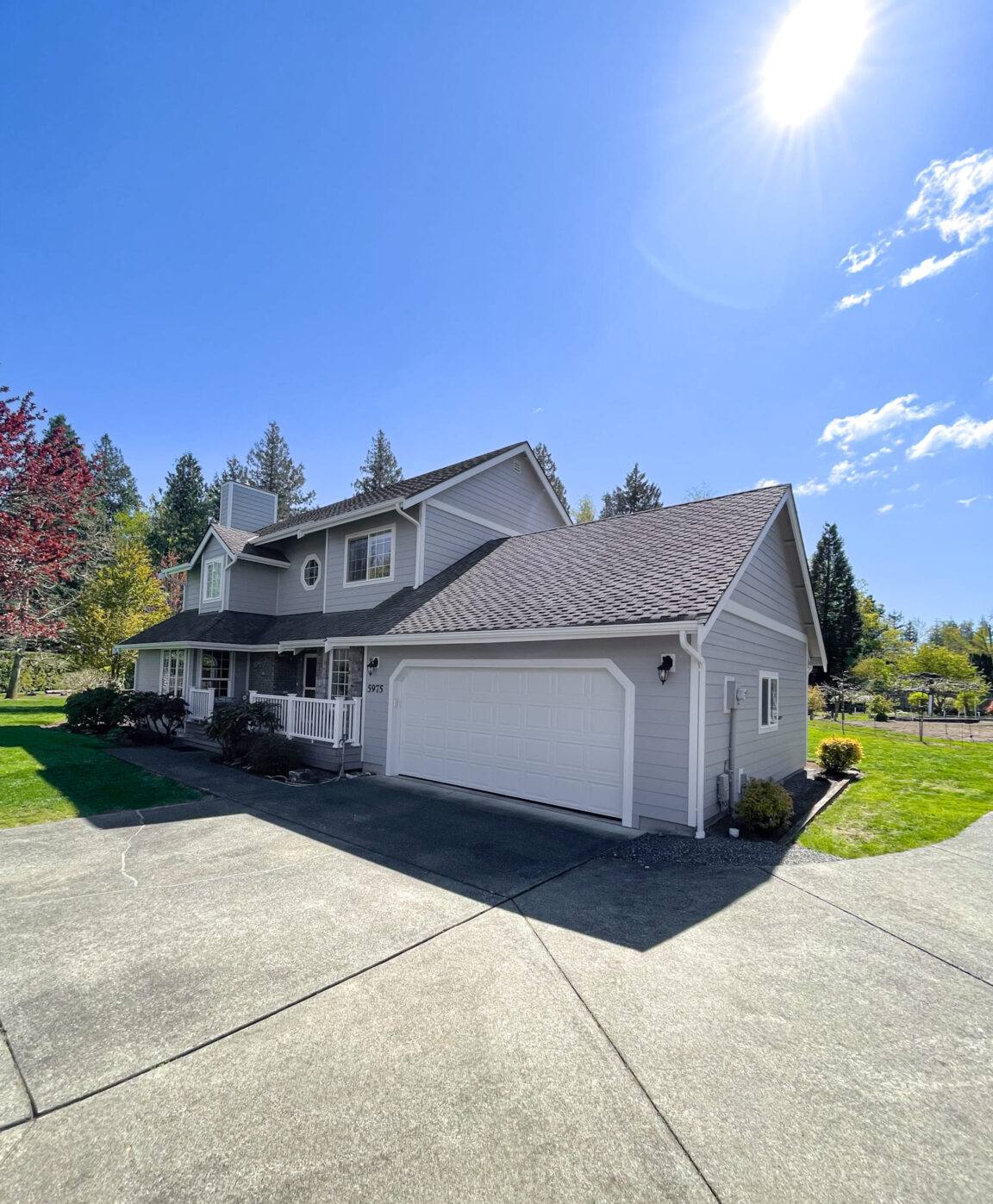
Why Siding Wears Differently Here
Three things define the Sudden Valley environment for exterior materials:
- Tree canopy shade. Large stands of conifers and deciduous trees mean siding on shaded elevations dries out slowly after rain — sometimes staying damp for days at a time in winter.
- Lake-adjacent humidity. Proximity to Lake Whatcom keeps ambient moisture higher than in more open parts of the county, which extends the window for moss, algae, and mildew to take hold on north- and east-facing walls.
- Driving rain and wind funneling. Storms moving in off the Salish Sea and Bellingham Bay bring wind-driven rain that finds every gap in flashing, trim, and butt joints — a problem made worse on homes with deep eaves shading damp siding but exposed gable ends catching the wind.
Individually, none of these is unusual for Western Washington. Together, in a wooded, lake-adjacent setting like Sudden Valley, they add up to a longer moss season and a shorter forgiveness window for sloppy installation than you'd get on a more exposed, sun-drenched lot.
What Moss and Sustained Moisture Actually Do to Siding
Moss itself doesn't eat through most siding materials, but it does two things that cause real damage over time. First, it holds water against the surface long after rain has stopped, which is exactly the condition that lets wood-based products swell, delaminate, or rot at seams. Second, moss and algae growth almost always means the siding surface stays damp enough, long enough, for paint and factory finishes to fail early — leading to peeling, chalking, and the need for repainting years ahead of schedule.
This is why the underlying material matters more in a place like Sudden Valley than it does in a drier, sunnier neighborhood. A product that shrugs off two rainy days in the open sun can still struggle when it's shaded and damp for two rainy weeks.
What a Correct Siding Installation Involves
Good siding is a system, not a single product nailed to the wall. A correct install in a moisture-heavy setting like this comes down to a few non-negotiables:
Drainage Plane and Water Management
A continuous weather-resistive barrier behind the siding, properly lapped and taped at seams, with a drainage gap that lets any water that does get behind the cladding find its way back out instead of sitting against the wall sheathing. On a shaded, damp lot, this drainage plane is doing more work than it would on a dry site, so it doesn't get to be an afterthought.
Flashing at Every Penetration
Windows, doors, deck ledgers, hose bibs, vents — every penetration through the siding is a place water can get behind the cladding. Step flashing, head flashing, and kick-out flashing at roof-to-wall intersections need to be installed in the correct order relative to the water-resistive barrier, not just caulked and called done.
Fastening and Clearances
Siding needs to be fastened per the manufacturer's schedule — the right fastener type, spacing, and depth — and it needs clearance from grade, roofing, and other hard surfaces so water doesn't wick up into the bottom edge of the panel or plank. In a shaded, humid setting, skimping on clearance is one of the fastest ways to create a rot problem that doesn't show up until it's expensive.
Ventilated Rainscreen Gap
A furring-strip or engineered rainscreen gap between the siding and the water-resistive barrier gives any moisture that gets past the cladding a path to drain and dry. On heavily shaded walls, this gap is the difference between siding that dries out between rain events and siding that never fully dries at all.
Why We Install Only James Hardie Fiber Cement
We standardized on James Hardie fiber cement siding and don't install vinyl, LP SmartSide, or wood products, including cedar. That's a deliberate professional standard, not a sales pitch, and it matters more in a setting like Sudden Valley than almost anywhere else in the county.
- It doesn't feed moss and mildew the way wood-based products can. Fiber cement is not an organic food source, so sustained shade and dampness don't create the same rot risk that they do for wood or wood-composite siding.
- ColorPlus factory finish. A baked-on, factory-applied finish holds color and resists fading and peeling far better than field-applied paint, which matters when a wall spends half the year damp and shaded.
- HZ5 climate-engineered formulation. Hardie's HZ product line is engineered for wetter, colder climate zones — which is exactly what Sudden Valley's lake-adjacent, tree-shaded setting is, even relative to the rest of Whatcom County.
- Non-combustible core. Fiber cement doesn't contribute fuel to a fire the way wood-based siding does, which is a meaningful consideration for wooded lots with limited defensible space.
- A strong, transferable warranty backed by correct installation. Hardie's warranty coverage assumes installation to their published specifications — which is exactly what our crews are trained and held to.
We're not going to tell you vinyl or LP SmartSide are junk — they're legitimate products used successfully all over the country. But we've made a professional call that in this climate, the long-term maintenance burden and moisture sensitivity of those alternatives isn't what we want to put our name on, especially on shaded, humid lots like the ones common in Sudden Valley.
How Hardie Compares for a Shaded, Moisture-Heavy Lot
| Factor | James Hardie Fiber Cement | Vinyl | Wood / LP SmartSide |
|---|---|---|---|
| Moisture and rot resistance | Not an organic food source; engineered for wet climates (HZ5) | Doesn't rot, but can warp or crack in temperature swings | Vulnerable to moisture absorption and rot at seams and cuts |
| Moss and algae staining | Resists staining; factory finish sheds grime | Can stain and is hard to fully clean without damage | Prone to holding moss and mildew, accelerating finish failure |
| Finish longevity in shade | Factory ColorPlus finish, long fade resistance | Color molded through, but can fade/chalk over time | Field-applied paint or stain fails faster in sustained damp shade |
| Fire performance | Non-combustible core | Combustible | Combustible |
| Typical lifespan when installed to spec | Decades, with strong transferable warranty | Long-lived but more prone to physical damage | Shorter effective life in wet-shaded conditions without diligent upkeep |
Our Installation Process for Sudden Valley Homes
The steps don't change dramatically from house to house, but how carefully each one is executed does, especially on shaded and lake-adjacent lots.
- On-site assessment. We look at sun exposure, tree cover, drainage patterns around the foundation, and the condition of the existing wall assembly before recommending anything.
- Removal and sheathing inspection. Old siding comes off and we check the sheathing underneath for hidden rot or moisture damage — common on shaded walls that have been trapping water for years without anyone knowing.
- Repair and prep. Any compromised sheathing or framing gets repaired before anything new goes up. Installing new siding over damaged sheathing just hides a problem, it doesn't fix it.
- Weather-resistive barrier and rainscreen. A continuous, properly lapped barrier goes on, followed by a ventilated gap so the wall assembly can dry.
- Flashing. Windows, doors, and all penetrations get flashed in the correct sequence relative to the barrier.
- Hardie installation. Panels or planks go up per Hardie's fastening schedule and clearance requirements, with attention to butt joints and corners where water intrusion most often starts.
- Caulking, trim, and final inspection. Sealants and trim details get finished, and we walk the whole exterior to confirm clearances, flashing, and fastening are correct before we call the job done.
What Homeowners Can Do Between Service Visits
Even the right siding, installed correctly, benefits from a little seasonal attention in a shaded, damp setting like Sudden Valley:
- Rinse moss and algae buildup off shaded walls once or twice a year with a garden hose and soft brush — avoid pressure washers, which can force water behind panels.
- Keep tree branches and shrubs trimmed back from the siding so air can circulate and walls can dry between rain events.
- Check and clear gutters each fall so overflow isn't running down the siding face.
- Look at caulk lines around windows, doors, and trim yearly and have any cracked or missing sealant redone before winter rains set in.
- Watch for staining or dark streaking on north- and east-facing walls — it's usually the earliest visible sign a wall isn't drying out between storms.
What Affects the Cost of a Sudden Valley Siding Job
| Factor | Why It Matters |
|---|---|
| Wall condition underneath | Hidden rot or moisture damage on shaded walls can mean sheathing repair before new siding goes on |
| Home size and wall complexity | More corners, gables, and penetrations mean more flashing and cutting time |
| Access and tree cover | Dense landscaping or limited access around the home can add setup and staging time |
| Trim and detail level | Additional trim boards, corner treatments, and accent details add material and labor |
| Existing siding removal | Tear-off and disposal of old wood, vinyl, or composite siding is a separate line item from a new-construction install |
We won't quote a number without seeing the house — anyone who does hasn't actually looked at the condition of your walls, which, on a shaded lot, is exactly the thing that determines real cost.
Why Local Experience in Sudden Valley Matters
A crew that's worked lake-adjacent, tree-covered properties around Whatcom County knows to check for the moisture problems that don't show up on a drier, sunnier lot — hidden sheathing damage behind shaded walls, moss buildup patterns tied to specific sun exposures, and the wind-driven rain paths that come off the lake and off Bellingham Bay during winter storms. That local pattern recognition is the difference between an install that looks right on day one and one that's still performing correctly ten winters from now.
If you're planning a siding project for a Sudden Valley home, we're happy to come take a look and give you a straightforward, no-pressure estimate — including an honest read on what your walls actually need before we talk about product or price.