 Bellingham Siding
 Building a Deck That Holds Up in Blaine
Blaine sits right up against the water at the northern edge of Whatcom County, and that location shapes everything about how a deck should be built here. A deck design that works fine twenty miles inland can fail early in Blaine because of what the marine air and the region's rain patterns do to fasteners, framing, and decking surfaces over time. We build custom decks specifically with this coastal exposure in mind, not as an afterthought bolted onto a standard build.
This page is about one thing: custom deck construction for homes in and around Blaine, and what actually needs to be different about that job compared to a deck built somewhere drier or further from the water.
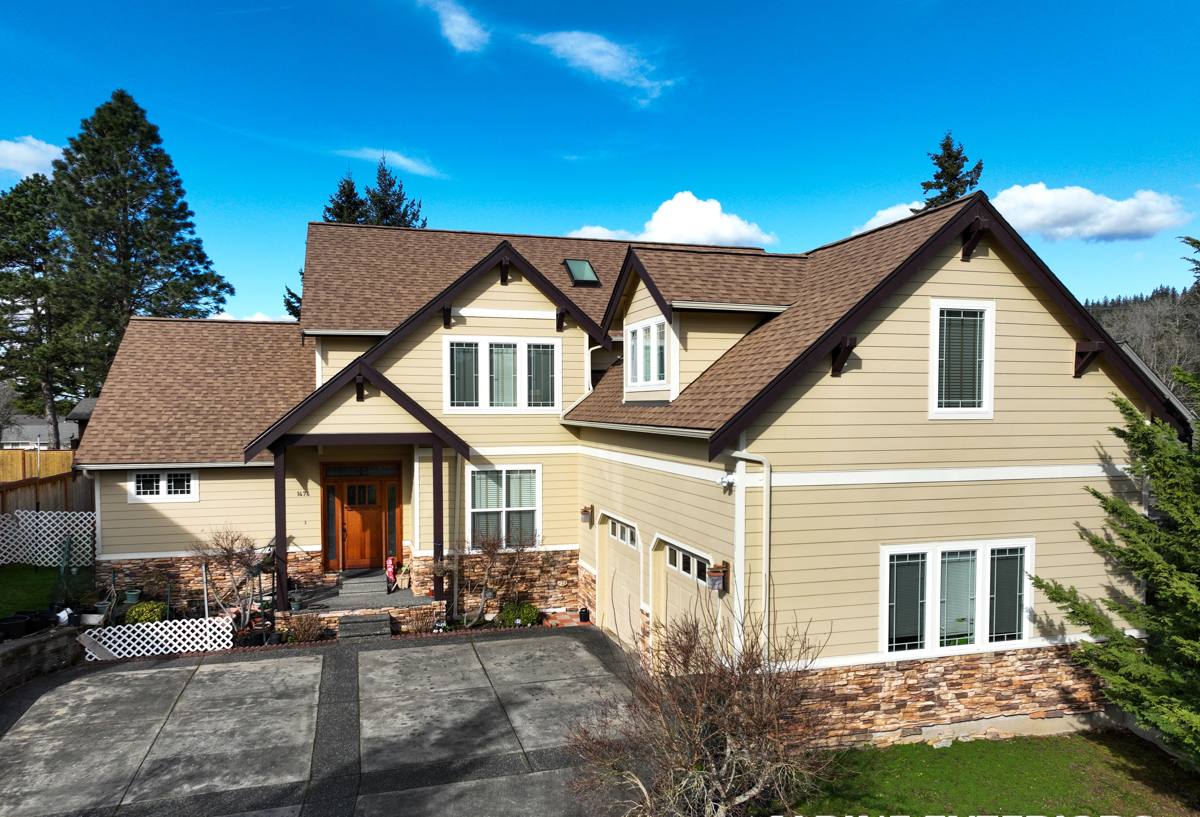
What Blaine's Climate Actually Does to a Deck
Salt Air and Corrosion
Homes close to the water deal with a slow, steady exposure to salt-laden air. It doesn't take a direct ocean-front lot to feel the effect — moisture carrying salt can travel a fair distance inland, especially with the wind patterns common to this part of the coast. On a deck, that shows up as accelerated corrosion on fasteners, hardware, and any metal connectors that aren't rated for it. A deck can look fine on the surface for a year or two while the hardware holding it together is already degrading underneath.
Driving Rain
Whatcom County gets a lot of rain, and near Blaine it often comes with wind behind it. That means water doesn't just fall on a deck surface — it gets driven sideways into ledger connections, under railings, and into any gap where end grain is exposed. A deck built without real attention to water shedding and flashing details will trap moisture in exactly the places that are hardest to inspect later.
The Long Moss Season
Cool, damp conditions for much of the year mean moss and algae growth is a near-constant pressure on any outdoor wood or composite surface that doesn't get much sun or airflow. Left unmanaged, moss holds moisture against the decking surface, which accelerates rot in wood and can affect the finish and slip-resistance of some composite products over time.
Material Choices for a Blaine Deck
There's no single "best" decking material for every home — it depends on budget, how much maintenance a homeowner wants to do, and how exposed the deck is to sun, rain, and salt air. Here's how the common options actually compare for this specific climate:
| Material | Moisture & Moss Behavior | Maintenance | Typical Lifespan Here |
|---|---|---|---|
| Pressure-treated wood | Absorbs moisture readily; needs sealing to resist moss and rot | Annual cleaning and periodic re-sealing | Shorter without upkeep, longer with it |
| Cedar | Naturally rot-resistant but still needs finish maintenance in wet climates | Regular cleaning, re-staining every few years | Moderate, depends on upkeep |
| Composite decking | Doesn't absorb water the way wood does, but surface texture affects how easily moss and algae get a foothold | Periodic washing, no sealing needed | Long, with consistent appearance |
| PVC decking | Fully non-organic, least hospitable surface for moss growth | Occasional washing | Long, highest upfront cost |
We'll walk through these trade-offs honestly during an estimate rather than pushing whatever has the best margin. A wood deck can be the right call for a homeowner who wants a specific look and is willing to maintain it. A composite or PVC deck can be the right call for someone who wants to spend less time on upkeep. Both can work in Blaine — the difference is in how the framing, fasteners, and finish work are handled underneath.
Framing and Fasteners: Where Most Deck Failures Actually Start
The decking surface is what homeowners notice, but the framing and fasteners are what determine whether a deck is actually safe and long-lasting. In a marine climate, this is where corners get cut on lower-quality builds, and it's usually invisible until something fails.
- Fasteners and structural hardware rated for corrosion resistance, not just standard exterior-grade hardware
- Proper ledger board flashing where the deck attaches to the house, to keep driven rain from getting behind the siding
- Joist protection tape or an equivalent moisture barrier on top of framing lumber, so end grain and cut edges aren't left exposed to standing water
- Adequate spacing between decking boards for drainage and airflow, which also reduces the surface conditions moss needs to establish
- Footings sized and placed correctly for the soil conditions on the specific lot, not just a generic minimum
None of this is unusual or exotic construction — it's standard good practice. But it takes more time and slightly more expensive hardware than the minimum code allows, and it's easy for a crew unfamiliar with this climate to skip it without the homeowner ever knowing until years later.
Design Choices That Fight Moss Before It Starts
Some moss pressure is unavoidable given the climate, but deck design has a real effect on how bad it gets and how often a homeowner has to clean it off.
Sun Exposure and Layout
Where possible, we consider how a deck's orientation and any overhead structures affect how much direct sun and airflow the surface actually gets. A deck tucked under heavy tree cover or a low roofline will hold moisture longer than one with better exposure, regardless of material.
Board Spacing and Drainage
Consistent gapping between boards, and framing that lets water actually drain instead of pooling on top of joists, keeps the underside of the deck from becoming a permanently damp environment — which is where the worst rot and the heaviest moss growth both tend to start.
Railings and Low Walls
Solid railings or low walls that don't allow water to run off cleanly can create damp zones at the base. We favor railing designs that shed water the same way the deck surface does.
Our Process for a Custom Deck Build
A custom deck project generally moves through the same stages, though the details change based on the home's layout and how exposed the site is to weather.
- On-site assessment of the lot, existing structure, sun and wind exposure, and drainage patterns
- Design discussion covering material options, layout, railing style, and any local permitting requirements
- Written estimate with a clear breakdown of materials and labor, no vague allowances
- Permitting handled before work begins, where required
- Framing and fastener installation using corrosion-resistant hardware and proper flashing details
- Decking installation with attention to spacing, drainage, and finish
- Final walkthrough covering the build and basic maintenance expectations for the specific material chosen
Why It Matters to Hire a Crew That Already Works in Blaine
A deck built by a crew unfamiliar with this specific coastal exposure isn't necessarily built badly — but it's often built to a generic standard that doesn't account for salt air corrosion or the amount of driven rain and moss pressure a Blaine property actually deals with. Choosing hardware, flashing details, and material finishes that are appropriate for this climate isn't guesswork when it's already part of how a crew normally builds in the area.
Local permitting requirements, typical soil and drainage conditions in Whatcom County, and the practical realities of scheduling around this region's rain patterns are all things that go smoother when a contractor has already worked through them on other local projects.
Maintaining a Deck in a Marine Climate
Whatever material is chosen, a few maintenance habits make a real difference in how long a deck holds up in Blaine's conditions:
- Sweep off debris and standing organic matter regularly, especially in fall and winter
- Wash the surface periodically to remove early moss and algae growth before it establishes
- Check fastener heads and visible hardware periodically for early signs of corrosion or staining
- Keep gutters and downspouts near the deck clear so water isn't dumping directly onto or under the structure
- Re-seal or re-stain wood decking on the schedule appropriate for the specific product, rather than waiting until it visibly needs it
A little consistent upkeep goes a long way in this climate — far more than it would in a drier region, and it's the difference between a deck that looks good for a couple of decades and one that needs early repairs.
Get a Straightforward Estimate
If you're planning a new deck or replacing an aging one in Blaine, we're happy to walk the property, talk through material options honestly, and put together a clear estimate. There's no pressure and no obligation — just a straight conversation about what your home actually needs. Use the form below to get started.