 Bellingham Siding
 Exterior Work Built for Sehome, Not a Generic Climate Zone
Sehome sits close to the heart of Bellingham, wedged between downtown, the Western Washington University campus, and Sehome Hill Arboretum, with Bellingham Bay just down the slope. It's a mix of older single-family homes, mid-century houses, and denser infill near the university — many of them shaded by mature trees, sitting on sloped lots, or close enough to the water to catch salt-laden air off the bay. That combination of shade, slope, and marine exposure is exactly what wears down exterior materials faster here than it would in a drier, flatter part of the country.
We install siding, roofing, windows, and decks, and on a neighborhood like Sehome those four systems really do work as one envelope. Siding that traps moisture behind it stresses the sheathing and trim. A roof that sheds water poorly overloads the siding and gutters below it. Windows that aren't flashed correctly feed water directly into wall assemblies. We treat all four as connected problems, not separate line items.
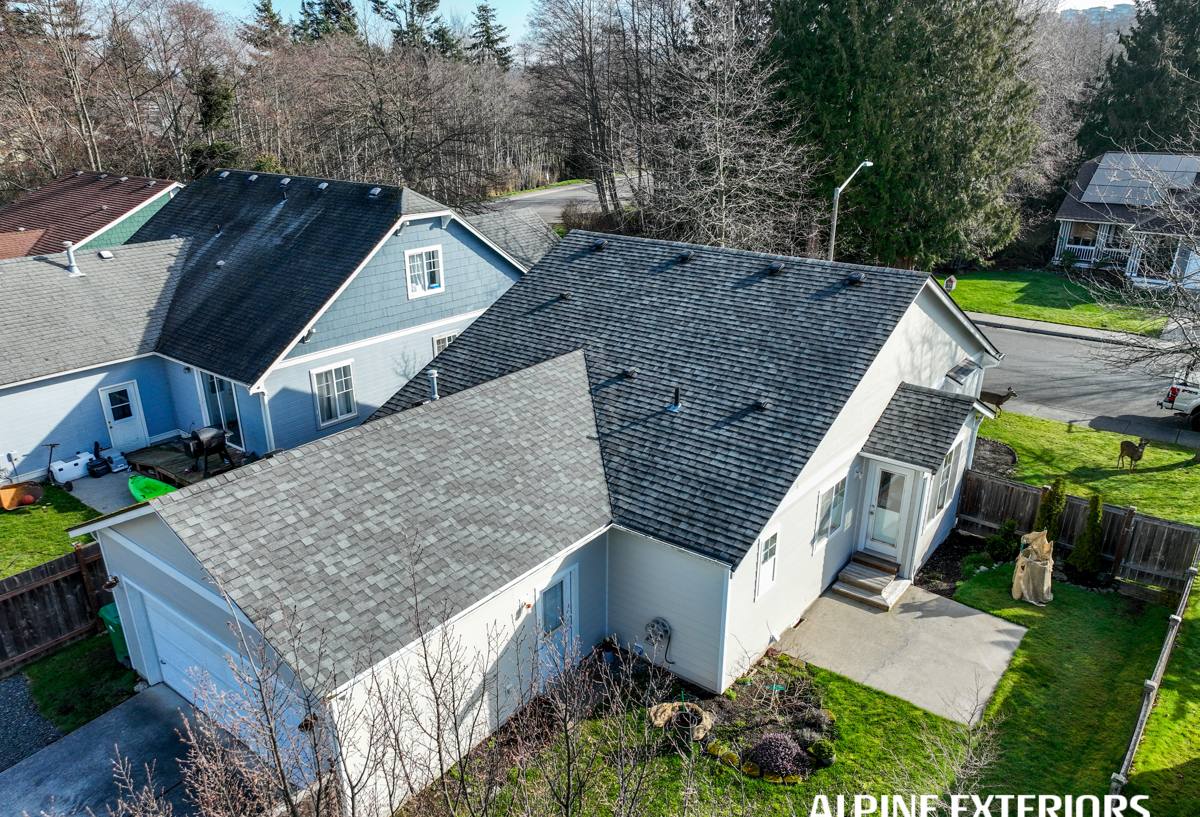
What Bellingham's Climate Actually Does to a Sehome House
Whatcom County doesn't get extreme weather in the dramatic sense — no hurricanes, no hail the size of golf balls. What it gets instead is relentless, low-grade exposure: months of driving rain, salt air drifting up from the bay, and a moss season that can run from fall through spring. None of that damages a house overnight. It damages a house over years, in the places nobody's looking.
Driving Rain and Wind-Driven Moisture
Storms off the Strait of Georgia and Bellingham Bay don't just drop rain straight down — wind pushes it sideways into walls, under trim, and into any gap in the siding or flashing. Over time, wind-driven rain finds every weak seam in a building envelope. Homes on Sehome's more exposed slopes and street-facing walls take the brunt of it.
Moss, Shade, and Slow-Drying Surfaces
Sehome's tree cover is part of what makes the neighborhood pleasant to live in, and it's also why north-facing walls, roof valleys, and shaded siding runs stay damp longer after every rain. Moss and algae take hold on surfaces that don't get enough sun or airflow to dry out between storms, and once established, they hold moisture directly against the material underneath.
Salt Air Off Bellingham Bay
Proximity to the bay means a steady, low-level exposure to salt-laden air, which accelerates corrosion on fasteners, flashing, and any metal components on a home's exterior. It also speeds up the breakdown of paint films and coatings that aren't formulated to handle it. This is a slow effect, but it's a real one, and it's part of why product choice matters as much as installation quality.
Why We Install Only James Hardie Fiber Cement Siding
We made a deliberate decision as a company to install James Hardie fiber cement exclusively — not vinyl, not LP SmartSide, not Cemplank or Allura, not primed spruce or cedar. Every one of those products has legitimate uses and a case can be made for each. Our reasoning is specific to what we see happen to siding in this climate over a 10, 20, and 30-year timeline, not a knock on any single manufacturer.
Wood-based products, including engineered wood siding, rely on their treatments and coatings staying intact to resist moisture. In a place with Sehome's shade and rain pattern, any breach in that coating — a nail pop, a scuff, a poorly sealed cut edge — gives moisture a path in, and wood-based substrates don't handle repeated wetting well over time. Vinyl handles moisture fine on its own, but it's a thin material that can warp, fade, and crack with UV and temperature swings, and it's limited in how it can be finished and detailed. Cedar is a beautiful, genuinely traditional material, but it demands a maintenance schedule — refinishing, sealing, monitoring for rot — that most homeowners don't sign up to keep on top of.
James Hardie fiber cement is non-combustible, dimensionally stable, and doesn't rely on a surface coating alone to keep water out of the substrate the way wood products do. The ColorPlus factory finish is baked on and warranted separately from the substrate, which matters in a marine climate where UV and salt air are working against paint year-round. It's not a miracle material and it still requires correct installation — proper clearances, fastening, and flashing — but it gives us a product we can stand behind for the long haul on a house exposed to what Sehome sees every winter.
The Hardie Product Lines We Use
| Product | Best Use | What It Offers |
|---|---|---|
| HardiePlank lap siding | Most homes, classic and modern styles | Traditional lap profile, wide color and texture selection |
| HardieShingle | Accent gables, Craftsman and cottage styles | Staggered or straight-edge shingle look without wood upkeep |
| HardiePanel | Modern facades, board-and-batten | Clean vertical lines, often paired with trim battens |
| HardieTrim | Corners, fascia, window and door surrounds | Matches siding durability for a consistent envelope |
| HZ5 / HZ10 climate-engineered formulations | Pacific Northwest wet climates | Engineered specifically for high-moisture regions like Whatcom County |
Color selection matters too. ColorPlus finishes are factory-applied under controlled conditions, which gives a more even, longer-lasting result than field-painting siding after installation, and it comes with its own warranty coverage separate from the siding substrate itself.
Roofing, Windows, and Decks — The Rest of the Envelope
Siding gets most of the attention, but on a shaded, damp lot like a lot of Sehome properties, the roof and windows do just as much work keeping a house dry.
Roofing
A roof under tree cover deals with moss, needle and leaf buildup in valleys, and slower drying after storms. We look at ventilation, flashing at penetrations and valleys, and gutter capacity as part of any roofing conversation — not just the field material itself.
Windows
Old or poorly flashed windows are one of the most common sources of hidden water intrusion we find behind siding during tear-off. Replacement windows paired with correct flashing integration into the new siding plane close off a path that's easy to miss otherwise.
Decks
Outdoor living space in Bellingham has to hold up to the same rain and shaded, slow-drying conditions as the siding above it. Ledger flashing, proper drainage, and material choice matter more here than they do in drier climates, since a poorly flashed deck ledger is a direct route for water into the house framing.
What a Siding Project in Sehome Typically Involves
- On-site assessment of existing siding, trim, flashing, and any moisture or moss damage
- Inspection of the wall assembly once old siding is removed — this is where hidden rot or window flashing issues usually surface
- Repair of any damaged sheathing or framing before new siding goes on
- Installation of house wrap or weather-resistive barrier and correct flashing details at windows, doors, and penetrations
- Installation of James Hardie siding, trim, and accessories to manufacturer fastening and clearance specifications
- Final walkthrough covering warranty registration and basic care
Cost Factors Homeowners in Sehome Should Know
| Factor | Why It Matters Here |
|---|---|
| Home size and wall complexity | Sehome's older homes often have varied rooflines and trim detail that add labor |
| Condition of sheathing underneath | Shade and moisture exposure make hidden rot more common on north-facing walls |
| Access and lot slope | Sloped Sehome lots can affect scaffolding and staging costs |
| Product line and finish | HardiePlank vs. HardieShingle vs. custom trim details vary in material and labor cost |
| Scope — siding only vs. siding with roofing/windows | Bundling work on one envelope project can reduce redundant setup and staging costs |
Maintenance Checklist for Sehome Homeowners
- Rinse siding annually to clear pollen, dust, and early moss or algae growth, especially on shaded walls
- Keep gutters clear of leaves and debris, particularly under mature trees common to the neighborhood
- Trim back vegetation and tree limbs that keep siding or roof sections in constant shade
- Inspect caulking and trim joints yearly, since gaps are where wind-driven rain gets in
- Check ColorPlus finish for any chips or scuffs and have them touched up promptly
- Have decks checked for ledger flashing integrity, especially before the wet season
Why a Local Crew Matters
A crew that works around Bellingham and Whatcom County regularly knows which walls in a neighborhood like Sehome stay wet the longest, which lots deal with the most wind exposure off the bay, and how the region's rain pattern behaves differently from a one-size-fits-all national install guide. That local knowledge shows up in the small decisions — flashing details, fastener spacing, product selection by wall orientation — that determine whether siding holds up for ten years or thirty.
If you're weighing a siding, roofing, window, or deck project on a Sehome home, we're glad to come take a look and talk through what we're seeing — no pressure, no obligation. Use the form below to request a free estimate.