 Bellingham Siding
 Sunnyland's Exterior Climate Challenge
Sunnyland sits close enough to Bellingham Bay and the surrounding waterways that homes here deal with a specific combination of conditions: salt-tinged air moving in off the water, long stretches of driving rain through fall and winter, and a moss and algae season that can run most of the year in shaded, north-facing spots. None of these things alone is unusual for Whatcom County. Together, over years, they're what determine whether a home's siding still looks and performs well at year fifteen or twenty.
Older homes throughout Sunnyland show the pattern clearly. Wood and engineered wood siding that wasn't maintained on a strict paint-and-caulk schedule tends to show soft spots at butt joints, sill trim, and anywhere water collects and sits. Vinyl siding holds up structurally but often looks tired early — chalking, fading, and the telltale ripple from repeated freeze-thaw cycling and UV exposure. None of this is a knock on any particular homeowner's maintenance habits. It's just what this climate does to exterior materials that aren't built for it.
Why Salt Air Matters More Than People Expect
Salt air doesn't just affect homes directly on the waterfront. Wind carries fine salt particulate well inland, and in a neighborhood like Sunnyland that sits within a few miles of the bay, that exposure adds up over the decades. Salt accelerates corrosion of fasteners and metal flashing, and it interacts with moisture to keep wood surfaces damp longer than they'd otherwise stay. Siding materials that are sensitive to moisture cycling age faster in this kind of environment than they would somewhere drier and further inland.
What This Means for Siding Choices
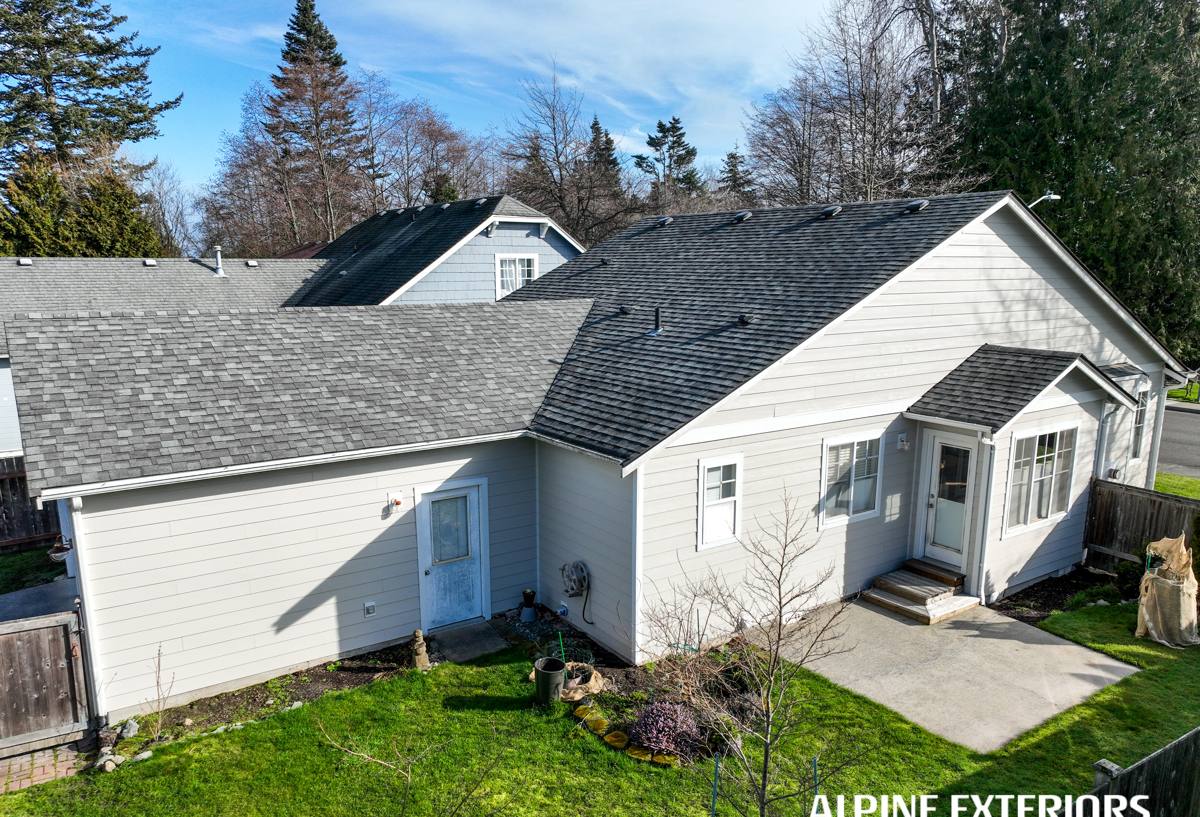
Bellingham's broader climate — wet, mild, and mossy for most of the year — already puts a premium on siding that resists moisture intrusion and doesn't feed organic growth. Sunnyland's added salt exposure raises the bar further. This is exactly the reasoning that led us to standardize on one product: James Hardie fiber cement siding, and to stop installing several materials that are common elsewhere but that we don't think hold up to the standard we want to put our name behind here.
Why We Don't Install Vinyl Siding
Vinyl is inexpensive and easy to install, which is why it's everywhere. But it's a petroleum-based product that expands and contracts significantly with temperature swings, and over time that movement stresses seams and fastening points. In a marine climate with constant moisture and UV cycling, vinyl tends to fade unevenly, warp at panel edges, and become brittle enough to crack on cold mornings. It also can't be painted to refresh its look without voiding warranties on most products. We're not saying vinyl fails outright — plenty of vinyl-sided homes get by fine. We just don't think it's the best long-term investment for this climate, and we'd rather install something we're confident will outlast it.
Why We Don't Install LP SmartSide, Cemplank, Allura, or Primed Wood
LP SmartSide is an engineered wood product — real wood strand technology treated with resins and coatings. It performs reasonably well when installed and maintained exactly to spec, but it's still fundamentally wood, which means cut edges, fastener holes, and any coating breach are entry points for moisture. In a neighborhood with Sunnyland's rain and humidity exposure, that margin for error is thinner than we're comfortable with. Cemplank and Allura are both fiber cement products, similar in concept to Hardie, but we've standardized on Hardie specifically for its factory finish system, product engineering, and warranty backing rather than installing a mix of comparable materials. Primed spruce or cedar siding requires the most ongoing maintenance of any option — regular repainting, caulking, and inspection — and is the most vulnerable to the moss and moisture pattern this area sees for much of the year.
Why James Hardie Fiber Cement
James Hardie siding is a cement-based composite — sand, cement, and cellulose fiber — engineered specifically to resist moisture, resist fire, and hold its factory-applied finish for decades rather than years. It doesn't rot, it doesn't feed insects, and it's non-combustible, which matters increasingly as wildfire smoke and ember exposure become a more regular part of Pacific Northwest summers even here in wetter Whatcom County.
Hardie's ColorPlus finish is baked on in a factory-controlled process rather than field-applied, which means better UV and fade resistance than site-painted siding, and touch-up rather than full repaint when the finish eventually needs attention. Hardie also engineers regional product lines — their HZ5 formulation is built for climates like ours, with freeze-thaw and moisture-cycling resistance tuned to marine Pacific Northwest conditions rather than a one-size-fits-all national spec.
Hardie Product Lines We Install
- HardiePlank lap siding — the most common choice, available in smooth and cedar-textured finishes, in a range of factory colors
- HardiePanel vertical siding — often used for accent sections, gables, or a more modern look
- HardieShingle — staggered or straight-edge shingle profiles for homes wanting a traditional Pacific Northwest look without cedar's maintenance burden
- HardieTrim — matching trim boards for a consistent, fully coordinated exterior system
Beyond Siding: The Full Exterior Envelope
Siding doesn't work in isolation. Water that gets past a roof edge, an old window flashing detail, or a failing deck ledger board ends up in the wall assembly regardless of how good the siding itself is. That's why we handle roofing, windows, and decks alongside siding rather than treating them as separate trades. On a Sunnyland project, it's common for us to flag a roofline or window flashing issue during a siding estimate that's actually the real source of a moisture problem a homeowner assumed was a siding failure.
How the Trades Interact
| Component | What Fails First in This Climate | Why It Matters for Siding |
|---|---|---|
| Roofing | Flashing at valleys, chimneys, and wall intersections | Roof leaks travel down behind siding before showing up as visible damage |
| Windows | Old flashing tape, failed caulk seals | Window openings are a top entry point for wind-driven rain |
| Decks | Ledger board attachment, flashing where deck meets house | A poorly flashed ledger board is one of the most common sources of hidden wall rot |
| Siding | Seams, butt joints, and penetrations for vents/fixtures | Correct installation and sealing at penetrations is what actually keeps water out |
What a Siding Project Looks Like in Sunnyland
Every home is different, but the general process is consistent: we start with an in-person assessment of the existing siding and any moisture damage underneath, inspect the condition of the water-resistive barrier and sheathing once old siding is removed, address any rot or flashing issues we find before anything new goes up, and then install Hardie siding to the manufacturer's specified fastening pattern, clearances, and joint treatment. Installation quality matters as much as the product itself — Hardie's warranty and performance depend on correct installation, including proper ground clearance, kick-out flashing at roof-wall intersections, and correctly sealed joints.
Signs It May Be Time to Look at Your Siding
- Soft or spongy spots when you press on wood or engineered wood siding, especially near the bottom courses
- Persistent moss or algae growth that comes back within weeks of cleaning
- Visible warping, buckling, or gaps opening up at seams
- Paint that's peeling or bubbling rather than just fading
- Rising energy bills that could point to a compromised building envelope
- Visible daylight or drafts at trim and window edges
Why a Local Crew Matters
Bellingham's microclimates vary more than people expect for a city this size — a home a few blocks from the water can face different wind-driven rain exposure than one further inland, and shaded, tree-covered lots hold moisture and grow moss differently than open ones. A crew that works across Whatcom County regularly knows to check ground clearance and flashing details a national franchise crew unfamiliar with the area might not think twice about. It also means someone answers the phone locally if a question comes up after the job is done, rather than routing through a call center.
Cost Factors to Expect
Every estimate is specific to the home, but a few factors consistently move the price on a Sunnyland siding project: the amount of existing damage or rot that needs to be addressed before new siding goes on, the complexity of the roofline and number of corners/penetrations, whether trim and fascia are being replaced along with the field siding, and the specific Hardie product line and finish chosen. We'll walk through all of this in a written estimate before any work starts — no surprise change orders for things that could have been identified up front.
Get a Straight Answer About Your Home
If you're weighing whether your current siding has a few more years in it or whether it's time to plan a replacement, we're happy to take a look and give you an honest read — no pressure, no sales script. Request a free estimate below and we'll schedule a time to walk your property in person.