 Bellingham Siding
 Every siding estimate is really an answer to a question the homeowner hasn't quite asked yet: what is this house actually going to need to hold up? In Bellingham, that question has a specific answer, because our climate is not gentle on exterior walls. Salt-laden air off Bellingham Bay, driving rain that comes in sideways off the Sound, and a moss season that can run from October into May all put demands on siding that a homeowner in a drier inland climate never has to think about. Understanding what drives the cost of a siding replacement here means understanding those demands first, then understanding how materials, labor, and prep work respond to them.
This page walks through the real cost factors, without inventing numbers that don't hold up house to house. Every project is different, and any contractor who gives you a firm number before walking your walls is guessing.
Why Bellingham Homes Are Harder on Siding Than People Expect
Whatcom County sits in a temperate rainforest zone. That's part of what makes it beautiful and part of what makes exterior maintenance a real, ongoing job rather than a once-a-decade errand. A few specifics worth understanding before you start pricing a project:
- Moisture load. Bellingham gets a lot of rain, but the bigger issue is how long things stay wet. Overcast, humid stretches mean siding, trim, and the wall assembly behind it can stay damp for days at a time, which is exactly the condition organic materials and weak paint films struggle with.
- Salt air near the water. Homes closer to the bay and the waterfront neighborhoods deal with airborne salt that accelerates corrosion on fasteners and finish breakdown on lower-grade coatings.
- Moss and algae. Shaded, north-facing walls and anything under tree cover will grow moss and algae if the surface holds moisture. This isn't cosmetic only — sustained organic growth traps water against the substrate.
- Wind-driven rain. Storms off the Sound don't just fall, they hit siding horizontally, which stresses every seam, lap, and penetration in the assembly.
None of this means siding fails fast here. It means the margin for error is smaller, and the cost of cutting corners shows up sooner than it would somewhere drier.
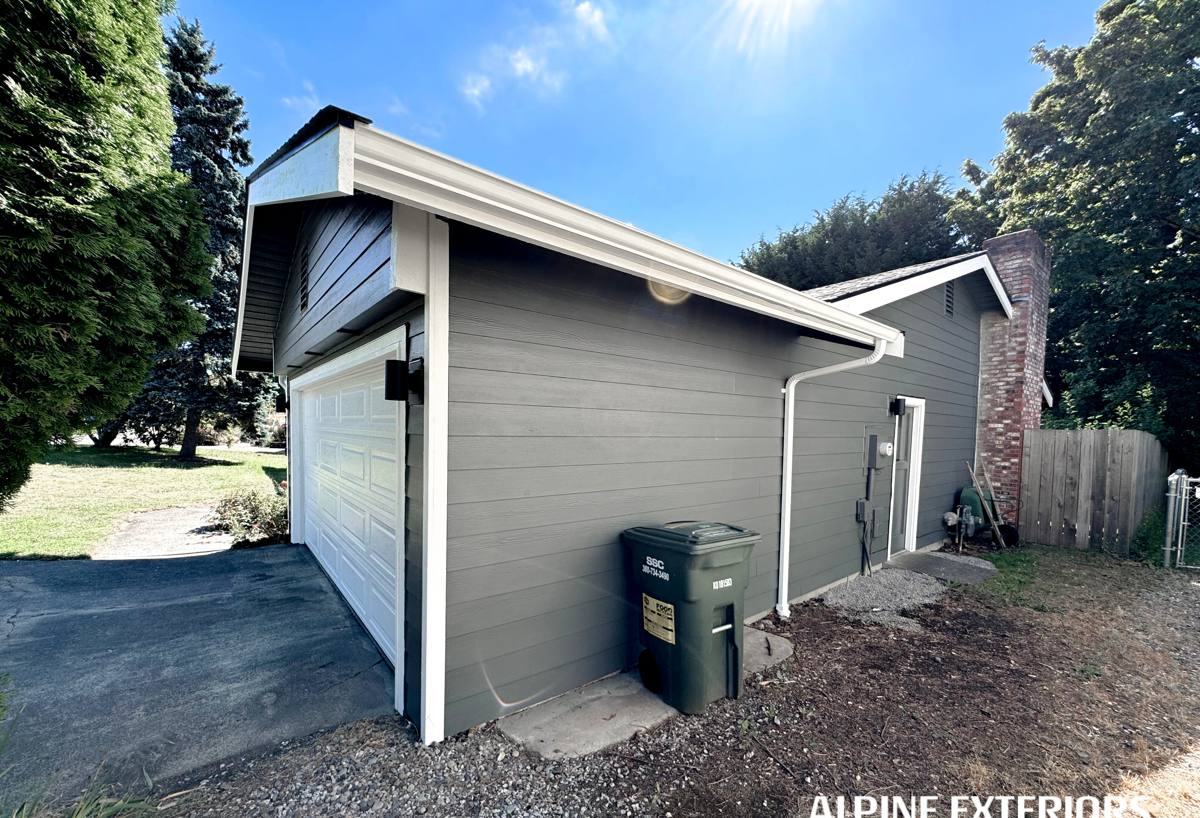
The Real Cost Drivers, In Order
Homeowners usually ask "what does siding cost per square foot," and the honest answer is that square footage is only one variable among several, and often not the biggest one. Here's what actually moves the number on a real project.
1. What's Underneath the Old Siding
This is the single biggest wildcard on almost every replacement job. Once the old siding comes off, we're looking at the sheathing, the house wrap or building paper, and the framing behind it. In a house that's had a slow leak or trapped moisture for years — which happens more often here than in drier climates — there can be rot, soft sheathing, or compromised framing that needs to be addressed before a single new panel goes up. You can't price that from the driveway. It's why a serious estimate involves someone actually getting eyes on the wall, not just measuring the exterior and multiplying.
2. Material Choice
Siding materials span a wide range in upfront cost, and the range exists for real reasons — thickness, manufacturing process, finish quality, and how the product is engineered to handle moisture and temperature swings. We'll get into specific materials below, but the short version is that cheaper materials often mean either more maintenance over the life of the product or a shorter service life, which changes the real cost once you look past year one.
3. House Complexity
A simple rectangular one-story home with few penetrations is a straightforward install. A two-story home with lots of dormers, bump-outs, window trim details, and tight setbacks between houses takes more labor hours per square foot — more cutting, more flashing, more scaffolding or staging. Complexity is often underestimated by homeowners pricing from photos or square footage alone.
4. Tear-Off vs. Overlay
Some contractors will install new siding directly over old siding to save labor cost. We don't recommend this, and it's worth understanding why it matters here specifically: overlaying traps whatever moisture or damage already exists behind the old material, and in a climate where moisture is the primary threat to a wall assembly, that's a bad trade for a lower number on the estimate. A full tear-off costs more upfront but lets you actually see and fix what's underneath.
5. Trim, Flashing, and Water Management Details
The siding panels themselves get most of the attention, but the flashing around windows, doors, and roof lines — along with proper house wrap and weep details — is what actually keeps water out of the wall. Skimping here is invisible on install day and expensive five years later. Any estimate that doesn't itemize this work is leaving out one of the most important parts of the job.
6. Access and Site Conditions
Steep lots, mature landscaping close to the house, second-story work, and limited driveway access for staging materials all add labor time. This is common in Bellingham's older neighborhoods and hillside lots, where houses weren't built with a contractor's staging area in mind.
Cost Factors at a Glance
| Factor | Why It Moves the Price | What to Ask Your Contractor |
|---|---|---|
| Sheathing/framing condition | Rot or moisture damage found during tear-off requires repair before new siding goes on | How do you handle discovered damage, and is it itemized separately? |
| Material selected | Upfront cost, finish quality, and expected service life vary widely by product | What's the expected lifespan and maintenance schedule for this material? |
| Tear-off vs. overlay | Full removal costs more but avoids trapping existing damage or moisture | Is this a full tear-off, and what happens to the old house wrap? |
| House complexity | Dormers, corners, and trim details add labor hours per square foot | Is the quote based on an actual walk-around or a satellite measurement? |
| Flashing and water management | Determines whether the wall assembly actually sheds water long-term | Can you walk me through the flashing details around windows and rooflines? |
| Site access | Staging, scaffolding, and second-story work add time and equipment cost | Does the quote account for site access or is it a flat rate? |
Why Material Choice Matters More Here Than in Most Climates
We install James Hardie fiber cement siding exclusively, and it's worth explaining why in plain terms rather than just stating it as a policy. In a climate with sustained moisture, salt air, and a long moss season, the material's behavior over 15-30 years matters more than its price on day one.
Fiber cement is non-combustible and dimensionally stable — it doesn't expand and contract with humidity the way wood-based products do, which matters when a house sits damp for days at a stretch. James Hardie's ColorPlus factory finish is baked on under controlled conditions, which gives it better adhesion and fade resistance than field-applied paint, and it comes with its own finish warranty separate from the product warranty. The HZ5 product line specifically is engineered for the Pacific Northwest's wet climate zone, which is a meaningful distinction — not all fiber cement is engineered the same way for the same conditions.
We don't install every product on the market, and that's a deliberate standard, not a limitation of what we're capable of doing. Products like primed spruce, cedar, LP SmartSide, and vinyl each have real strengths, but each also has a maintenance burden or moisture vulnerability that we've found doesn't hold up to Whatcom County's specific combination of rain, humidity, and salt exposure as well as fiber cement does. We'd rather explain that trade-off honestly than install something we don't stand behind for the long haul.
What Drives Cost Up — and What Doesn't Have To
Some cost increases are unavoidable and worth paying for. Others are places where a homeowner can make informed choices without compromising the final result.
- Worth paying for: proper tear-off and inspection of sheathing, correct flashing and water management details, factory-finished siding over field-painted, adequate fastener spacing and type for wind exposure.
- Where you have real choices: siding profile and color (cost-neutral in most cases), trim package complexity, whether to replace all elevations at once or phase the project, timing the project for off-peak scheduling.
- Where corners shouldn't be cut: skipping tear-off to save labor, skipping house wrap replacement, using undersized fasteners to save material cost, rushing flashing details around penetrations.
A Practical Checklist Before You Get Quotes
- Walk your own house first and note any soft spots, visible moss growth, staining, or areas where paint or finish has failed.
- Ask whether the quote includes a full tear-off or an overlay, and get that in writing.
- Ask what happens if rot or damage is found once the old siding comes off — how it's priced, not just that it might happen.
- Ask about the specific material line being quoted, not just "fiber cement" or "vinyl" generically — product lines within a brand differ.
- Confirm who is responsible for permits, and whether the contractor is licensed and insured for exterior work in Washington.
- Get the flashing and water management approach described specifically, not just "standard installation."
- Ask about the warranty structure — both the manufacturer's product warranty and the contractor's workmanship warranty.
How Long Should a Siding Job Actually Take
Timeline is driven by the same complexity factors as cost. A straightforward one-story home might be a matter of days once tear-off starts. A larger two-story home with significant trim work, or a project that uncovers sheathing repairs, will run longer. Weather is also a real factor in Bellingham — a wet stretch can pause exterior work, and a contractor who tells you a fixed timeline regardless of forecast isn't being fully straight with you. Build some flexibility into your expectations, especially if you're scheduling around fall or winter, when our wet season is in full swing.
Getting a Number You Can Actually Trust
The estimates that hold up are the ones built from an actual walk-around of the house — checking the condition of existing siding, looking for signs of moisture intrusion, noting trim complexity, and confirming access. Estimates built from a satellite photo or a phone call tend to grow once the crew is actually on-site and finds what's really there. Ask direct questions, expect direct answers, and be wary of a quote that's dramatically lower than everything else you've received — it usually means something is being left out, not that you found a better deal.
If you're weighing a siding replacement and want a clear, honest look at what your specific house needs, we're happy to walk it with you. There's no pressure and no obligation — just a straight assessment and a real number based on what's actually on your walls, not a guess from the street.