 Bellingham Siding
 Exterior Work Built for Cordata's Climate
Cordata sits in north Bellingham, close enough to Puget Sound and the Whatcom County lowlands that homes here deal with the same core problem every exterior surface in this part of Washington faces: persistent moisture. It isn't one dramatic storm that wears down a home's exterior — it's the accumulation of a long, wet fall and winter, a marine layer that keeps humidity elevated even on dry days, and a moss and algae season that can stretch for much of the year on shaded or north-facing walls. Add in the salt-tinged air that drifts inland off the Sound during windier weather, and you have a set of conditions that will find every weak point in a home's siding, trim, roofing, and window seals over time.
None of this means Cordata homes are doomed to constant repair. It means the materials and installation methods matter more here than they would in a drier climate. A siding product or install detail that would be forgivable in eastern Washington can turn into a moisture problem within a few winters on the west side. That's the lens we bring to every job in this neighborhood.
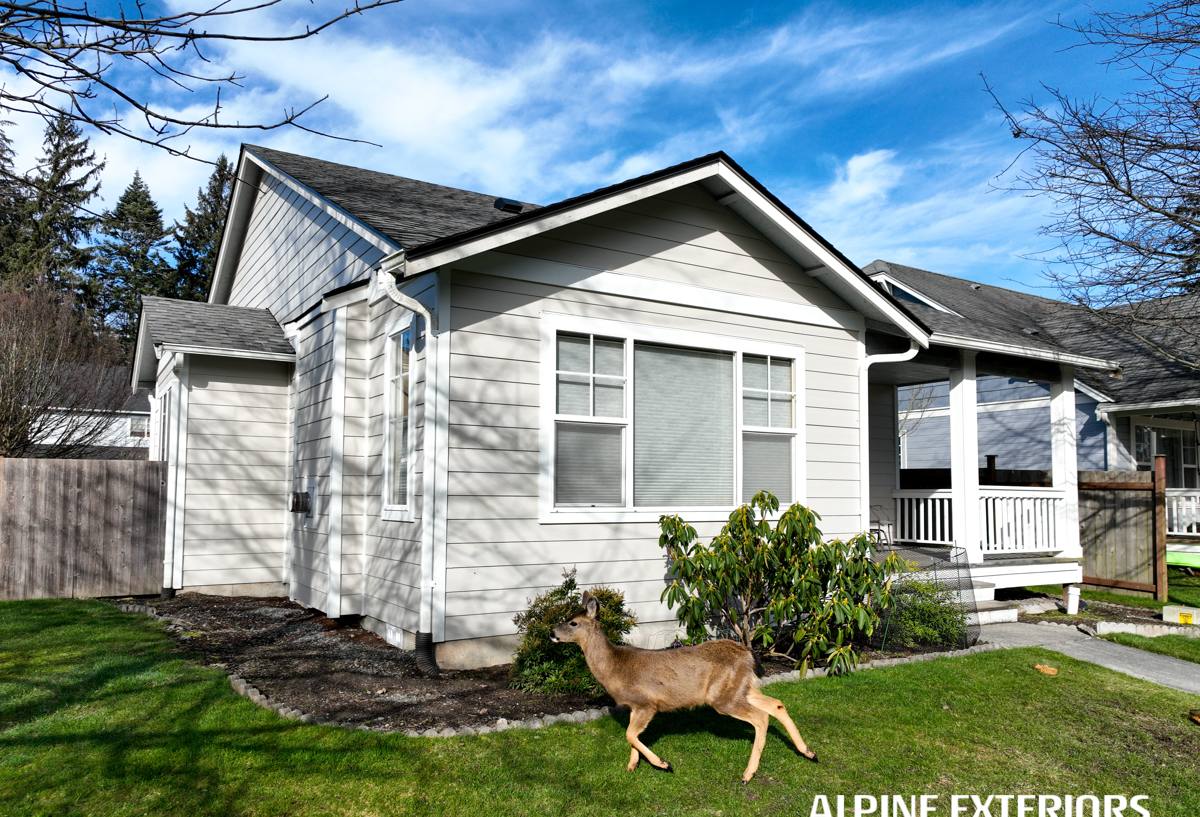
Why We Install Only James Hardie Fiber Cement
We made a deliberate decision to standardize on James Hardie fiber cement siding and not offer alternatives like vinyl, LP SmartSide, Cemplank, Allura, or primed wood species such as spruce or cedar. That's not a marketing angle — it's a professional judgment call based on how these products actually perform once they've spent a few Bellingham winters absorbing rain and staying damp under moss growth.
Vinyl Siding
Vinyl is inexpensive and low-maintenance in the sense that it doesn't need painting, but it's a thin, flexible material that expands and contracts with temperature swings, can crack in impacts, and relies almost entirely on a drainage plane behind it to manage moisture — it doesn't structurally resist water the way fiber cement does. In a climate where walls stay damp for extended stretches, we'd rather put a rigid, moisture-stable product on the house.
LP SmartSide and Engineered Wood
Engineered wood siding has improved over the years, but it's still a wood-based product, and wood-based products are more sensitive to sustained moisture exposure than fiber cement. Edge swelling and the need for diligent caulk and paint maintenance are real concerns in a climate that doesn't give siding much time to dry out between rain events.
Cedar and Primed Wood Siding
Cedar has genuine appeal — it's a beautiful, traditional material — but it's also a maintenance-intensive one. Natural wood siding needs regular refinishing, is a food source for the moss and fungal growth this climate is famous for, and is combustible. Given how much upkeep it demands to look and perform well long-term in a wet climate, we don't recommend it as a primary siding choice.
Why Hardie
James Hardie fiber cement is non-combustible, dimensionally stable, and factory-finished with ColorPlus technology, which bakes the color onto the board under controlled conditions rather than relying on field-applied paint that has to cure properly in cool, damp weather — a real concern for job-site painting in this climate. Hardie's HZ5 product line is engineered for climates like ours, and the transferable warranty backs the product for the long haul. It's the material we're comfortable standing behind on a Cordata roofline that's going to face decades of Pacific Northwest weather.
Getting Rid Of Moss Without Damaging Your Roof
Full Exterior Services for Cordata Homes
Siding is our core specialty, but exterior systems don't work in isolation — siding, roofing, windows, and decks all interact to keep water out of a home, and a weakness in one usually shows up as damage in another.
Siding
James Hardie lap, shingle, and panel siding installed with correct flashing, house-wrap integration, and fastening for our wind and rain exposure. We also handle trim, fascia, and soffit work as part of a full siding job so the whole exterior envelope gets addressed together.
Roofing
A roof that isn't shedding water properly — clogged valleys, failing flashing, moss holding moisture against shingles — sends water down the wall assembly and undermines even good siding. We inspect roofing as part of exterior assessments because the two systems are connected.
Windows
Window flashing and sealant are common failure points in wet climates. Poorly integrated windows are one of the most frequent sources of hidden water intrusion we find behind older siding, which is why window work is done to tie properly into the new siding's water management, not just caulked over.
Decks
Decks in this climate take a similar beating from standing moisture, moss, and UV-then-rain cycling. We build and repair decks with materials and detailing meant to handle wet Whatcom County winters, not just dry-season appearances.
What Correct Installation Actually Involves
Fiber cement siding is only as good as its installation. James Hardie publishes specific installation requirements — fastener placement, clearances from grade and roofing, proper flashing at every penetration and butt joint, and correct caulking practices — and skipping these details is the single biggest reason siding fails early, regardless of brand. In a climate that gives siding very little time to dry, a missed flashing detail or a joint left uncaulked isn't a cosmetic issue; it's a direct path for water into the wall assembly.
Our crews install to manufacturer spec because that's what keeps the product warranty valid and, more importantly, what actually keeps water out of the walls of a Cordata home for the long run.
Comparing Siding Materials for a Wet Climate
| Material | Moisture Behavior | Maintenance | Fire Resistance | Typical Lifespan |
|---|---|---|---|---|
| James Hardie Fiber Cement | Dimensionally stable, engineered for wet climates | Low — factory-cured ColorPlus finish | Non-combustible | Decades with proper install |
| Vinyl | Relies on drainage plane; can trap moisture behind it | Low, but can crack or warp | Combustible, can melt/deform | Variable, shorter in harsh exposure |
| LP SmartSide / Engineered Wood | Wood-based; sensitive to sustained damp exposure | Moderate — caulk and finish upkeep | Combustible | Shorter than fiber cement if maintenance lapses |
| Cedar / Primed Wood | Absorbs moisture, supports moss/fungal growth | High — regular refinishing needed | Combustible | Highly dependent on upkeep |
This is a general comparison based on how these material categories behave, not a claim about every product on the market — but it's the reasoning behind why we standardized on one system instead of offering all of them.
Cost Factors Homeowners Should Understand
Siding cost isn't just the material price per square foot. A few factors that actually move the total for a Cordata project:
- How much of the existing siding, sheathing, or house-wrap needs to be removed and replaced versus reused
- Whether hidden moisture damage is found once old siding comes off — common on homes with a history of wood or vinyl siding in this climate
- The complexity of the home's shape — dormers, multiple gables, and trim detail all add labor
- Whether windows, trim, or roofing need coordinated work during the same project
- Access — steep lots, tight setbacks, or multi-story walls affect scaffolding and labor time
We don't quote broad averages without seeing the home, because the range between a straightforward single-story re-side and a complex, moisture-damaged multi-story home is significant. A written, itemized estimate after an on-site look is the only honest way to price a job.
Signs Your Siding Needs Attention
- Soft or spongy spots when you press on the siding, especially near the bottom courses
- Persistent moss, algae, or dark streaking that keeps returning after cleaning
- Paint that's peeling, bubbling, or failing faster than it should
- Visible gaps, cracking, or warping at butt joints and corners
- Water stains or musty smells on interior walls near exterior siding lines
- Caulking that's cracked, shrunk, or missing at trim and window edges
Any one of these on its own might be minor. Several together, especially on a north- or west-facing wall that stays shaded and damp, usually mean it's worth having someone look at what's happening behind the siding, not just on the surface.
Why a Local Crew Makes a Difference
Exterior work in Whatcom County isn't generic. A crew that installs siding in a dry climate half the year doesn't build the same instincts around flashing details, drying time, and moss-prone shading that a crew working Bellingham roofs and walls year-round does. Local knowledge also matters for practical things like permitting requirements and understanding how a given lot's exposure — wind direction, tree cover, proximity to the Sound — affects what a home actually needs versus what a generic spec sheet says.
We're not traveling in from out of the area to do a job and leave. If something needs a warranty follow-up or a question comes up two winters later, we're still local and still reachable.
Our Process for Cordata Projects
We start with an on-site inspection — looking at the current siding, trim, roofing condition, and any signs of moisture intrusion — before recommending a scope of work. From there we provide a written estimate, walk through the James Hardie product line and color options that fit the home, and schedule the work with a clear timeline. Throughout the job, flashing, house-wrap, and fastening are handled to manufacturer spec, not shortcuts, because that's what actually determines how the siding performs in this climate ten and twenty years out.
If you're weighing a siding, roofing, window, or deck project for a Cordata home, we're happy to take a look and put together a straightforward, no-pressure estimate — just fill out the form below to get started.