 Bellingham Siding
 We Used to Install More Than One Brand of Siding
For years, like most siding contractors in Whatcom County, we quoted whatever a homeowner wanted — vinyl, engineered wood, fiber cement, sometimes cedar. Somewhere along the way we stopped. Not because of a sales pitch from a manufacturer rep, but because we kept getting called back to the same houses for the same reasons: swollen panel edges, cracked caulk joints, faded color, moss creeping up from the bottom courses, trim rotting behind gutters that dumped water where it shouldn't go. Bellingham's climate is not harsh in the way a hurricane coast or a desert is harsh. It's harsh in a slower, quieter way — persistent moisture, salt air off Bellingham Bay and the Strait, and long stretches of the year where siding simply does not get a chance to fully dry out. That combination punishes certain products faster than homeowners expect, and it rewards one product system in particular. That's why James Hardie fiber cement is the only siding we put on homes today.
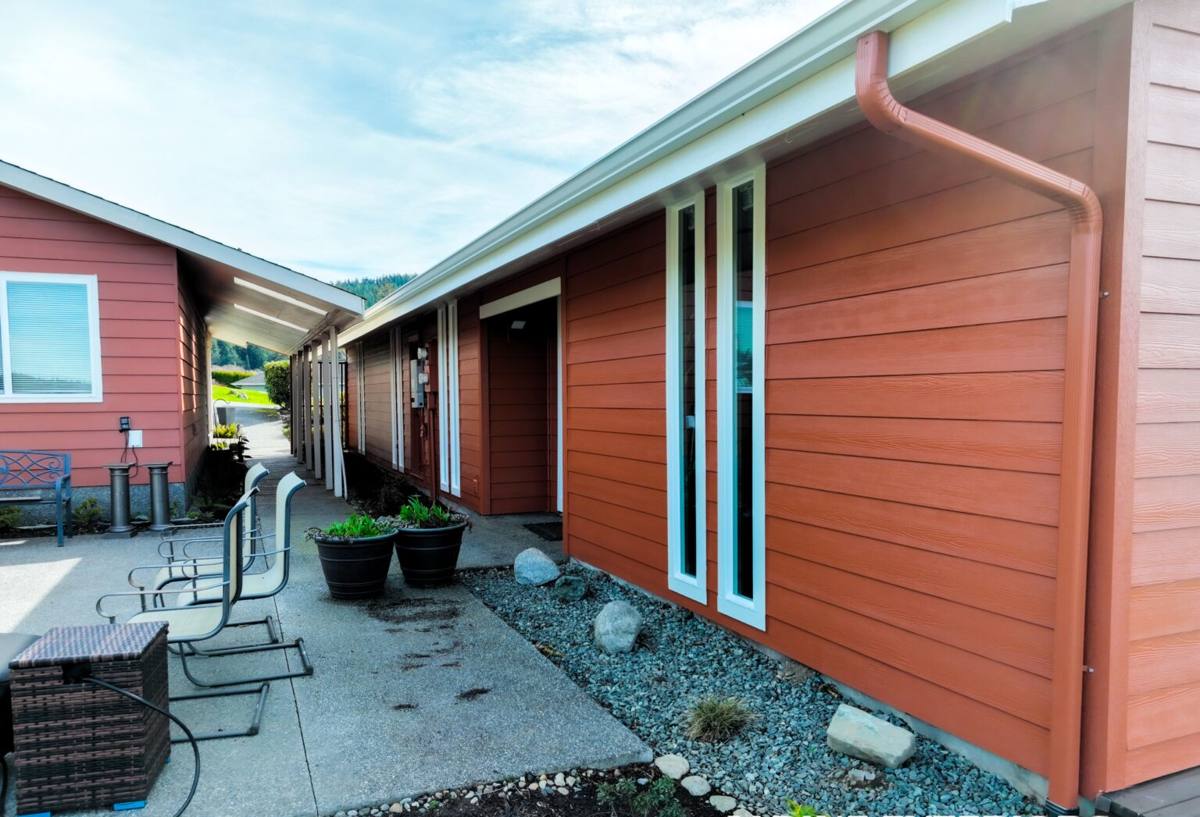
What Bellingham and Whatcom County Actually Do to Siding
Salt Air
Homes near Bellingham Bay, Chuckanut Drive, Lummi Island crossings, and the waterfront neighborhoods deal with airborne salt that accelerates corrosion on fasteners, staples, and exposed metal trim, and that also degrades certain coatings faster than inland exposure would. It's a slow chemical attack that shows up years later as fastener bleed, streaking, and finish failure at seams.
Driving Rain
Storms coming off the Strait of Juan de Fuca and Georgia Strait don't just fall straight down — wind-driven rain gets pushed sideways into wall assemblies, especially on west and southwest-facing elevations. Any siding product that isn't dimensionally stable, or that relies on paint film alone to keep water out, is going to take on moisture at the seams and fastener points over time.
The Moss Season
Whatcom County's damp, mild fall-through-spring stretch is basically one long moss and algae season. Anything organic in a siding product — wood fiber, cellulose, uncoated cut edges — gives moss and mildew something to grab onto and feed on. Once it's established at the bottom courses, under eaves, and in shaded north-facing walls, it holds moisture against the siding and makes the underlying problem worse.
Temperature Swings and UV
We don't get brutal winters here, but we do get repeated freeze-thaw cycling in the shoulder seasons, plus real UV exposure in the summer months. Materials that expand and contract a lot, or that chalk and fade under UV, show it within a handful of years on a Bellingham house.
Why We Stopped Installing the Alternatives
None of the products below are junk. Each one has a legitimate use case somewhere. Our decision isn't about condemning them — it's about what performs best, with the least maintenance, in this specific climate, and what we're willing to warranty our labor against.
Vinyl Siding
Vinyl is affordable and low-maintenance in the sense that it doesn't need painting. But it's a thin plastic product that expands and contracts significantly with temperature, which over time opens gaps at seams and corners — exactly where wind-driven rain wants to get in. It also doesn't hold up well to a hard impact, and on older installs we've seen panels warp or bow on south and west exposures. Color is baked in, but it fades and chalks with UV exposure, and once it fades you can't repaint it without special prep and paint — most homeowners just live with it.
LP SmartSide and Engineered Wood
Engineered wood siding is strand-based wood product with a resin binder and a factory coating. It performs reasonably well when installation details — caulking, flashing, ground clearance, gutter management — are executed perfectly and stay that way for the life of the product. The problem is that it's still wood-based, so if water finds a way in at a cut edge, a fastener, or a failed caulk joint, it swells and deteriorates from the inside, and that damage is often hidden until it's advanced. In a climate with as much sustained moisture exposure as ours, that margin for error is thinner than we're comfortable installing behind our name.
Cemplank and Allura
These are also fiber cement products, and fiber cement as a category is the right call for this region — that part they get right. Where we draw the distinction is factory finish quality, the depth of the color and texture engineering for regional climates, and warranty structure. We standardized on one manufacturer so our crews have deep, repeated experience with one system's fastening patterns, joint treatment, and finish requirements, rather than splitting expertise across several product lines with different specs.
Primed Spruce and Cedar
Real wood siding, whether primed spruce lap or cedar, is beautiful, and there's a reason it's the traditional look in this region. But it is the highest-maintenance option on this list. It needs repainting or restaining on a recurring cycle, it's the most attractive material to moss and mildew of anything we install, and it's the most vulnerable to the rot that comes from Whatcom County's wet months. We'll still repair or maintain existing wood siding for homeowners who want to keep that look, but we don't install it new anymore.
Why James Hardie
It's Non-Combustible
Fiber cement is engineered from cement, sand, and cellulose fiber — there's no organic wood component to rot, and it carries a noncombustible rating, which matters for wildfire-adjacent insurance considerations even in Western Washington.
ColorPlus Factory Finish
Instead of field-painting siding after installation — which is where a lot of quality variance comes from — Hardie's ColorPlus finish is baked on at the factory in multiple coats under controlled conditions. It resists fading and chipping far better than site-applied paint, and touch-up product is available that's formulated to match.
Engineered for Regional Climate
Hardie makes climate-specific product formulations — an HZ5 line engineered for regions with more freeze-thaw cycling, and coastal/moisture-focused engineering for the Pacific Northwest's damp conditions. That's a meaningfully different design philosophy than a one-size-fits-all national product.
Dimensional Stability
Fiber cement doesn't expand and contract with temperature the way vinyl does, and it doesn't absorb and swell the way wood-based products can. That stability is what keeps caulk joints, seams, and paint film intact for the long haul instead of failing in year five or six.
Warranty Backing
Hardie's product warranty is transferable to a subsequent homeowner, which matters for resale — buyers and their inspectors recognize the brand and the warranty documentation. We back our own installation labor separately, but having a manufacturer warranty with real teeth behind the product itself is part of why we're comfortable standing behind these jobs long-term.
Side-by-Side: What Homeowners Are Actually Comparing
| Factor | Vinyl | Engineered Wood | Wood (Cedar/Spruce) | James Hardie Fiber Cement |
|---|---|---|---|---|
| Moisture tolerance | Moderate (seam risk) | Fair (edge/fastener risk) | Poor without upkeep | Strong |
| Maintenance cycle | Low, but can't repaint easily | Recaulk/inspect yearly | Repaint/restain every few years | Low, factory finish |
| Combustibility | Combustible plastic | Combustible (wood-based) | Combustible | Non-combustible |
| Dimensional stability | Expands/contracts noticeably | Can swell if breached | Swells and shrinks with moisture | Very stable |
| Typical lifespan installed to spec | 15-25 years | 20-30 years | Variable, upkeep-dependent | 30+ years |
| Moss/mildew resistance | Good (non-organic) | Fair | Poor | Good |
Ranges above are general industry experience, not guarantees — actual performance always depends on installation quality and ongoing maintenance, not just the product itself.
Installation Is Where Products Actually Fail or Succeed
We want to be honest about something: a huge share of the siding failures we get called to inspect aren't a material defect — they're an installation mistake. Wrong fastener spacing, missing or wrong flashing at windows and penetrations, panels nailed too tight against each other with no expansion gap, siding installed too close to grade or roof lines with no clearance for water to shed. Hardie's own installation manual is specific about these details for a reason, and it's part of why we only install one system — our crews know it cold.
What Correct Hardie Installation Involves
- Proper starter strip and minimum clearance from grade, decks, and roof lines
- Correct fastener type, spacing, and embedment depth per Hardie's published specs
- Weather-resistant barrier and flashing integrated correctly at every window, door, and penetration
- Expansion gaps at butt joints and trim, sealed with a compatible sealant, not caulked tight
- Field-cut edges primed or sealed before installation, not left exposed
- Kick-out flashing at roof-to-wall intersections to direct water away from the siding field
What This Costs Compared to the Alternatives
Fiber cement generally costs more upfront than vinyl and is competitive with or somewhat above engineered wood, depending on the product line and trim package you choose. Real wood is often priced similarly to fiber cement on materials but adds ongoing repainting costs over the years that fiber cement mostly avoids. We won't quote exact numbers here because every home's square footage, trim complexity, story count, and existing wall condition changes the estimate — that's what a walk-through and written quote are for. What we can say is that when you factor in a 25-30 year ownership horizon, factory-finish fiber cement tends to be the lowest total cost of ownership of the group, because you're not repainting, recaulking annually, or replacing swollen sections at year 10.
Questions Worth Asking Any Siding Contractor
- What products do you install, and why did you choose them over the alternatives?
- Will you show me the manufacturer's installation manual for the product you're proposing?
- What's your fastener schedule and flashing detail at windows and roof lines?
- Is your crew factory-trained or certified on this specific product?
- What does your labor warranty cover, separate from the manufacturer's material warranty?
- How will you handle ground clearance and moisture management given my lot's grading?
Our Standard, Plainly Stated
We install James Hardie fiber cement siding, and we don't install vinyl, LP SmartSide, Cemplank, Allura, primed spruce, or cedar as new siding. That's a narrower offering than a lot of contractors give you, and we're upfront about that trade-off. What it buys you is a crew that has installed one system, to one spec, on hundreds of Whatcom County homes, and that knows exactly how it needs to be flashed, fastened, and finished to hold up against salt air, driving rain, and a moss season that doesn't really end. If you're weighing a siding replacement or a new build in Bellingham, we're happy to walk your home, look at your specific exposure and trim details, and put together a straightforward, no-pressure estimate.