 Bellingham Siding
 Why Color Is a Bigger Decision Than It Looks
Picking a siding color feels like the fun part of a project, right up until you realize the color you choose has to survive a Whatcom County winter, a wet spring, and a summer's worth of UV exposure without chalking, fading, or growing a green film. In Bellingham, that's not a hypothetical. Salt-laden air off Bellingham Bay, driving rain that comes in sideways off the Strait, and a moss season that can stretch from October through May all put real stress on exterior paint film. The color you pick, and more importantly how that color is applied to the siding, determines whether your house looks sharp in year twelve or needs a repaint by year five.
James Hardie's answer to this is a factory-applied finish system called ColorPlus Technology. Understanding how it actually works, not just the marketing name, is the difference between picking a color you like in a showroom and picking one that performs on a house two blocks from the water.
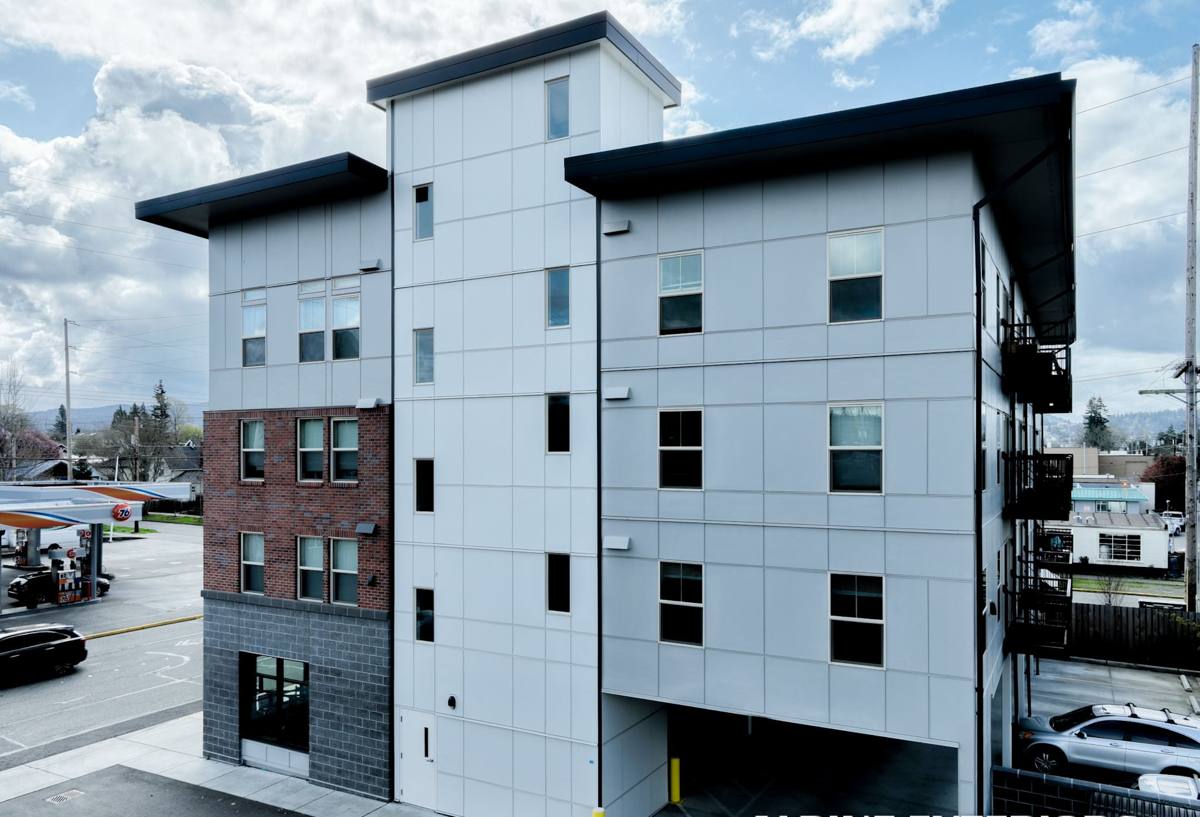
What ColorPlus Technology Actually Is
ColorPlus is not paint applied on a job site with a brush or sprayer. It's a multi-coat color finish baked onto the fiber cement board at the factory, before it ever reaches Bellingham. The process includes multiple coats cured under controlled heat, which produces a harder, more consistent finish than anything achievable outdoors in variable weather with a paint gun.
The practical result: the finish resists fading, chipping, and cracking better than field-applied paint, and James Hardie backs it with a separate finish warranty on top of the product warranty (more on that below). For a homeowner, the appeal isn't the brand name — it's that you get factory quality control on every board instead of relying on weather conditions during installation week.
Why This Matters More Here Than in Drier Climates
Field-applied paint needs the right temperature and humidity window to cure properly. Whatcom County doesn't offer many of those windows outside of a narrow summer stretch. A crew painting siding on-site in October, when a lot of siding work actually happens here, is fighting damp air and short daylight. A factory finish sidesteps that problem entirely because it's cured before it's shipped.
The HZ5 Product Line: Built for This Zone
James Hardie engineers its fiber cement formulations by climate zone, and Bellingham falls into the HZ5 category, the line built for regions with significant moisture exposure and freeze-thaw cycling. HZ5 boards are engineered for better moisture management and impact resistance than the versions sold in dry, hot climates. This matters for color performance too: a board that manages moisture correctly holds its finish better, because trapped moisture behind or within a board is what causes paint film to blister and peel from underneath, regardless of how good the topcoat is.
This is one of the reasons we don't install products outside the Hardie system. A great color finish on a board that isn't matched to the climate just means you get a longer-looking failure instead of a faster one.
The Color Collections
James Hardie organizes ColorPlus colors into a curated palette rather than an unlimited custom-match system, and that's intentional. The colors are selected and tested as a system, which is part of how the company can stand behind fade performance.
- Statement Collection — designed for accents, trim, shutters, and front doors; bolder tones meant to be used selectively
- Dream Collection — a broader palette for main field color, generally more neutral and versatile
- Designer Collection — regionally curated palettes matched to common architectural styles in a given area
For Bellingham specifically, the neutral and muted end of the palette tends to do the most work. Homes here read well in warm grays, deep greens, soft blues, and weathered off-whites — tones that complement the evergreen backdrop and don't fight with the gray-sky light we get for a good chunk of the year. Bright whites and stark colors show dirt, pollen, and the fine mist of moss spores faster than mid-tones do, which is less about aesthetics and more about how often you'll want to clean the siding.
Matching Trim, Fascia, and Soffit
A common mistake is picking a field color and stopping there. Hardie's trim boards (HardieTrim) and soffit products come in coordinating ColorPlus finishes, and getting the sheen and undertone matched across field, trim, and fascia is what makes a house look intentional rather than assembled from parts. This is a spot where an experienced installer matters — matching a factory palette across different board profiles takes some product knowledge.
ColorPlus vs. Field-Applied Paint
| Factor | ColorPlus (Factory Finish) | Field-Applied Paint |
|---|---|---|
| Cure conditions | Controlled factory environment | Dependent on job-site weather |
| Coat consistency | Uniform, multi-coat, baked-on | Varies by applicator and conditions |
| Typical repaint interval | Often 15 years or longer before touch-up | Commonly 5-10 years in wet coastal climates |
| Warranty | Separate finish warranty from manufacturer | Warranty tied to paint brand, not siding |
| Upfront cost | Built into the material cost | Sometimes lower material cost, added labor later |
None of this means field-painted siding is unusable — it's a legitimate option and some homeowners want a fully custom, non-palette color. But in a climate that gives paint film relatively few good curing days a year, factory-applied finish is the more predictable long-term bet, which is a big part of why we standardized on it.
How Bellingham's Climate Actually Tests a Finish
Three specific local conditions are worth naming, because they're the ones that actually separate a good finish from a mediocre one over a decade:
- Salt air near the bay and waterfront neighborhoods accelerates the breakdown of lower-quality coatings and can corrode fasteners if the wrong hardware is used
- Driving, wind-blown rain tests how well a finish sheds water at seams, laps, and butt joints rather than just how it looks on a flat panel
- Extended moss and algae season means any finish with poor mildew resistance will show green streaking well before it structurally fails
ColorPlus finishes are formulated with this kind of exposure in mind, but the finish is only half the equation. The other half is installation: correct flashing, proper caulking at joints, and the right gap and fastener spacing are what keep water from getting behind the board in the first place. A great color on a poorly flashed wall will still fail early — just from moisture intrusion rather than UV fade.
The ColorPlus Warranty, in Plain Terms
James Hardie's ColorPlus finish carries its own warranty, separate from the standard product warranty on the fiber cement board itself. Warranty terms and transferability details change over time and by product line, so we always walk homeowners through the current published terms for their specific product selection rather than quoting numbers from memory. The relevant question to ask any contractor, on any siding job, is whether the warranty covers finish performance (fading, chalking) as well as the substrate, and whether it transfers if you sell the house. A warranty that only covers the board and not the finish isn't covering the thing you're actually looking at every day.
What Correct Installation Involves
Color performance and product warranty both depend on installation matching manufacturer specification. Things worth confirming with any crew working on your home:
- Proper clearance between siding and grade, decks, and roof lines to prevent wicking
- Correct fastener type and placement (over-driven or under-driven nails void warranty coverage and can crack boards)
- Factory-cut or properly sealed field cuts, since an unsealed cut edge is a direct path for moisture into the board
- Correct caulking at butt joints and around penetrations, using a product compatible with ColorPlus finish
- Touch-up paint used only in the exact matching ColorPlus formulation, not a generic hardware-store tint match
That last point trips people up. Because ColorPlus colors are proprietary factory finishes, a hardware store can't mix an exact match. Touch-up kits in the correct formulation are available through the manufacturer's dealer network, which is one more reason to keep records of exactly which color and collection was installed on your home.
Choosing a Color for a Whatcom County Home
Beyond personal taste, a few practical things worth weighing before committing to a color:
- Darker colors absorb more heat and show less dirt streaking from rain runoff, but can show chalking more visibly as they age
- Lighter, cooler-toned colors reflect heat and tend to hide moss spores and pollen slightly better between cleanings
- Homes under heavy tree cover (common on wooded Whatcom County lots) tend to develop surface algae faster regardless of color — a periodic soft wash keeps any finish looking its best
- Check whether your neighborhood or HOA has architectural color guidelines before finalizing a selection
If you're planning a siding project and want to look at actual ColorPlus samples against your home's roofline, trim, and neighborhood, we're happy to walk through the palette in person and give you a straightforward, no-pressure estimate.