 Bellingham Siding
 Silver Beach and the Climate It Sits In
Silver Beach is one of Bellingham's older, more wooded residential pockets, with homes tucked among mature trees and set close to water. That combination — shade, tree canopy, and proximity to a large body of water — creates a microclimate that is tougher on exterior building materials than a lot of homeowners realize. Whatcom County sits in a marine climate zone, and Bellingham as a whole deals with driving rain off the Sound, long stretches of overcast humidity, and a moss season that can run eight or nine months out of the year in shaded areas.
Homes in Silver Beach often get less direct sun and more standing moisture than homes on open, south-facing lots elsewhere in the city. That means siding, trim, and roofing surfaces here dry out more slowly after a storm, and they spend more time sitting damp between one rain event and the next. Over years, that slow-drying cycle is what actually damages a house — not any single storm, but the cumulative effect of materials that never fully get a chance to dry.
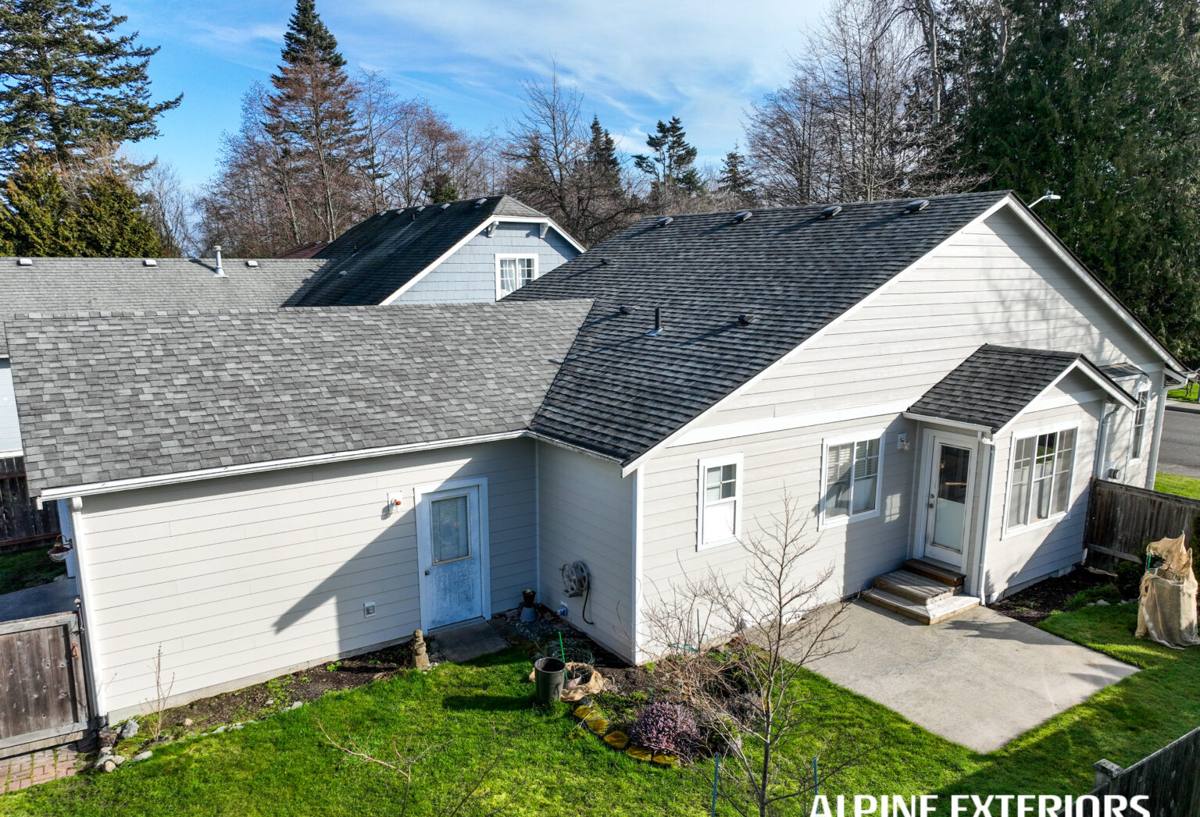
How Moisture Shows Up on Silver Beach Homes
Moss and Algae Growth
Shaded siding and north-facing walls in Silver Beach are prone to moss, algae, and mildew staining. This isn't just cosmetic. Moss holds moisture directly against the siding surface, and on materials that aren't dimensionally stable, that trapped moisture is what leads to swelling, delamination, or rot underneath the surface finish.
Slow-Drying Wall Assemblies
Homes tucked under tree cover get less wind and sun exposure to help walls dry after rain. Older wood-based siding, and even some engineered wood products, are more vulnerable in these conditions because they rely on paint film and caulking to keep water out — and both of those degrade faster in a shaded, humid environment.
Gutter and Drainage Strain
Tree cover means more debris in gutters and downspouts, and clogged drainage sends water where it shouldn't go — behind siding, along fascia boards, and into soffits. A roofing and gutter system that's actually matched to a tree-heavy lot matters as much as the siding itself.
Why Material Choice Matters More Here Than in a Dry Climate
In a drier region, the difference between siding materials shows up mostly in appearance and upfront cost. In a climate like Whatcom County's — and especially in a shaded, moisture-retentive setting like Silver Beach — material choice determines how the house performs for the next 20 to 30 years.
| Material | Moisture Behavior | Moss/Algae Resistance | Maintenance Load | Typical Lifespan (PNW) |
|---|---|---|---|---|
| James Hardie fiber cement | Dimensionally stable, doesn't swell or rot from moisture exposure | Factory finish resists staining better; still needs occasional cleaning | Low — no repainting cycle with ColorPlus finish | 30-50+ years with proper install |
| Vinyl siding | Doesn't absorb water, but panels warp/gap under moisture and temperature cycling | Prone to algae film in shaded areas; hard to fully clean without damage | Low, but limited repair options once cracked or faded | 20-30 years |
| Cedar / wood siding | Absorbs moisture readily; needs consistent sealing to resist rot | High susceptibility to moss and mildew in shade | High — recoating and caulk maintenance every few years | 15-25 years without diligent upkeep |
| LP SmartSide / engineered wood | Wood-strand core is moisture-sensitive at cut edges and seams | Moderate; failure often starts at unsealed edges before surface staining is visible | Moderate — edge sealing and paint maintenance required | 20-30 years, install-dependent |
We install James Hardie fiber cement exclusively. We don't carry vinyl, LP SmartSide, Cemplank, Allura, primed spruce, or cedar. That's not a marketing position — it's a decision built around what actually holds up in Whatcom County's wet, shaded conditions without turning into a repainting or caulk-maintenance project for the homeowner every few years.
What James Hardie Brings to a Shaded, Wet Lot
Hardie's fiber cement is cellulose fiber and cement, not wood fiber or wood strand, so it doesn't swell, delaminate, or rot the way wood-based products can when they stay damp for extended periods. The HZ5 product line is engineered specifically for climates with heavy moisture exposure and freeze-thaw cycling, which fits the Pacific Northwest better than Hardie's HZ10 line built for hot, dry regions.
ColorPlus Factory Finish
The ColorPlus finish is baked on at the factory rather than applied on-site, giving it more consistent coverage and better fade and moisture resistance than field-applied paint. In a climate where siding stays damp longer between dry spells, that finish quality is what keeps color and surface integrity intact for decades instead of years.
Non-Combustible Material
Fiber cement is non-combustible, which matters for insurance considerations and for homeowners thinking about wildfire-adjacent risk in wooded, tree-covered lots like much of Silver Beach.
Warranty Backing
Hardie backs its products with a strong, transferable limited warranty — worth understanding in detail if you're comparing siding options, since warranty structure differs quite a bit between fiber cement, vinyl, and engineered wood manufacturers.
Installation Details That Matter in This Climate
Fiber cement performs exactly as well as it's installed — and in a wet, shaded environment, sloppy installation shows up faster than it would in a dry climate. A few things we pay close attention to on every job, and especially on lots with heavy tree cover or lake proximity:
- Proper rain-screen gap behind the siding so water that gets past the surface can drain and the wall can breathe
- Correct flashing at every window, door, and penetration — the majority of moisture problems trace back to flashing, not the siding material itself
- Manufacturer-specified fastener placement and clearance from grade, decks, and roof lines
- Caulking only where Hardie's specifications call for it, not as a substitute for proper flashing
- Adequate clearance where siding meets roofing, so runoff and debris from tree cover don't sit against the bottom courses
A Full Exterior Approach, Not Just Siding
Siding doesn't work in isolation. On a shaded, tree-heavy property, the roof, gutters, windows, and even decking all interact with the same moisture load. We handle siding, roofing, windows, and decks as a company, which means we look at a Silver Beach home as one connected exterior system rather than treating siding as a standalone product install.
A roof that sheds debris poorly, gutters that overflow onto the wall below, or window flashing that was never properly integrated with the siding plane will undermine even the best fiber cement installation. When we quote a project, we're looking at how those systems meet each other, not just measuring wall square footage.
Signs a Silver Beach Home May Need Attention
- Persistent moss or dark staining on north- or east-facing walls that returns shortly after cleaning
- Soft spots, bubbling paint, or visible swelling at siding seams and butt joints
- Gutters that overflow or drip along the fascia during moderate rain
- Caulk lines that have cracked or pulled away around windows and trim
- Visible gaps or warping in siding panels, especially near ground level or under deck overhangs
Why a Local Crew Matters for This Kind of Lot
Installing fiber cement correctly on a shaded, moisture-heavy lot isn't the same job as installing it on an open, sunny lot across town. A crew that works throughout Whatcom County regularly sees how moss, tree debris, and slow-drying wall assemblies actually behave over multiple seasons — not just how a house looks the day the job wraps up. That local, repeat exposure to Bellingham's specific climate conditions is what informs decisions about flashing details, gap spacing, and where extra attention is worth the time on a given house.
If you're in Silver Beach and dealing with moss buildup, aging siding, or you're just planning ahead for a home that sits in a shadier, wetter spot than most, we're happy to take a look and talk through what makes sense for your specific property. Reach out for a free, no-pressure estimate — there's a form below to get started.