 Bellingham Siding
 Why Silver Beach Windows Wear Out Faster Than Inland Homes
Silver Beach sits close to Bellingham Bay, and that proximity to open water shapes almost everything about how windows age here. Salt-laden marine air settles into window tracks, gaskets, and hardware year-round, accelerating corrosion on hinges, balances, and locking mechanisms long before the glass itself fails. Add Whatcom County's driving rain — wind-driven rather than straight-down — and you get water pressure testing every seam, sill, and joint on the west and south faces of a house in ways that calmer inland neighborhoods simply don't experience.
Then there's moss season, which in this part of Washington runs long. Persistent damp and shade around foundation plantings and roof overhangs keep humidity elevated near window openings for months at a stretch. That moisture doesn't just sit on the outside — it works into old caulk lines, swells wood sashes, and feeds condensation problems on the interior side of poorly performing glass. None of this means Silver Beach homes need exotic solutions. It means the details that get skipped on a quick, cheap window job are exactly the details that fail first in this climate.
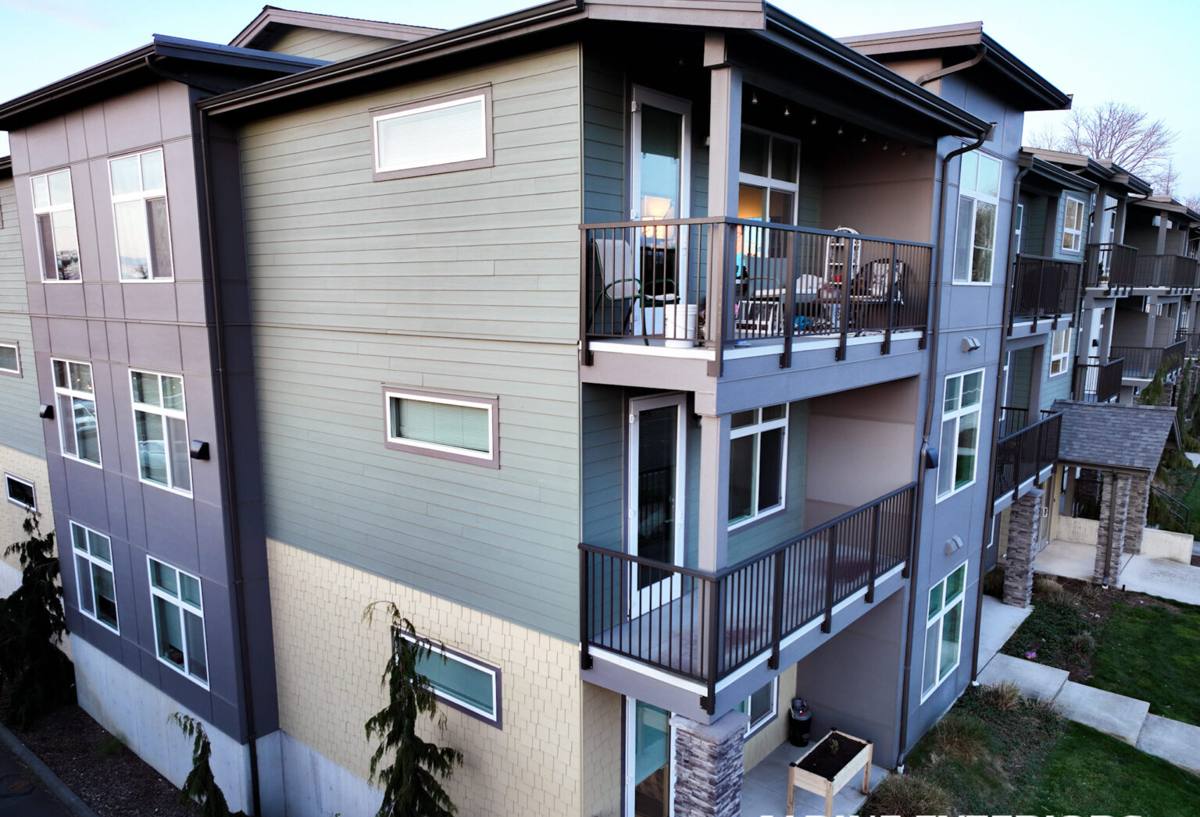
Signs Your Windows Are Losing the Battle
Most homeowners don't replace windows because they woke up and decided to — they replace them because the signs finally added up. In a marine climate like this, watch for:
- Visible fog or moisture trapped between panes on double-glazed units (a failed seal, not a cleaning problem)
- Wood sashes or sills that feel soft, or paint that bubbles and peels every winter in the same spots
- Persistent condensation on the inside of the glass, especially on north- and west-facing rooms
- Drafts you can feel with a hand near the frame, even with the window latched
- Hardware that's corroded, stiff, or won't lock flush anymore
- Visible daylight or gaps between the frame and the siding or trim
- A noticeable jump in heating costs without any other explanation
One or two of these can sometimes be repaired. Several at once, especially on the same wall, usually points to a window that's past the point where patching makes financial sense.
Choosing the Right Window Material for a Bayside Home
Material choice matters more here than in a dry inland climate, because whatever you install is going to face salt air and sustained moisture exposure for decades. There isn't one "best" answer for every home — it depends on your budget, your home's style, and how much upkeep you're willing to do.
| Material | Moisture & Salt-Air Performance | Maintenance | Typical Lifespan |
|---|---|---|---|
| Vinyl | Won't rot or corrode; performs well in marine air | Low — occasional cleaning | 20-30 years |
| Fiberglass | Very stable in moisture and temperature swings; strong seal retention | Low | 30-40+ years |
| Wood-clad | Good if cladding and flashing details are correct; vulnerable where cladding is compromised | Moderate to high — exterior clad, interior wood needs periodic attention | 20-30+ years, install-dependent |
| Aluminum | Prone to condensation and corrosion in salt air unless thermally broken | Moderate | Varies widely |
For most Silver Beach homes, we lean toward vinyl or fiberglass for their consistent performance against salt air and moisture without demanding ongoing maintenance. Wood-clad windows can still be the right call on a home where the look matters and the owner is comfortable with the added upkeep — we just make sure the cladding and flashing are installed in a way that doesn't let moisture get behind the wood in the first place.
What We Steer Clients Away From, and Why
We generally don't recommend bare aluminum frames or low-end vinyl with thin, unreinforced corners for this location. It's not that these products are junk everywhere — it's that in a climate with sustained humidity and salt exposure, thin-walled frames and non-thermally-broken metal show their weaknesses faster than they would somewhere drier. We'd rather steer a homeowner toward a mid-grade product installed correctly than a premium name installed poorly, or a bargain product that fights the climate for the next fifteen years.
Glass Packages That Actually Make Sense Here
Bellingham's climate calls for glass that manages heat loss and condensation, not glass optimized for a hot, dry climate. A double-pane unit with a low-E coating and argon gas fill is the practical baseline for most homes in this area — it balances upfront cost against real energy savings through our long heating season. Triple-pane glass can make sense on north- or west-facing rooms that take the brunt of wind and rain, or for homeowners prioritizing sound dampening and maximum comfort, but it's not a requirement for every window on the house.
What matters just as much as pane count is the spacer system between the panes. A poor-quality spacer is often the first thing to fail in a humid marine climate, letting moisture creep in and fog the glass years before the rest of the window is due for replacement. We pay attention to spacer quality and warranty terms specifically because of how common early seal failure is in this kind of environment.
What a Correct Installation Actually Involves
The window itself is only part of the job. In our experience, most window failures in this climate trace back to installation shortcuts, not the product. A correct install in a wind-driven-rain environment involves a few non-negotiable steps.
Flashing and Weather Barrier Integration
The window opening needs to be flashed so that any water that gets past the exterior cladding is directed back out, not down into the wall cavity. That means proper sill pan flashing, head flashing that overlaps correctly with the water-resistive barrier, and side flashing tied into the existing weather barrier rather than just caulked over it.
Sealing Without Trapping Moisture
Sealant belongs on the exterior face to block wind and rain, but the assembly still needs a way to let any incidental moisture escape rather than get sealed in on all sides. We use sealants rated for the temperature and moisture swings typical of a Pacific Northwest year, applied at the joints that actually see water — not a bead of caulk around the whole perimeter as a catch-all.
Shimming, Leveling, and Fastening
A window that's out of square binds, doesn't latch fully, and stresses the seal over time. Proper shimming at the right points, checked for level and plumb before fastening, keeps the sash operating smoothly and keeps the seal doing its job for the long haul.
Our Process, Start to Finish
We keep the process straightforward because homeowners deserve to know what's happening at each stage:
- On-site assessment — we look at each window's condition, the wall assembly behind it, and any moisture or rot already present before quoting anything.
- Honest recommendation — we tell you which windows genuinely need replacement, which can wait, and which material and glass package fit your home and budget.
- Written estimate — clear pricing, product specifications, and timeline, with no pressure to decide on the spot.
- Removal and inspection — once old windows come out, we check the framing for hidden water damage before anything new goes in, since this is often the only chance to catch a problem early.
- Installation with proper flashing and sealing — following the steps above, not skipping them to save time.
- Final check and cleanup — every window operates, locks, and seals correctly before we consider the job done, and the site is cleaned up when we leave.
Maintenance in a Salt-Air, Long Moss Season Climate
Even a correctly installed window benefits from a little seasonal attention here. Rinsing accumulated salt film off exterior frames and hardware a couple of times a year helps hardware last longer. Keeping gutters and nearby foliage clear reduces the sustained dampness that feeds moss and mildew around window trim during our wetter months. And checking exterior caulk lines annually — especially after a hard winter — catches small gaps before they become water intrusion problems. None of this is labor-intensive, but skipping it in a climate this wet shortens the life of even a good window.
Why Hiring a Crew That Already Works Silver Beach Matters
Window replacement done right depends on understanding the specific conditions a home faces, not just following a generic installation manual. A crew that regularly works waterfront and near-waterfront neighborhoods in Bellingham already knows which flashing details hold up against wind-driven rain off the bay, which sealants perform over a full Whatcom County winter, and how much moss and moisture pressure to expect around a given exposure. That local pattern recognition is hard to substitute for, and it's the difference between a window that performs for thirty years and one that starts showing seal failure or frame corrosion in five.
If you're weighing whether your Silver Beach home's windows need attention, we're happy to take a look and give you a straight answer — no pressure, no inflated urgency, just what we actually see. Reach out for a free estimate using the form below, and we'll walk the property with you.