 Bellingham Siding
 Living Close to the Water in Whatcom County
Homes in the Puget area near Bellingham sit close enough to the water that the climate is a daily factor in how a house ages, not an occasional inconvenience. Salt-laden air off Puget Sound, long stretches of driving rain through fall and winter, and a moss season that can stretch for months all put steady pressure on exterior surfaces. None of this is unusual for Whatcom County — it's simply the tradeoff for living near the water — but it does mean the materials and installation methods that work fine inland don't always hold up the same way here.
We're a local exterior contractor working throughout the Bellingham area, and we've built our entire siding, roofing, window, and deck approach around this specific climate rather than treating every house the same regardless of where it sits.
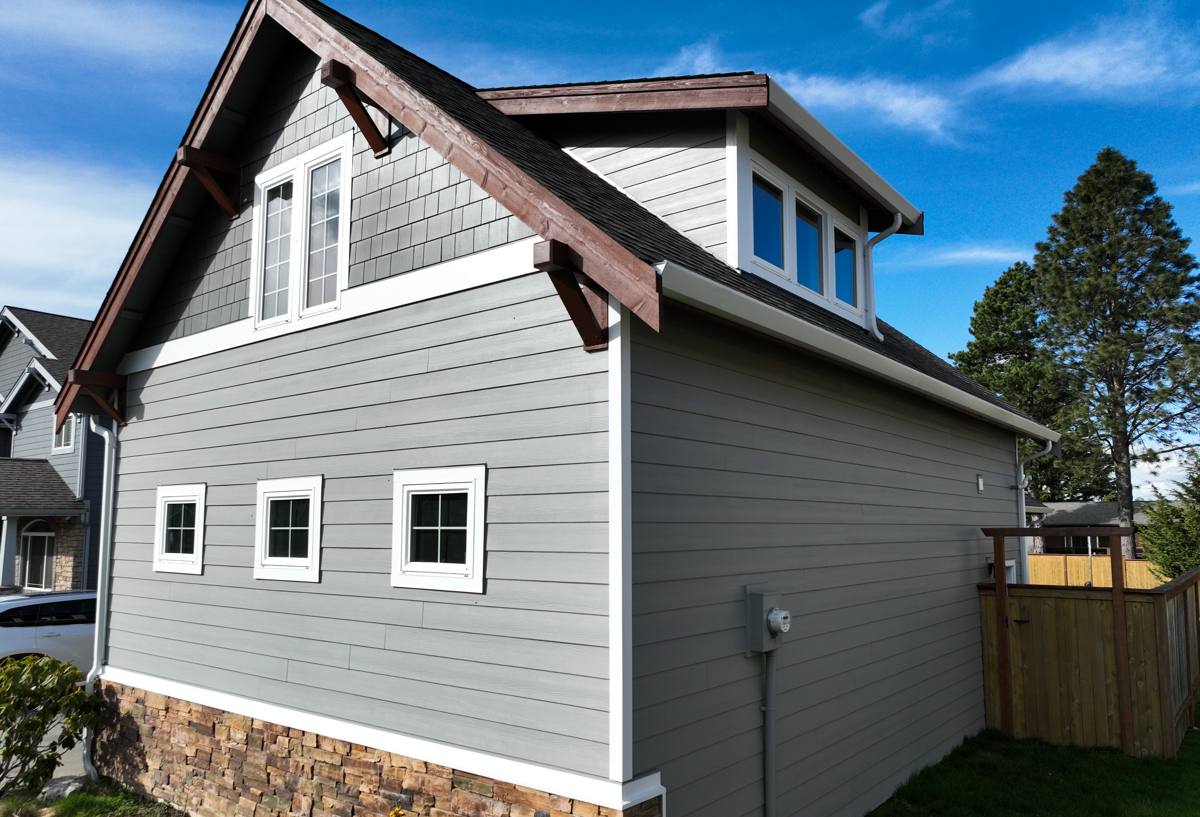
What Puget-Area Homes Actually Face Each Year
Salt Air and Corrosion
Proximity to Puget Sound means airborne salt settles on exterior surfaces, fasteners, and trim more than it does even a few miles inland. Over years, this accelerates corrosion on lower-grade fasteners and metal flashing, and it can degrade certain paint and coating systems faster than the manufacturer's inland test data would suggest. Materials and hardware that aren't rated for coastal exposure tend to show their weaknesses here first.
Driving Rain
Whatcom County doesn't just get a lot of rain — it gets wind-driven rain that hits siding at an angle instead of running straight down the wall. That matters because it pushes moisture into laps, seams, and butt joints that a vertical-rain climate would never test. Any siding system that's marginal on water management will find the gaps here eventually.
Moss and Sustained Dampness
Long, cool, damp stretches create ideal conditions for moss and algae growth on siding, trim, roofing, and shaded decking. Beyond the cosmetic issue, sustained moisture held against a wall or roof surface is what actually causes rot, coating failure, and, in wood-based products, structural softening over time.
Why the Siding Product You Choose Matters More Here Than Elsewhere
In a drier, milder climate, the difference between siding products shows up mostly in appearance and upfront cost. Near Puget Sound, the difference shows up in how the material actually performs against sustained moisture and salt exposure year after year. That's the lens we use when we talk to homeowners about their options — not brand marketing, but how a product behaves in this specific environment.
Vinyl Siding
Vinyl is inexpensive and low-maintenance in the sense that it doesn't need repainting, but it's a thin, flexible material that can warp or become brittle with age and temperature swings, and its seams and J-channels give wind-driven rain more opportunities to work moisture behind the panel. It also doesn't hold up well against impact, and its appearance is difficult to disguise as anything other than vinyl.
LP SmartSide and Engineered Wood
Engineered wood products have improved over the years, but they're still wood-based at the core, which means the cut edges and any breach in the factory coating are vulnerable to moisture intake. In a climate with this much sustained dampness and moss pressure, that vulnerability isn't theoretical — it's exactly the failure mode this climate is built to find.
Cemplank, Allura, and Other Fiber Cement Alternatives
These are legitimate fiber cement competitors to James Hardie, and fiber cement as a category is the right general direction for this climate. Where we've drawn the line is on the specific engineering, factory finish consistency, and warranty backing behind the products we install — which is why we standardized on one manufacturer rather than mixing brands project to project.
Primed Spruce and Cedar
Real wood siding has genuine appeal, and cedar in particular has a long history in the Pacific Northwest. But both require an ongoing maintenance commitment — recoating, caulking, and moisture monitoring — that most homeowners underestimate when they choose it, and that commitment only gets harder to keep up with in a climate this wet.
Why We Install Only James Hardie Fiber Cement
We made a decision as a company to install one siding system: James Hardie fiber cement. That's not a marketing position, it's a practical one built from working on homes throughout this region. Fiber cement itself is non-combustible and dimensionally stable — it doesn't expand and contract with moisture the way wood-based products do, which matters directly in a climate defined by sustained dampness. James Hardie backs its products with engineering specifically built for different regional exposure levels, a factory-applied ColorPlus finish that's baked on rather than field-painted, and a strong transferable warranty that follows the house, not just the original owner.
We're not going to tell you competing fiber cement products are junk — several are reasonable materials. What we will say is that after years of installing exterior products in this climate, James Hardie is the one we're willing to put our name behind, and it's the only siding we install.
James Hardie Product Lines for This Climate
James Hardie engineers its siding in different formulations for different regional climate zones, and the Pacific Northwest falls into a category built around sustained moisture exposure rather than extreme heat or freeze-thaw cycling. In practice, this means the boards, trim, and fastening specifications for a Puget-area home are chosen specifically for a wet, coastal-influenced environment — not a generic national spec.
The ColorPlus factory finish is a meaningful part of this too. Because the color coat is baked onto the board at the factory under controlled conditions, it holds up more consistently against UV and moisture than a field-applied paint job, and it comes with its own finish warranty separate from the base product warranty.
What Correct Installation Actually Involves
Fiber cement siding is only as good as the installation behind it, and this is where a lot of the real performance difference between contractors shows up — not in the product itself. For a home in a driving-rain, salt-air environment, correct installation means:
- Proper water-resistive barrier and flashing details at every window, door, and penetration, sequenced so water is always directed outward and downward
- Correct fastener type and spacing, chosen for coastal corrosion resistance rather than the cheapest compliant option
- Manufacturer-specified clearances between siding and grade, decks, roofing, and other surfaces to prevent wicking and trapped moisture
- Properly caulked and primed cut edges wherever a board is trimmed on site, since an unsealed cut edge is a vulnerability point
- Ventilation behind the cladding where the wall assembly calls for it, so incidental moisture can dry rather than sit against the wall
Skipping or rushing any one of these steps is usually invisible on install day and shows up years later as a callback — which is exactly the kind of problem a driving-rain climate is efficient at exposing.
Roofing, Windows, and Decks — The Whole Exterior Envelope
Siding doesn't work in isolation. Water that gets past a roof edge, an aging window flashing, or a poorly attached deck ledger will eventually find its way into the wall assembly regardless of how good the siding is. We handle roofing, windows, and decks alongside siding for this reason — it lets us treat the exterior as one connected system instead of patching one component while ignoring the others.
Roofing
In a moss-prone climate, roof material choice, ventilation, and periodic moss treatment all affect how long a roof actually lasts versus its rated lifespan.
Windows
Window flashing integration with the siding plane is one of the most common failure points we see on older homes — it's a detail that has to be done correctly at the time of installation, because it's very difficult to fix after the fact without disturbing the surrounding siding.
Decks
Decks near the water take a similar beating from moss, moisture, and salt exposure as siding does, and ledger board attachment and flashing quality matter just as much for keeping water out of the house structure as they do for the deck itself.
Comparing Siding Options for This Climate
| Material | Moisture Behavior in Driving Rain | Maintenance | Typical Lifespan |
|---|---|---|---|
| James Hardie Fiber Cement | Dimensionally stable, engineered for regional exposure | Low — occasional wash | Multiple decades with proper install |
| Vinyl | Seams and channels vulnerable to wind-driven rain | Low, but can warp/crack over time | Variable, shorter in harsh exposure |
| LP SmartSide / Engineered Wood | Cut edges and coating breaches absorb moisture | Moderate — coating upkeep needed | Shorter if moisture management lapses |
| Cedar / Primed Spruce | Absorbs moisture without diligent coating maintenance | High — regular recoating required | Depends heavily on upkeep |
| Other Fiber Cement (Cemplank, Allura) | Generally sound category, varies by product/warranty | Low | Long, product-dependent |
Why a Local Crew Matters for This Kind of Work
A lot of exterior problems in this region aren't caused by bad materials — they're caused by details that were installed correctly for a different climate. A crew that works throughout Bellingham and Whatcom County regularly sees how homes here actually age: which flashing details hold up, which corners get skipped and cause problems five years later, and where moss and moisture consistently cause trouble. That local pattern recognition is hard to replace with a general specification sheet, and it's a big part of why we keep our installation crews working in this same region rather than spreading thin across unfamiliar climates.
It also means we're accountable locally. If something needs adjustment after the job is done, we're not a crew that packed up and left the region.
Maintaining Your Exterior in a Wet, Coastal Climate
- Rinse siding and trim periodically to clear salt residue and organic buildup before it sets in
- Keep gutters and downspouts clear so water is directed away from siding and foundation lines
- Trim back vegetation and tree cover that keeps siding, roofing, or decking shaded and damp longer than necessary
- Watch for moss buildup on roofing and shaded siding areas and address it before it spreads
- Have caulking and trim joints inspected every few years, since these are the first places sealant tends to fail
- Address any small water stains or soft spots immediately rather than waiting for a bigger repair
Getting Started
If you're weighing a siding, roofing, window, or deck project on a home in the Puget area, we're happy to take a look and talk through what your specific house is dealing with — no pressure, no obligation. Use the form below to request a free estimate and we'll go from there.