 Bellingham Siding
 Metal Roofing Built for Sunnyland's Weather
Sunnyland sits close enough to Bellingham Bay that homes here deal with a specific mix of conditions: salt-tinged marine air, long stretches of driving rain off the water, and a moss season that can run nearly nine months out of the year. A roof in this neighborhood isn't just shedding water — it's fighting slow corrosion, constant moisture exposure, and organic growth that never really stops trying to take hold. Metal roofing, installed correctly, handles all three of those better than most alternatives, which is why we install a fair amount of it in this part of Bellingham.
This page is specifically about metal roofing for Sunnyland homes — what the climate demands, what a correct installation actually involves, and how we approach the job when we're working streets we already know.
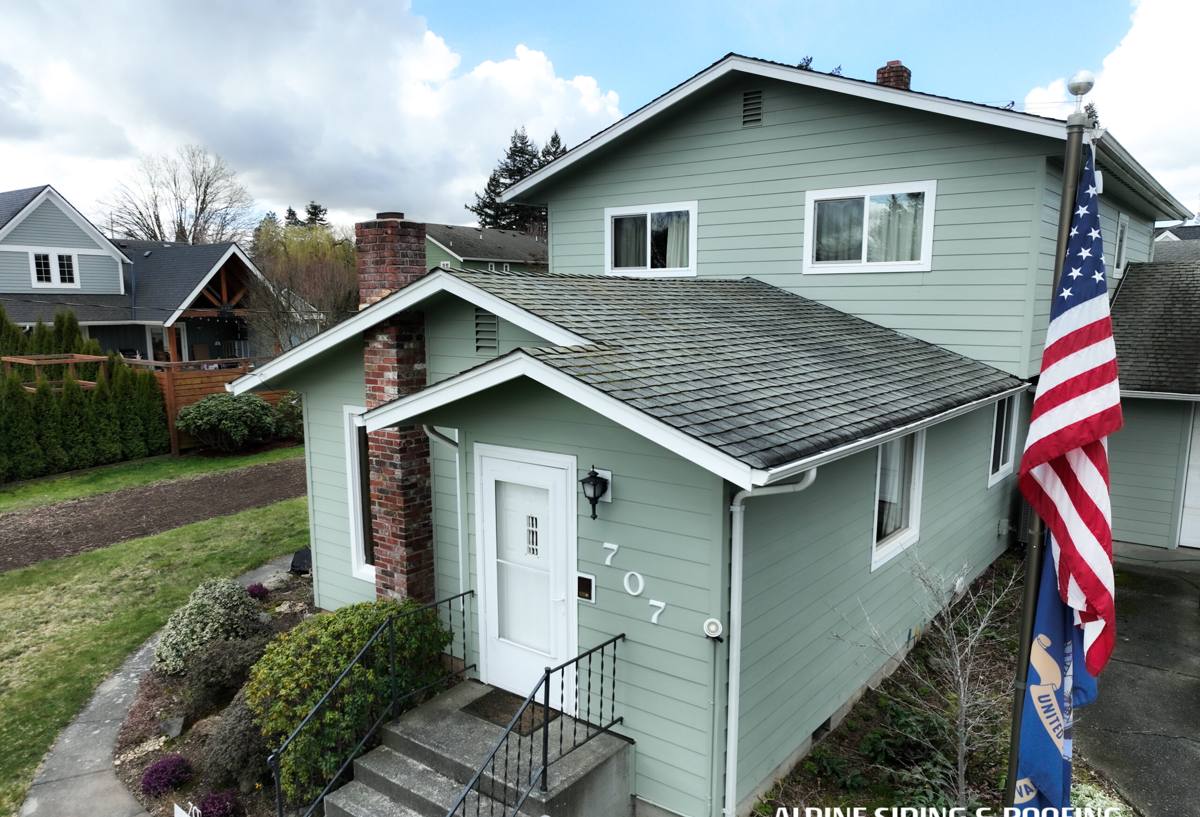
Why Sunnyland's Climate Is Hard on Roofs
Salt Air and Corrosion
Proximity to Bellingham Bay means airborne salt is a real factor here, even a mile or two inland. Salt-laden moisture accelerates corrosion on any metal surface that isn't properly coated or isn't the right alloy to begin with. Fasteners, flashing, and panel edges are usually where corrosion shows up first, which is why material choice and fastener quality matter more here than in a drier, inland Whatcom County location.
Driving Rain
Storms coming off the water don't always fall straight down — wind-driven rain pushes water sideways and upward under laps, around penetrations, and into any gap a rushed installation leaves behind. A metal roof's watertightness depends almost entirely on how the seams, flashing, and underlayment were detailed, not just on the panels themselves.
Moss and Organic Growth
Bellingham's damp, mild climate is close to ideal for moss, and Sunnyland's tree cover in places adds extra shade and debris that keeps roof surfaces wet longer. Moss doesn't just look bad — it holds moisture against the roof surface, and on the wrong material or the wrong installation, that moisture has time to work its way into seams and fastener points.
Why Metal Makes Sense Here
Metal roofing isn't the right fit for every home or every budget, but for Sunnyland's conditions it has real advantages worth weighing honestly:
- Sheds water fast off a steep, continuous surface with far fewer joints than shingle roofing, reducing the number of places wind-driven rain can find a way in
- Smooth, hard surface gives moss and moisture far less to grip compared to textured roofing materials
- Properly coated steel or aluminum resists the corrosive effects of marine air much better than untreated or low-grade materials
- Long service life reduces how often the roof is disturbed for repairs or replacement, which matters on a coastal property where every penetration is a future leak risk
- Handles heavy, wind-driven rain events without the granule loss and edge lifting that can affect other roofing types over time
None of that means metal is maintenance-free. It still needs periodic inspection, gutter and valley clearing, and attention to sealant life at penetrations — just less of it, and with fewer failure points, than most alternatives.
What a Correct Metal Roof Installation Involves
Underlayment and Deck Prep
Everything starts underneath the metal. On a Bellingham roof, we treat underlayment as the real waterproofing layer, not a formality — synthetic or high-temp ice-and-water underlayment at eaves, valleys, and penetrations gives the roof a backup line of defense if wind-driven rain ever gets past the panels themselves. We also check the deck for rot or soft spots before anything goes down, since covering a damaged deck with new metal just hides a problem instead of fixing it.
Fastener and Flashing Choice
In a salt-air environment, fastener material is not a place to cut corners. We use fasteners and flashing rated for coastal exposure, matched to the panel material to avoid galvanic corrosion between dissimilar metals — a detail that's easy to overlook and expensive to fix once it's been leaking quietly for a few years.
Panel Seams and Attachment
How panels are seamed and attached determines how well the roof handles thermal movement and wind uplift. We follow manufacturer spacing and fastening specs closely rather than treating them as suggestions, since a metal roof that's fastened too tight or too loose will show it within a few seasons through oil-canning, loosening, or seam separation.
Valleys, Penetrations, and Transitions
Valleys and roof penetrations (vents, chimneys, skylights) are where most roof leaks actually originate, on metal or any other material. We custom-flash these points rather than relying on generic boots or pre-formed pieces that don't match the roof's actual geometry.
Comparing Roofing Materials for Sunnyland Conditions
| Factor | Metal Roofing | Asphalt Composition Shingle |
|---|---|---|
| Moss resistance | Smooth surface, harder for moss to establish | Textured surface holds moisture and debris, more moss-prone |
| Wind-driven rain performance | Fewer seams, strong shedding on steep pitches | More laps and edges; performance depends heavily on install quality |
| Salt air / corrosion exposure | Depends on coating and fastener quality | Not typically a corrosion concern, but granule and edge wear can accelerate |
| Typical service life | Several decades with proper install and coating | Shorter, with more frequent inspection and repair needs |
| Upfront cost | Higher material and labor cost | Lower upfront cost |
| Noise in heavy rain | Can be noticeable without proper underlayment/decking | Generally quieter by default |
Neither material is universally "better" — it comes down to the home, the budget, and how much the owner values fewer long-term maintenance headaches versus lower upfront cost. We'll walk through that trade-off honestly during an estimate rather than pushing one material because it's what we'd prefer to install.
Cost Factors for Metal Roofing in This Area
Metal roofing costs more upfront than asphalt shingle roofing, and the total depends on several factors specific to the property:
| Factor | Why It Affects Cost |
|---|---|
| Roof pitch and complexity | Steep pitches, multiple valleys, and dormers all add labor time and material waste |
| Panel type and gauge | Heavier gauge and standing-seam profiles cost more than lighter exposed-fastener panels |
| Coating and finish | Coastal-grade coatings that resist salt-air corrosion cost more than standard finishes |
| Tear-off vs. re-roof | Removing old roofing and repairing deck damage adds labor beyond a straightforward install |
| Number of penetrations | Each vent, skylight, or chimney needs custom flashing, which adds time |
We won't quote a number without seeing the roof — anyone who does is guessing. What we can say honestly is that metal is a bigger upfront investment than shingles, and the value comes from fewer replacements and less maintenance over the life of the roof, which matters more in a climate like ours than in drier parts of the state.
Our Process for Sunnyland Roofing Projects
- On-site inspection of the existing roof, deck condition, and any moisture or moss issues already present
- Honest discussion of material options and trade-offs based on your budget, roof design, and how long you plan to stay in the home
- Written estimate covering materials, underlayment, flashing, and any deck repair likely to be needed
- Proper tear-off (when needed), deck inspection and repair, and installation of coastal-grade underlayment
- Panel installation following manufacturer specs for fastening, seaming, and thermal movement allowance
- Custom flashing at every valley, vent, and penetration — not generic off-the-shelf pieces
- Final walkthrough so you understand what was done and what maintenance, if any, to expect going forward
What to Check Before Hiring Anyone for Metal Roofing Here
- Do they have experience specifically with coastal or marine-exposure installations, not just general roofing?
- Will they specify fastener and flashing materials rated for salt-air exposure, or is that left vague?
- Do they inspect and repair the deck before installing, rather than covering existing damage?
- Can they explain their approach to valleys and penetrations in specific terms, not just "we flash everything"?
- Are they licensed and insured to work in Washington, and willing to put warranty terms in writing?
Why Local Experience in Sunnyland Matters
A roofing crew that already works in Bellingham and Whatcom County understands things a crew from outside the region has to learn on your roof: how much moss pressure a shaded lot actually sees, how far wind-driven rain travels off the bay, and which fastener and coating specs hold up here versus somewhere drier. That local knowledge shows up in the details — flashing choices, underlayment selection, maintenance advice — that separate a roof that performs for decades from one that needs attention again in a few years.
If you're weighing metal roofing for a home in Sunnyland, we're glad to take a look and give you a straight, no-pressure estimate — what your roof actually needs, what it will cost, and how we'd approach it. Use the form below to get started.