 Bellingham Siding
 Deck Replacement Built for Fairhaven's Weather
Fairhaven sits close enough to the water that its homes take a different kind of beating than a deck out in a drier part of Whatcom County. Salt-laden air off Bellingham Bay works on fasteners and metal connectors year-round, driving rain gets pushed sideways into ledger boards and stair stringers, and the long stretch of gray, damp months between fall and spring means moss and algae get a real head start on any wood or composite surface that isn't detailing correctly. A deck that was built for a sunnier, drier climate simply doesn't hold up the same way here — and that's the gap we're trying to close with every replacement we do in this neighborhood.
This page is about one job: replacing a tired, aging, or failing deck in Fairhaven with something built to actually handle the conditions it will live in. Not a generic "deck installation" pitch — the specific decisions that matter when the deck is a few blocks from saltwater and under tree cover for half the year.
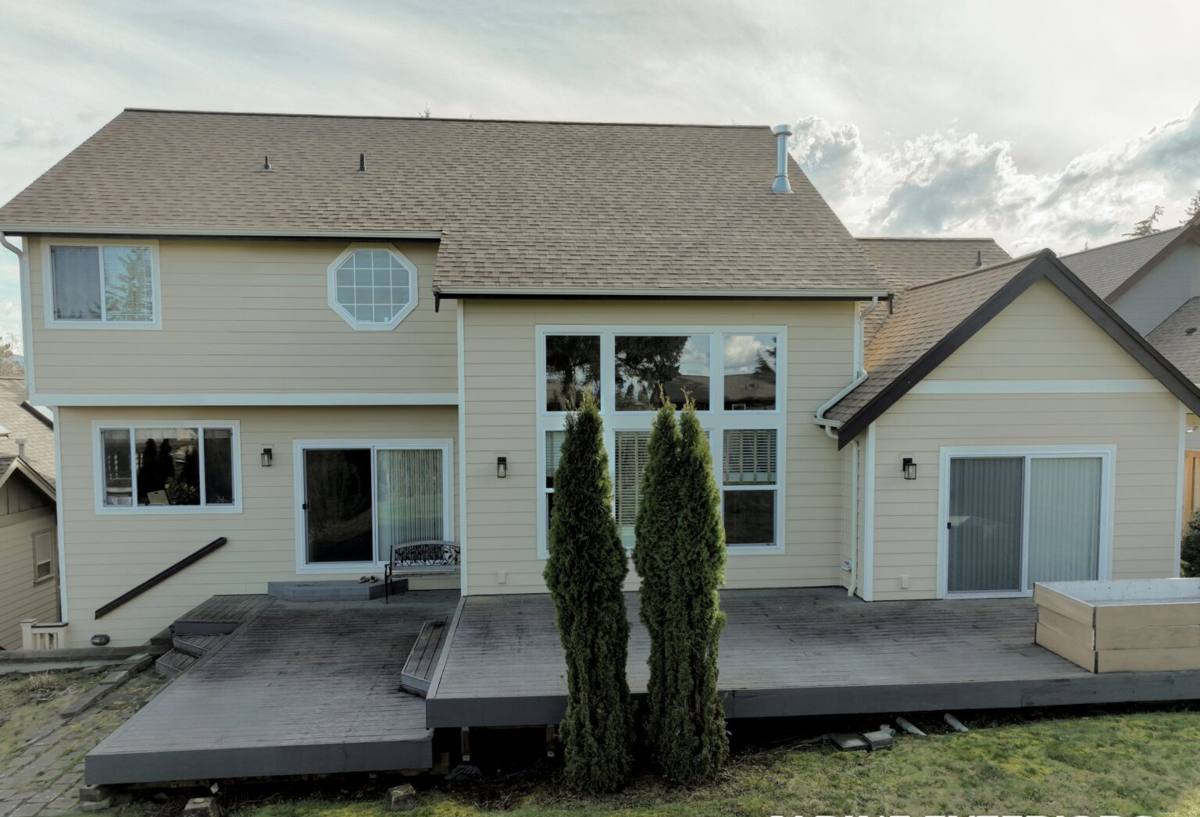
Why Decks Age Faster Near the Water
Homeowners are often surprised at how much faster a deck in a coastal-influenced neighborhood shows wear compared to one further inland. A few things are working against the structure at the same time:
- Salt air acceleration: airborne salt speeds up corrosion on nails, screws, joist hangers, and any exposed metal hardware — even galvanized fasteners have a shorter service life here than the manufacturer's inland rating suggests.
- Driving rain intrusion: wind-driven rain doesn't just fall straight down — it gets pushed under railings, behind ledger flashing, and into end-grain cuts that were never sealed.
- Extended moss and algae season: Bellingham's damp fall-through-spring stretch gives moss and algae months to establish on horizontal surfaces, especially in shaded spots common under mature trees in this area.
- Freeze-thaw cycling: even mild winter freezes can force moisture trapped in wood fibers or beneath poorly ventilated decking to expand and contract, opening up cracks over several seasons.
None of these are dramatic on their own. It's the combination, repeated year after year, that eventually shows up as soft spots, rusted-through hardware, and a deck surface that's slick and green more months than it isn't.
Signs a Fairhaven Deck Needs Full Replacement — Not a Repair
Not every aging deck needs to be torn out completely. But there's a point where patching individual boards or re-sealing the surface stops being worth it, and a full replacement is the honest recommendation. We look for:
- Soft, spongy, or visibly rotted framing members — especially ledger boards, joists, and posts where they meet the ground or a concrete footing
- Rusted, corroded, or failing fasteners and structural connectors (this is common in salt-air exposure even when the wood above looks fine)
- Railing posts that flex or wobble under load — often a sign the post base has been compromised by trapped moisture
- Persistent moss or algae growth that keeps returning within weeks of cleaning, suggesting a drainage or ventilation problem rather than just a surface issue
- Stair stringers that show cracking, splitting, or separation from the treads
- A deck that predates current code requirements for guardrail height, baluster spacing, or ledger attachment
If a deck is showing two or more of these at once, it's usually cheaper over the long run to replace it correctly than to keep chasing individual repairs that don't address the underlying moisture or hardware problem.
What a Correct Deck Replacement Involves Here
Starting Below the Surface
A deck replacement that's actually going to hold up in this climate starts with what you can't see once the decking is down. That means correct ledger board flashing where the deck attaches to the house — this single detail is responsible for more hidden rot damage than almost anything else on a deck, because it's the point where water most consistently finds its way behind the structure if it isn't detailed right. It also means footings sized and set to the depth Whatcom County requires for frost protection, and post bases that keep wood off standing water rather than sitting directly on grade.
Hardware Selection Matters More Here Than Most Places
Given the salt air exposure common to Fairhaven, we don't treat fastener and connector selection as an afterthought. Stainless steel or high-grade coated fasteners cost more up front than standard galvanized hardware, but in a coastal-influenced environment the difference in service life is significant enough that we consider it a professional standard, not an upsell. The same logic applies to joist hangers, post bases, and any structural connector — mismatched or under-rated hardware is one of the most common hidden failure points we find when we open up an older deck.
Framing for Drainage and Airflow
Moss and algae need standing moisture and shade to establish. Framing that allows water to drain and air to move underneath the deck — rather than pooling against joists or trapping moisture between boards — does more to slow that growth than any surface treatment applied after the fact. This is a design decision made during framing, not something that can be fixed later with a cleaner.
Decking Material Options and Trade-Offs
There's no single "best" decking material for every Fairhaven home — the right choice depends on budget, how much upkeep the homeowner wants to take on, and how shaded the site is. Here's how the common options actually compare in this climate:
| Material | Moss/Algae Resistance | Maintenance | Typical Lifespan | Notes for This Climate |
|---|---|---|---|---|
| Pressure-treated wood | Low — needs regular cleaning and sealing | Annual cleaning, periodic sealing | 10–15 years | Lowest upfront cost; requires the most consistent upkeep to hold up against moss and rain exposure |
| Cedar | Moderate — natural oils help but fade over time | Periodic sealing to maintain resistance | 15–20 years | Attractive, naturally moisture-resistant wood, but still needs maintenance as its protective oils weather out |
| Composite decking | Higher — varies by product and capping | Occasional washing, no sealing | 25–30 years | Higher upfront cost but far less ongoing maintenance; quality varies significantly by manufacturer |
| PVC decking | Highest — fully synthetic, non-porous | Minimal washing only | 25–30+ years | Best moisture and moss resistance of the common options; highest material cost |
We'll walk through these options honestly during your estimate, including where a given product's warranty structure and installation requirements matter for a shaded or damp lot.
Our Process, Start to Finish
- On-site assessment: we walk the existing deck, check framing and hardware condition where accessible, and talk through what's driving the replacement — age, damage, code compliance, or just wanting something lower-maintenance.
- Honest scope and estimate: you get a clear breakdown of what's structural, what's material choice, and what's optional — no pressure toward the most expensive option.
- Permitting: most deck replacements in Bellingham require a permit, especially when framing or footings are involved. We handle the paperwork and inspections so you don't have to chase it down.
- Demolition and disposal: the old deck comes out cleanly, with debris hauled away — no leftover materials left on site.
- Framing and structural work: footings, posts, ledger flashing, and joists go in to code, with the hardware and drainage detailing appropriate to this climate.
- Decking, railing, and stairs installed: per the material you've chosen, with attention to fastening patterns and gapping appropriate to that product.
- Final walkthrough: we go over the finished deck with you before calling the job done.
Maintenance That Actually Extends the Life of a Fairhaven Deck
Even a correctly built deck benefits from a little seasonal attention in this climate. A simple checklist we give homeowners after a replacement:
- Sweep leaves and debris off the deck surface regularly in fall — trapped organic matter is what feeds moss growth
- Rinse or lightly scrub horizontal surfaces at least once a year, more often in shaded areas, before moss has a chance to establish
- Check that gaps between boards stay clear of debris so water and air can keep moving underneath
- Inspect railing posts and stair connections annually for any looseness
- For wood decks, plan on resealing on the schedule the product calls for — don't wait until it's visibly gray and dry
- Keep gutters and downspouts near the deck clear so runoff isn't being directed onto or under the structure
Why a Crew That Already Works Fairhaven Matters
Deck framing and material decisions that work fine in a drier, inland part of Whatcom County aren't automatically the right call three blocks from the bay. A crew that already does regular work in Fairhaven has a working sense of which fastener grades hold up, which decking products handle shaded, damp sites well, and where the driving-rain exposure on a given lot tends to be worse than it looks on paper. That's not something you get from a generic estimate — it comes from doing the work in this specific neighborhood, house after house, and seeing what actually lasts.
It also matters for permitting and inspections. Working within Bellingham and Whatcom County's permitting process regularly means fewer surprises and delays compared to a crew encountering local requirements for the first time.
What Affects the Cost of a Deck Replacement
Every deck is different, so we don't publish a flat price — but the main factors that move the number are worth understanding before your estimate:
| Factor | Why It Matters |
|---|---|
| Deck size and shape | Square footage and complexity (multiple levels, angles, built-in seating) drive both material and labor |
| Decking material chosen | Pressure-treated wood, cedar, composite, and PVC all sit at different price points, as shown above |
| Framing condition and code updates | Older decks often need footing, post, or railing upgrades to meet current code, which adds scope |
| Site accessibility | Tight side yards, slopes, or limited equipment access can add labor time |
| Railing and stair design | Custom railings, multiple stair runs, or built-in features add both material and install time |
We'll go through each of these specific to your deck during the estimate, so the number you get reflects your actual project — not a generic average.
If your Fairhaven deck is showing its age, or you just want a straight answer about whether repair or full replacement makes more sense, we're glad to take a look. Fill out the form below for a free, no-pressure estimate — no obligation, just an honest read on where your deck stands.