 Bellingham Siding
 Storm Damage on South Hill: A Different Set of Problems
South Hill sits up on the ridge above downtown Bellingham, which means homes there catch weather that lower, more sheltered parts of the city don't get as hard. Higher elevation means more direct exposure to wind coming off Bellingham Bay and the Salish Sea, and older homes on the hill often have mature tree canopy nearby, which is its own storm liability during a windstorm. When a system rolls through Whatcom County, South Hill roofs tend to take it on the chin first.
That combination of wind exposure, salt-tinged air, and heavy tree cover shapes what "storm damage" actually looks like up here. It's rarely just one dramatic event. More often it's a branch strike that cracks a ridge cap, wind that lifts a section of shingles enough to break the seal without tearing them off outright, or driving rain that finds its way under damaged flashing during a storm and doesn't show up as a stain on the ceiling for another two or three rainy weeks.
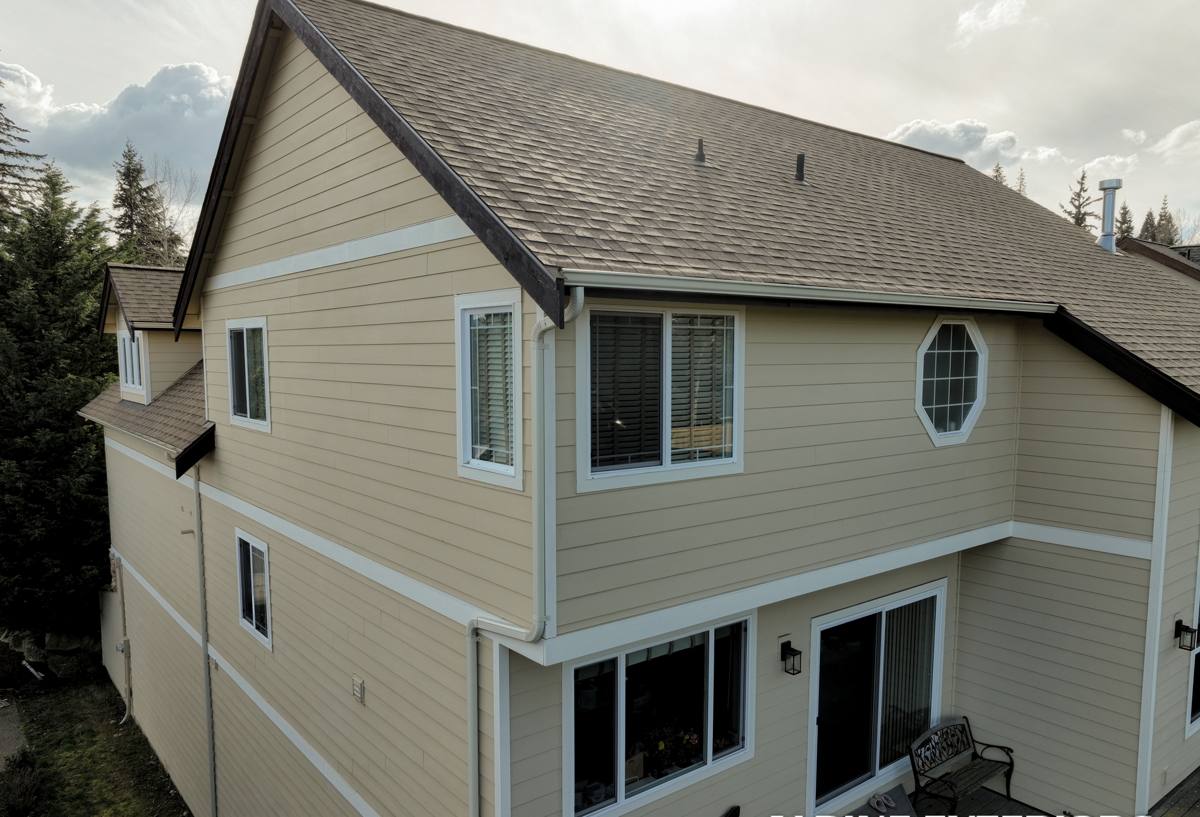
Why Bellingham's Climate Makes This a Recurring Issue
Whatcom County doesn't get the kind of catastrophic hail or tornado damage that drives insurance claims in other parts of the country. What it gets instead is persistent, cumulative wear punctuated by wind events — and that's arguably harder on a roof over time. A few things stack up specifically here:
- Salt air corrosion: Proximity to the bay means metal flashing, fasteners, and vent components corrode faster than they would inland, which shortens the life of the very components that keep a roof watertight after a storm.
- Driving rain: Storms here often bring rain at an angle, not straight down. That matters because wind-driven rain finds gaps that vertical rain never would — lifted shingle tabs, marginal flashing laps, and nail pops all become entry points.
- Moss season: Bellingham's long damp stretch from fall through spring gives moss and moisture months to work into any gap a storm has already opened, turning a small storm-related weak point into a bigger repair if it sits untreated.
The practical result is that storm damage on South Hill is often less visible than homeowners expect. There's rarely a hole you can see from the ground. More often it's a compromised seal or a lifted shingle edge that lets moisture in gradually, which is exactly why a proper post-storm inspection matters more than a quick look from the driveway.
What a Correct Storm Damage Inspection Actually Involves
A rushed inspection misses the damage that actually causes problems. Ours covers the roof system as a whole, not just the obvious spots:
On the Roof Surface
We check for lifted, cracked, or missing shingles or shakes, damaged ridge caps, and granule loss around impact points. Wind damage in particular can leave shingles that look intact from a distance but have broken their adhesive seal — those need to be identified individually, not assumed based on a general impression of the field.
Flashing and Transitions
Chimney flashing, valley flashing, and flashing around vents and skylights are where storm damage most often turns into a leak. These are also the areas salt air and years of Bellingham rain wear down fastest, so a storm can be the thing that finally opens up a flashing joint that was already marginal.
Attic and Interior Check
When it's safe and accessible, we look at the attic side too — water staining, damp insulation, or daylight where there shouldn't be any. This is often where we find evidence of a leak that hasn't reached the ceiling drywall yet, which is the best time to catch it.
Gutters, Downspouts, and Drainage
Storms move debris. A gutter packed with branches or moss after a windstorm can back water up under the roof edge even if the shingles themselves are undamaged, so we check that the water actually has somewhere to go once it leaves the roof.
Our Process, Start to Finish
| Step | What Happens | Why It Matters |
|---|---|---|
| 1. Contact & Scheduling | You describe what happened; we prioritize based on active leaks vs. cosmetic damage | Active water intrusion gets seen first, always |
| 2. On-Site Inspection | Full roof, flashing, attic, and drainage check by someone who works South Hill regularly | Catches damage that isn't visible from the ground |
| 3. Emergency Tarping (if needed) | Temporary protection for exposed areas before the next rain | Stops a small leak from becoming a ceiling repair |
| 4. Written Scope & Estimate | Plain-language explanation of what's damaged and what it takes to fix it correctly | No guessing, no upsell pressure |
| 5. Repair | Matching materials where possible, correct flashing detail, proper fastening for wind exposure | A patch that doesn't hold up to the next storm isn't a repair |
| 6. Final Walkthrough | We show you what was done and why | You should understand your own roof, not just take our word for it |
Repair vs. Replacement: How We Think About It
Storm damage doesn't automatically mean a full roof replacement, and we're not going to tell you it does. Whether a repair makes sense depends on a few honest factors:
- Age of the existing roof: Storm damage on a roof with several years of life left is usually a straightforward repair. Storm damage on a roof already near the end of its service life is often the trigger that makes replacement the more sensible call.
- Extent of the damage: A few shingles and a section of flashing is a repair. Widespread lifting across multiple slopes, especially combined with granule loss and brittle shingles, points toward something bigger.
- Underlying condition: If we open up a damaged section and find the decking or underlayment already compromised by moisture that predates the storm, that changes the scope — and we'll tell you plainly if that's what we find.
- Insurance considerations: We'll document damage clearly enough for you to bring to your insurer, but we're not going to inflate a scope to hit a deductible or claim damage that isn't there.
Materials and Fastening for South Hill's Exposure
Repairs here should account for the wind and salt exposure that caused the damage in the first place, not just restore the roof to its prior condition. That means using fasteners and flashing rated for the corrosion exposure this close to the bay, following manufacturer nailing patterns for wind resistance rather than the minimum, and making sure valley and flashing details are sealed correctly rather than just re-covered. A repair that ignores why the original section failed is likely to fail again in the next storm.
Why Local Experience on South Hill Matters
A crew that only sees a neighborhood once, after a homeowner calls around for the cheapest bid, doesn't know how that neighborhood's roofs actually behave over time. Working South Hill regularly means we already have a sense of which roof ages and original construction details tend to show storm stress first, how tree cover on specific blocks affects debris and moss buildup, and how wind off the bay tends to hit the hill compared to lower parts of Bellingham. That local pattern recognition speeds up diagnosis and helps us tell you honestly whether you're looking at a repair or something more.
It also means accountability. We're not a storm-chasing crew that shows up after a big weather event and is gone by next season — we're based here in Whatcom County, and if a repair doesn't hold up, you know exactly where to find us.
What to Do Right After a Storm
If you suspect storm damage on your South Hill home, a few simple steps protect your roof and your case with insurance, if you end up filing one:
- Photograph any visible damage from the ground — don't get on the roof yourself, especially after wind or rain
- Check your attic and ceilings for new staining, dampness, or daylight
- Clear debris from gutters and downspouts if it's safely reachable
- Note the date and general conditions of the storm for your records
- Call for an inspection before the next rain, not weeks later
The gap between "storm happens" and "roof gets inspected" is where small damage turns into bigger, more expensive damage — especially with Bellingham's rain returning as often as it does.
Get a Straight Answer About Your Roof
If your South Hill home has been through a windstorm or heavy rain and you're not sure whether there's real damage or just cosmetic wear, we'll take a look and give you a straightforward answer — repair, monitor, or replace. There's a form below for a free, no-pressure estimate whenever you're ready.