 Bellingham Siding
 Building a Deck That Actually Holds Up in Birch Bay
Birch Bay sits right on the water, and that changes what a deck has to deal with compared to a deck built a few miles inland in Bellingham or Ferndale. Salt-laden air corrodes hardware faster, wind-driven rain gets pushed sideways into ledger boards and stair stringers, and the shaded, damp stretches of the year give moss and algae a long runway to take hold on decking and framing. A deck built to a generic spec might look fine the first summer and start showing problems by year two or three. A deck built for this specific stretch of Whatcom County coastline is a different job from the ground up — different fasteners, different flashing details, different spacing, and different maintenance expectations.
This page covers what that actually means in practice: what Birch Bay homes need from a deck, what a correctly built one involves, how we approach the work, and why local experience matters more here than it does for a lot of exterior projects.
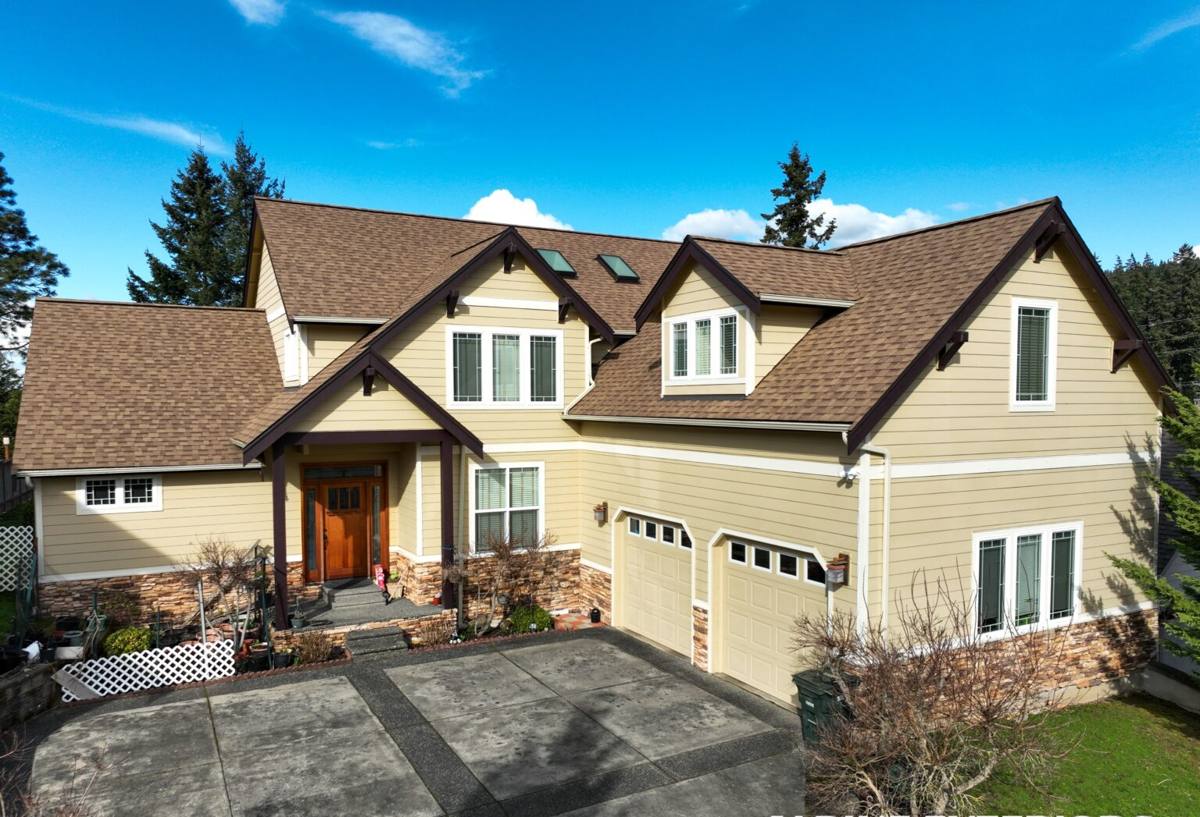
What Birch Bay's Climate Does to a Deck
Salt Air and Corrosion
Proximity to Birch Bay and the Strait of Georgia means airborne salt is a constant, low-level presence on anything metal. Standard zinc-coated fasteners and connectors that would last decades in a drier, inland yard can start showing rust streaks and pitting within a few seasons this close to the water. Once a fastener starts corroding, it weakens, and it also stains the wood or composite around it — that's often the first visible sign a deck is aging faster than it should.
Driving Rain and Wind
Storms coming off the water don't just drop rain straight down — they push it sideways into ledger connections, stair stringers, rail post bases, and any seam where two materials meet. Any gap in flashing or a poorly sealed ledger-to-house connection becomes a slow leak path. Over time that moisture works into framing members that were never designed to handle constant wetting, and that's where you start seeing soft spots and structural issues that are expensive to fix compared to what it would have cost to flash the connection correctly the first time.
Moss, Algae, and the Long Wet Season
Whatcom County's wet season runs long, and shaded or north-facing sections of a deck can stay damp for weeks at a stretch. That's exactly the environment moss and algae need. Beyond looking bad, a mossy deck surface gets genuinely slick and holds moisture against the decking material itself, which accelerates wear on wood and can void warranties on some composite products if left unaddressed.
What a Correctly Built Deck Involves Here
None of this is exotic — it's about not skipping details that matter more here than they would somewhere drier and more sheltered.
Fasteners and Hardware
We use stainless steel or high-grade corrosion-resistant fasteners and structural connectors on Birch Bay decks, not standard galvanized hardware. It costs more up front. It also doesn't rust out and stain your decking, or fail quietly inside a joist hanger where you can't see it.
Ledger Attachment and Flashing
The ledger board — where the deck attaches to the house — is the single most common failure point on decks in wet coastal climates. We flash this connection properly with a continuous flashing detail and a water-resistant barrier behind it, so wind-driven rain can't work its way into the house rim joist or the deck framing over time.
Framing Layout and Spacing
Joist spacing, beam sizing, and post spacing all need to account for the decking material you choose and the loads it'll see, but in a high-moisture environment we also pay attention to airflow underneath the deck. Decks built low to the ground with poor ventilation underneath stay damp longer and age faster — sometimes a slightly higher deck or added ventilation gaps in the skirting makes a real difference over the life of the structure.
Surface Drainage
Decking should be spaced and sloped to shed water rather than pool it. Standing water on a deck surface, even briefly after a storm, is what feeds moss growth and accelerates wear on wood grain or composite caps.
Decking Material Options for a Coastal Property
There's no single "best" decking material for every Birch Bay home — it depends on budget, maintenance appetite, and how much sun or shade the deck gets. Here's how the common options compare in this specific climate.
| Material | How It Handles Salt Air & Moisture | Moss/Algae Resistance | Maintenance |
|---|---|---|---|
| Pressure-treated wood | Good with proper fasteners and sealing; needs re-sealing to stay protected | Moderate — needs regular cleaning | Annual cleaning and re-sealing recommended |
| Cedar | Naturally rot-resistant, but still benefits from sealing near salt air | Moderate — grain can hold moisture if not maintained | Periodic cleaning and oil/sealant refresh |
| Composite decking | Excellent — doesn't absorb moisture or corrode | Good on modern capped products; can still get slick if not cleaned | Low — occasional washing, no sealing |
| PVC decking | Excellent — fully synthetic, unaffected by salt or rot | Good — smooth capped surface sheds algae growth better than wood | Low — washing only |
Wood costs less to install but asks more of the homeowner over time — if you're not going to keep up with annual sealing, a damp coastal lot will find the gaps in that maintenance schedule. Composite and PVC cost more up front but are a better match for a low-maintenance, water-heavy environment like Birch Bay if that fits your budget.
Our Process for a Birch Bay Deck Project
- On-site assessment: We look at sun/shade exposure, existing drainage patterns, proximity to water, and how the deck will attach to your home before recommending a design or material.
- Design and material selection: We walk through decking, railing, and hardware options against your budget and how much maintenance you actually want to do.
- Permitting: Deck projects in Whatcom County and within Bellingham city limits typically require a permit depending on size and height — we handle that process rather than leaving it on you.
- Framing and structural work: Ledger flashing, footings, beams, and joists built to the spacing and hardware standards this climate calls for.
- Decking, railing, and finish work: Surface installation with proper spacing for drainage, railing installed to code, and any finish sealing if wood was selected.
- Final walkthrough: We go over the finished deck with you, including what maintenance it'll need and roughly when.
Maintenance: What Birch Bay Decks Actually Need
A deck built correctly still needs some upkeep in this environment — the goal is to keep that upkeep manageable rather than reactive.
- Rinse or sweep debris and organic buildup off the deck surface regularly, especially in shaded areas, to slow moss and algae growth.
- Inspect fasteners and hardware yearly for early rust staining, particularly near the ledger and stair connections.
- Check that gaps between decking boards stay clear so water can drain instead of pooling.
- Re-seal or re-stain wood decking on the schedule the product calls for — don't wait until it's visibly graying or cupping.
- Keep an eye on the ledger flashing and the area where the deck meets the house siding for any signs of water staining or soft wood.
- Trim back vegetation that shades the deck excessively or holds moisture against the structure.
Why Hiring a Crew That Already Works in Birch Bay Matters
A contractor who mostly builds decks in drier inland areas may not default to stainless hardware, may not think twice about ledger flashing detail, and may not factor in airflow underneath the structure — not because they're careless, but because it simply hasn't bitten them yet. Working regularly in Birch Bay and along the rest of the Whatcom County coastline means we've seen what happens when those details get skipped: the corroded joist hangers, the soft ledger boards, the moss-covered stairs that get slick every winter. Building it right the first time costs less than fixing those problems five years in.
Local experience also means a straighter conversation about your specific lot — how much sun your deck footprint actually gets, whether the site drains well or holds water, and what that means for material choice and structural detail before we ever cut a board.
Common Mistakes We See on Older Coastal Decks
When we get called out to repair or replace a deck in the Birch Bay area, a handful of issues come up repeatedly:
- Standard galvanized fasteners used instead of stainless, leading to rust staining and weakened connections within a few years.
- Ledger boards attached without proper flashing, allowing water to track behind them into the house framing.
- Decking installed too tight, with no drainage gap, so water and debris sit on the surface.
- Low decks with little to no ventilation underneath, trapping moisture against framing year-round.
- No maintenance plan communicated to the homeowner at handoff, so small issues went unnoticed until they became structural.
Most of these are inexpensive to avoid during construction and expensive to fix afterward — which is the whole argument for getting the details right the first time.
Get a Free Estimate for Your Birch Bay Deck
If you're planning a new deck, replacing an aging one, or just want an honest opinion on whether yours is holding up the way it should, we're glad to take a look. Fill out the form below for a free, no-pressure estimate — we'll walk the site, talk through material and design options that make sense for your home's exposure, and give you a straightforward answer on scope and cost.