 Bellingham Siding
 Roofing in Sunnyland: What the Climate Actually Demands
Sunnyland sits close enough to Bellingham Bay that salt-laden air is a constant factor, and it sits under enough mature tree cover that shade, needle drop, and moisture retention are constant factors too. That combination is harder on a roof than either one alone. Salt air accelerates corrosion on exposed metal fasteners and flashing. Shade and organic debris keep shingles damp longer after every rain, which is exactly the environment moss and algae need to take hold. Add in Whatcom County's long wet season and driving rain that comes in sideways off the water during winter storms, and you have a roof that's rarely given a real chance to dry out between October and April.
None of that means asphalt shingles are the wrong choice for this neighborhood — they're still the most practical, cost-effective option for most Sunnyland homes. It means the installation details matter more here than they would in a drier climate, and a roof that was installed correctly for a different environment can still underperform in this one.
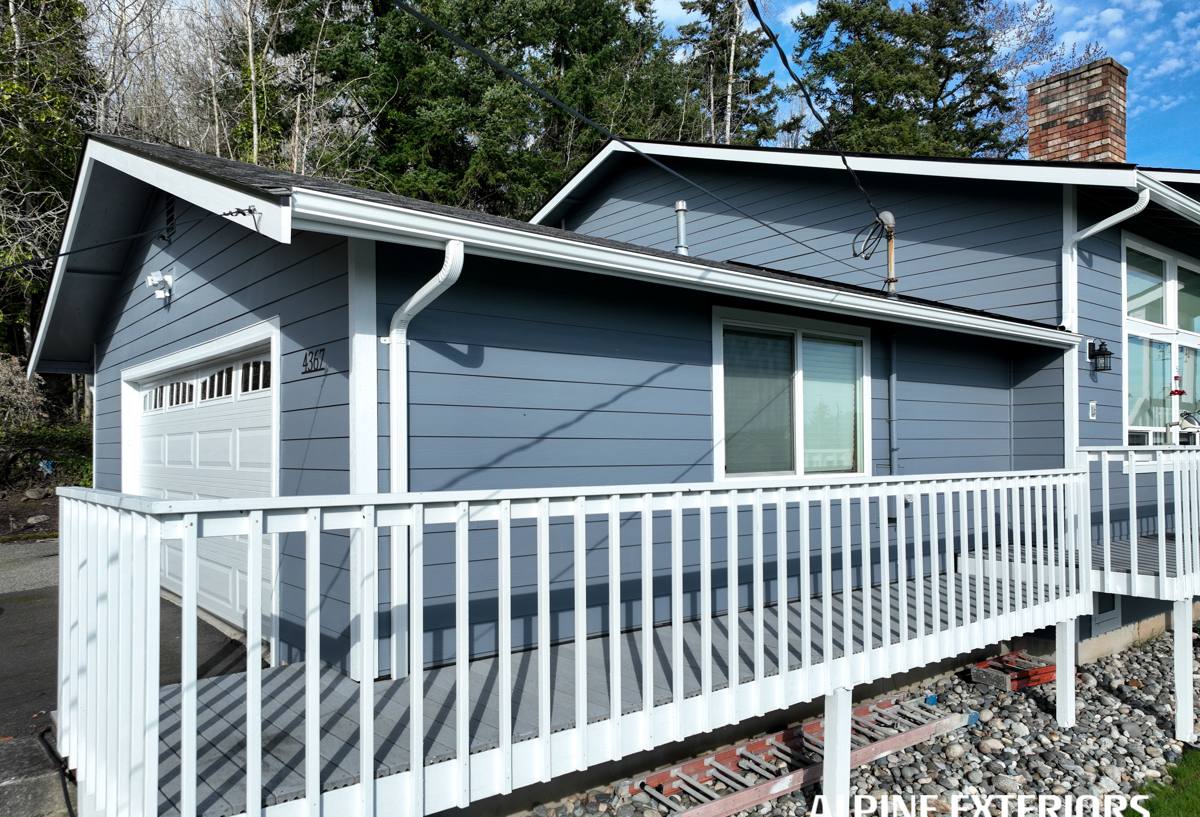
What a Correct Asphalt Shingle Roof Looks Like in This Neighborhood
A shingle roof is a system, not a single product. The shingles themselves get most of the attention, but in a climate like ours, the layers underneath and around them do as much of the real work.
The layers that matter most locally
- Underlayment: A synthetic, water-resistant underlayment (not old-style felt alone) gives you a second line of defense when wind-driven rain gets past the shingle surface, which happens more often here than in calmer inland climates.
- Ice and water shield at vulnerable points: Valleys, eaves, and areas prone to ice damming or standing water get a self-adhering membrane, not just underlayment.
- Flashing: Step flashing at walls, counter-flashing at chimneys, and properly lapped valley flashing keep water from finding its way behind the shingles at every transition point. Corrosion-resistant metal matters more this close to the bay.
- Fasteners: Correct nail placement and count per shingle — not staples, not underdriven or overdriven nails — is one of the most common places corners get cut, and one of the first places a roof fails in high wind.
- Ventilation: Balanced intake and exhaust venting keeps the attic close to outdoor temperature and humidity, which protects the shingles from underneath and prevents moisture buildup in the roof deck.
Any one of these done wrong won't necessarily show up as a leak in year one. It shows up as a leak in year eight, usually right around the time a homeowner assumed they had another decade of life left in the roof.
Moss, Algae, and Salt Air: The Long-Term Enemy
The single biggest quality-of-life issue for shingle roofs in Sunnyland isn't storm damage — it's slow biological growth. Shaded roof sections that stay damp for days after a rain event are where moss gets started, usually along the north-facing slopes and anywhere overhanging branches drop debris into valleys or against ridge caps. Left alone, moss lifts shingle edges, holds moisture against the roof deck, and accelerates granule loss.
Algae staining (the dark streaking you see on older roofs) is a separate but related problem, more cosmetic than structural, but it's also a sign that a roof is staying wet longer than it should. Many shingle lines now include algae-resistant granules, which is worth asking about specifically for homes with heavy shade or roofs facing the water.
What actually reduces moss and algae pressure
- Keeping tree limbs trimmed back from the roofline so sunlight and airflow can reach the surface
- Clearing valleys and gutters of needles and leaf litter before they compact into a moisture-holding mat
- Using algae-resistant shingles on shaded or north-facing sections
- Avoiding pressure washing, which strips protective granules — soft washing or manual removal is the correct approach
Shingle Options for Sunnyland Homes
Most homes in this area are well served by architectural (laminated) shingles rather than older-style 3-tab shingles. The thicker, layered construction holds up better to wind and driving rain, and the added mass helps resist the kind of edge-lifting that starts moss problems. Some homeowners with more wind or debris exposure — larger trees overhead, more open exposure toward the water — look at impact-rated or heavier Class 4 shingles for the added durability, though that's a decision that should be based on the specific property, not a blanket recommendation.
| Shingle Type | Typical Lifespan | Best Fit For |
|---|---|---|
| 3-tab (standard) | 15-20 years | Budget-driven projects, lower wind exposure |
| Architectural / laminated | 25-30 years | Most Sunnyland homes — better wind and moisture resistance |
| Impact-rated / Class 4 | 30+ years | Heavy tree cover, higher wind exposure, homeowners prioritizing longevity |
Warranty structure is worth reading closely rather than assuming. Manufacturer warranties on the shingle material differ from workmanship warranties on the installation, and moisture or ventilation-related failures are sometimes excluded or reduced if the roof wasn't vented to spec — another reason the installation details matter as much as the shingle brand.
Our Installation Process
1. Inspection and roof deck assessment
We start by checking the condition of the existing deck, not just the shingles. Any soft, delaminated, or water-damaged sheathing gets identified and addressed before new roofing goes down — covering a compromised deck just hides the problem.
2. Tear-off and prep
Old material comes off down to the deck so we can verify its condition and install underlayment properly, rather than layering over existing shingles.
3. Underlayment, flashing, and ice/water shield
These go in before a single shingle is laid, at the valleys, eaves, and any wall or chimney transitions, using corrosion-resistant flashing appropriate for a coastal climate.
4. Shingle installation
Correct nail pattern, correct exposure, and attention to manufacturer spec for wind rating — details that directly affect how the roof performs in a winter windstorm.
5. Ventilation check
We confirm intake and exhaust venting are balanced for the attic space, adjusting or adding venting where the existing setup falls short.
6. Cleanup
Full site cleanup, including a magnetic sweep for stray fasteners in the yard and driveway.
Ventilation and Moisture Control
An under-ventilated attic traps warm, moist air against the underside of the roof deck. In our climate, that moisture has nowhere good to go — it condenses, softens the deck over time, and can void portions of a shingle warranty. Balanced ventilation (intake low at the eaves, exhaust high at the ridge) keeps the attic closer to outdoor conditions year-round, which protects both the roof deck and the shingles from the inside out. This is one of the most overlooked parts of a reroof, largely because it's invisible once the job is done — but it's often the difference between a roof that reaches its full rated lifespan and one that doesn't.
Maintenance Checklist for Sunnyland Homeowners
- Clear gutters and valleys of needles and leaf debris at least twice a year, more often under heavy tree cover
- Trim back overhanging branches to reduce shade and debris buildup on the roof surface
- Have moss removed manually or soft-washed — never pressure washed — as soon as it appears
- Check attic ventilation isn't blocked by insulation at the eaves
- Schedule a professional inspection after major windstorms, even if no leak is visible yet
- Watch for granules collecting in gutters, a sign of aging shingles worth having assessed
Why a Crew That Already Works Sunnyland Matters
Roofing specs on paper don't change from neighborhood to neighborhood, but the judgment calls do. Knowing which streets sit under heavy year-round shade, which roofs face direct exposure toward the bay, and how a particular block tends to hold moisture after a storm all come from having done the work here before — not from a general knowledge of Whatcom County's climate. A crew that's already replaced and repaired roofs in this specific area brings that context to every inspection and every install, which shows up in fewer surprises later: the right ventilation call, the right shingle grade for a shaded lot, the right flashing detail at a transition that tends to leak on homes of a certain age in this part of town.
If you're weighing a repair against a full reroof, or just want an honest look at what your current roof has left in it, we're happy to take a look. There's no pressure and no obligation — just a straightforward assessment from a crew that works this neighborhood regularly. Use the form below to request a free estimate.