 Bellingham Siding
 Deck Repair Built for Sudden Valley's Climate
Sudden Valley sits along Lake Whatcom, tucked into trees and hillside that keep the neighborhood shaded, cool, and beautiful most of the year. That same setting is hard on decks. Overhanging trees drop needles and leaves that trap moisture against boards. Lake-effect humidity and Whatcom County's long, wet fall-through-spring stretch keep wood damp for weeks at a time. Add in the driving rain that comes off the water during winter storms, and even a well-built deck starts showing wear faster than homeowners expect. We've worked on decks throughout Sudden Valley long enough to know which spots fail first and why, and we build every repair to hold up against the specific conditions this neighborhood deals with, not a generic weather pattern.
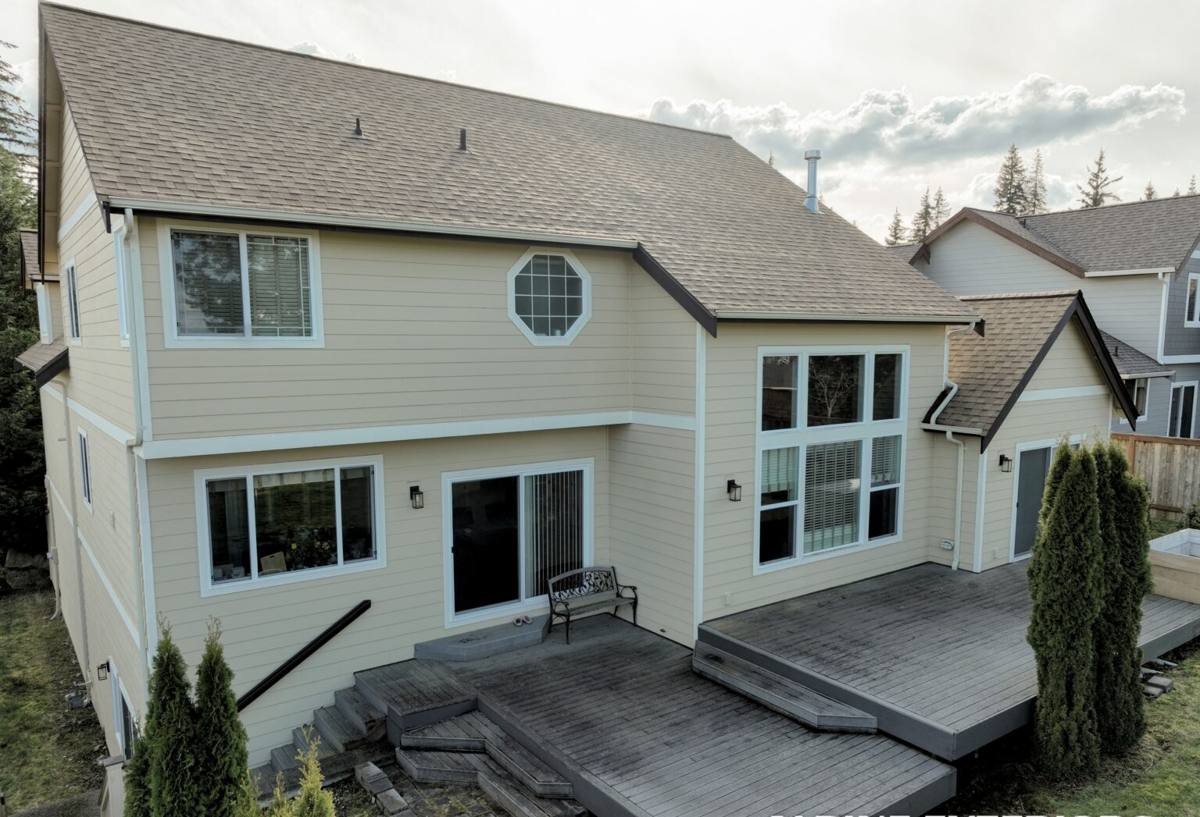
Why Decks in This Area Wear Down Faster
A deck in a dry, sunny climate ages differently than one in Sudden Valley. Here, the damage almost always traces back to moisture that never gets a real chance to dry out.
Moss and Algae Buildup
The tree cover that makes Sudden Valley pleasant to live in also blocks the sun that would otherwise dry a deck surface between rains. Moss and algae take hold on boards that stay shaded and damp, and once established, they hold water directly against the wood grain. Over a season or two, that turns into soft, spongy decking that's slippery underfoot long before it's obviously rotten.
Driving Rain and Wind-Driven Moisture
Storms that move across Lake Whatcom can push rain sideways into a deck rather than straight down. That means water gets forced under railings, into ledger board connections, and behind fascia trim — areas a deck wasn't necessarily designed to shed water from. Repeated wind-driven rain is one of the most common reasons we find rot starting at connection points rather than open deck surfaces.
Salt Air and Metal Fasteners
Bellingham's marine air carries salt further inland than people expect, and Sudden Valley isn't immune to it. Salt-laden moisture accelerates corrosion on screws, joist hangers, and structural brackets — especially older fasteners that weren't rated for coastal exposure. Corroded hardware is a structural issue, not a cosmetic one, and it's one of the first things we check on any repair call.
Freeze-Thaw Cycling
Whatcom County doesn't get extreme cold, but it gets enough freeze-thaw cycling each winter to matter. Water that's already worked its way into a crack or a soft spot expands when it freezes, widening the damage. A small crack in October can be a real structural gap by March if it isn't caught first.
Warning Signs Worth Calling About
Most deck failures don't happen suddenly — they build for a season or two while the signs are easy to write off as cosmetic. Catching these early is what keeps a repair a repair instead of a full rebuild.
- Boards that feel spongy, bouncy, or soft when you walk across them
- Green or black staining that keeps coming back after cleaning
- Railings or posts that wiggle or feel less solid than they used to
- Gaps opening up where the deck meets the house (ledger board area)
- Rust streaks running down from screws, bolts, or metal brackets
- Stair stringers that flex or creak under normal weight
- Standing water that takes more than a day to fully dry after rain
- Wood that's noticeably darker or discolored compared to surrounding boards
If you're seeing two or more of these, it's worth having someone look underneath the deck, not just at the surface. Surface staining is often the least of the problem — what's happening at the ledger board, joists, and posts underneath tells the real story.
What a Correct Deck Repair Actually Involves
A lot of deck "repairs" amount to swapping a few visibly rotten boards and calling it done. That approach misses the point in a climate like ours, where the moisture that damaged the original boards is still getting into the structure the same way it always did. Our process starts underneath the deck, not on top of it.
1. Structural Inspection First
Before we touch a single board, we get underneath and check the ledger board attachment, joists, beams, and posts. This is where structural failures actually start, and it's the part most people never see. We're checking for soft spots, rusted hardware, undersized or missing flashing, and any signs that water has been tracking somewhere it shouldn't.
2. Identify the Moisture Path
Every rot problem has a source. Sometimes it's a missing or failed ledger flashing letting water behind the house siding. Sometimes it's a low spot in the decking that never drains. Sometimes it's simply too much shade and tree debris holding moisture against the wood. We identify the actual path before repairing anything, because replacing boards without fixing the moisture source just buys you a year or two before the same spot fails again.
3. Remove Only What's Actually Damaged
We don't upsell full rebuilds when a targeted repair will hold. At the same time, we don't patch around a compromised joist just because it's less visible than the decking above it. Every board and structural member gets tested, not assumed.
4. Rebuild with Climate-Appropriate Materials and Hardware
Replacement lumber, fasteners, and connectors get matched to what the exposure actually calls for — stainless or coated hardware where corrosion risk is higher, proper flashing at ledger connections, and spacing that allows airflow underneath instead of trapping moisture against the new wood.
5. Address Drainage and Airflow
A repair that ignores drainage is a repair that fails again. Where we can, we improve board spacing, clear debris paths, and correct grading or flashing details that were contributing to the original damage.
Repair vs. Rebuild: How We Make the Call
Homeowners often ask whether it's worth repairing an older deck or better to replace it outright. The honest answer depends on where the damage is, not how old the deck is.
| Factor | Usually Repairable | Usually Needs Rebuild |
|---|---|---|
| Decking boards | Isolated soft or discolored boards | Widespread rot across most of the surface |
| Railings | Loose posts, worn balusters | Posts rotted at the base or pulling from framing |
| Ledger board | Minor flashing gap, caught early | Rot at the house connection point |
| Joists/beams | One or two isolated soft spots | Multiple members compromised or undersized |
| Footings/posts | Stable, just need hardware upgrades | Settling, cracking, or heaving |
| Overall age | Sound structure, cosmetic wear | Structure built to outdated code or span standards |
The ledger board and the framing underneath are the two areas that most often decide the answer. If those are sound, a repair almost always makes sense financially. If the ledger connection or main structural members are compromised, patching around them usually costs more over time than doing it right once.
Why Local Experience with Sudden Valley Homes Matters
A deck repair crew that mostly works drier inland areas of Whatcom County will approach a Sudden Valley deck differently than one that knows this specific neighborhood. Homes here tend to have more tree cover, more shaded north- and east-facing decks, and more exposure to the wind patterns that come off Lake Whatcom. That changes where we expect to find damage and what we build back in to prevent it from returning.
We also know that access matters here — some Sudden Valley properties have sloped lots, limited driveway space, or decks built into hillsides, which affects how a crew stages material and equipment. Planning for that ahead of time keeps a repair job efficient instead of turning into a longer, messier project than it needs to be.
Maintenance That Extends the Life of a Repair
A good repair only stays good if it's maintained with the local climate in mind. A few habits go a long way in a neighborhood like this:
- Clear leaves, needles, and debris from between boards each fall, before the wet season sets in
- Rinse off moss and algae growth before it gets a chance to establish itself
- Check and re-tighten railing hardware once a year, especially after winter storms
- Keep gutters and downspouts near the deck clear so runoff isn't draining onto it
- Trim back overhanging branches where possible to let more light and air reach the surface
- Reapply sealant or stain on schedule — UV and moisture both break it down faster under tree cover
What to Expect From Our Repair Process
We keep the process straightforward, from the first look to the final walkthrough.
- On-site assessment. We inspect the deck top to bottom, including underneath, and explain what we find in plain terms.
- Written estimate. You get a clear scope of work and price before anything starts — no surprise add-ons partway through.
- Repair work. We remove and replace only what's compromised, correct the underlying moisture issue, and use hardware and materials suited to this climate.
- Final check. We walk the deck with you when it's done, point out what was fixed, and flag anything worth watching going forward.
Most Sudden Valley deck repairs are completed in a matter of days, though timelines shift depending on how much structural work is needed and, as always in this part of Washington, what the weather is doing that week.
Get an Honest Look at Your Deck
If your deck is showing soft spots, moss buildup, wobbly railings, or signs of rot near the house connection, it's worth having it looked at before another wet season passes. We offer free, no-pressure estimates for Sudden Valley homeowners — fill out the form below and we'll take a look and give you a straight answer on what it needs.