 Bellingham Siding
 Decks Built for Sudden Valley's Particular Climate
Sudden Valley sits back from Bellingham Bay along the south shore of Lake Whatcom, which changes what a deck has to deal with compared to a flat, open lot closer to downtown. Homes here tend to sit under mature fir and cedar canopy, on sloped ground, with the lake adding its own humidity to whatever the sky is already delivering. That combination — shade, slope, and moisture that lingers instead of drying out — is the real design problem for any deck project in this neighborhood.
Whatcom County as a whole gets a long, wet fall-through-spring stretch, and wind off Bellingham Bay carries salt-tinged, moisture-heavy air well inland, especially during winter storms. Sudden Valley isn't waterfront on the salt water, so it doesn't take the same direct spray a bluff-front home in Bellingham does, but that damp, salt-laden air still reaches this far up the county and adds to the corrosion load on fasteners and hardware over time. Add the shade from the trees, and you get a much longer moss season than an open, sun-exposed yard would see. A deck built without accounting for that will show algae staining, soft spots, and hardware corrosion years before it should.
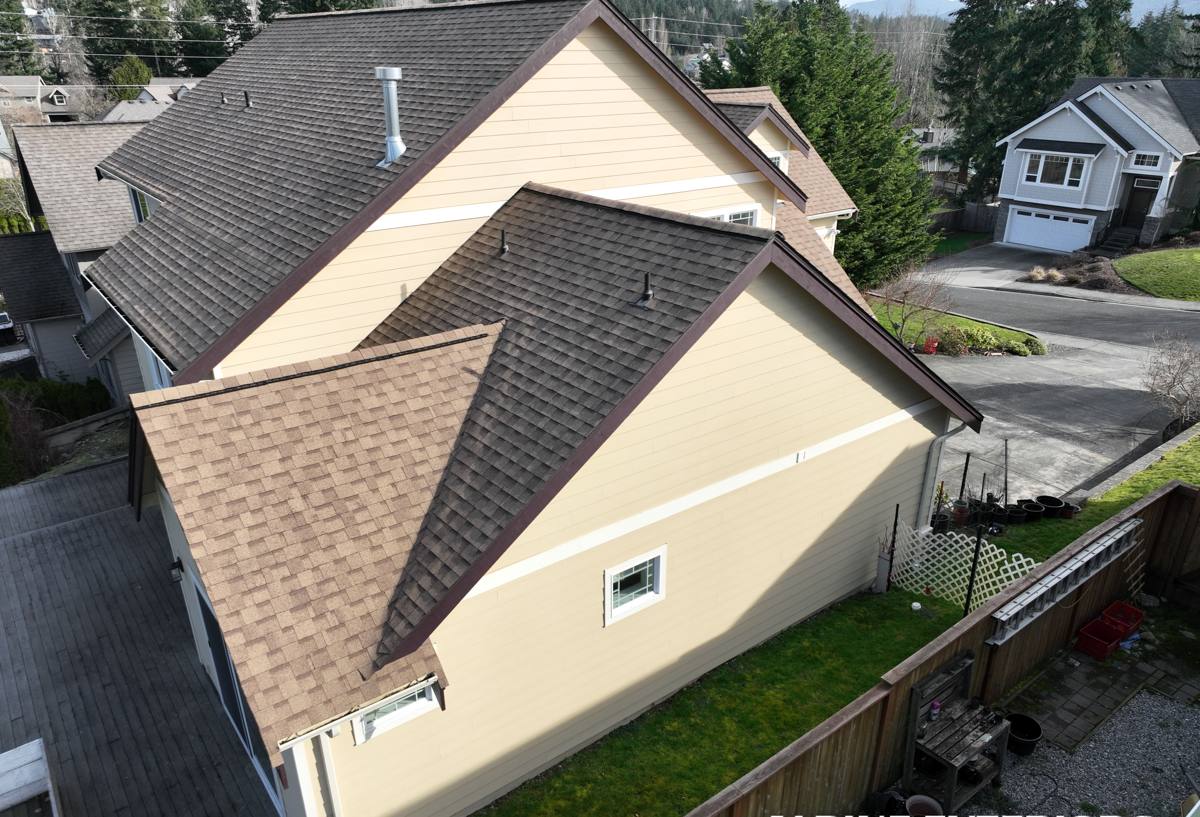
What's Different About Building in Sudden Valley Specifically
Sloped and Wooded Lots
A lot of Sudden Valley properties are built into a hillside rather than on flat ground, which means deck framing often has to deal with uneven grade, taller or uneven footings, and sometimes limited equipment access through narrow driveways or wooded side yards. That's a different job than framing a deck on a flat suburban lot, and it changes how footings, beams, and stair runs get planned.
Shade and Slow Drying
Tree cover keeps yards cooler in summer, which residents generally like, but it also means decking, joists, and ledger boards stay damp longer after rain. Wood and composite products both perform differently under prolonged shade than they do in full sun — something worth discussing before picking a material.
Lake Humidity
Proximity to Lake Whatcom adds ambient moisture beyond what rainfall alone would produce. It's a minor factor on its own, but combined with shade and slope, it pushes us toward more conservative choices on flashing, gap spacing, and fastener grade than we'd use on a dry, open, in-town lot.
Choosing a Decking Material for This Environment
There's no single "best" decking material — the right choice depends on how much upkeep a homeowner wants to do and how much shade and moisture the specific site gets. Here's how the common options actually perform under Sudden Valley conditions:
| Material | How it handles shade & moisture | Maintenance | Typical lifespan here |
|---|---|---|---|
| Pressure-treated fir/pine | Prone to moss and algae in shaded spots without regular cleaning | Annual cleaning, re-stain or seal every 2-3 years | 15-20 years with upkeep |
| Cedar | Naturally rot- and insect-resistant, still needs sealing in damp shade | Sealing every 1-2 years to hold color and resist moss | 15-25 years with upkeep |
| Composite (capped) | Handles moisture well; can still get surface algae in deep shade and needs occasional washing | Periodic washing, no staining or sealing | 25-30+ years, backed by manufacturer warranty |
| Uncapped composite (older-generation) | More prone to moisture absorption at cut ends and surface mold in shaded, damp yards | More frequent cleaning than capped composite | Shorter service life in shaded, wet conditions |
For heavily shaded Sudden Valley lots, we lean toward capped composite or well-sealed cedar over bare pressure-treated lumber, simply because both hold up better against the moss and algae that shade encourages. That said, plenty of homeowners prefer the look and lower upfront cost of treated wood and are happy to keep up with cleaning and sealing — it's a legitimate choice as long as the maintenance commitment is clear going in.
Framing and Structure: Getting the Foundation Right
The decking surface is what people notice, but the framing underneath is what determines whether a deck is safe and long-lasting — and it's also where sloped, wooded lots create the most work.
- Footings sized for the slope: Uneven grade often means individual footings at varying depths and heights rather than a uniform grid, which takes more planning to keep the frame level and properly supported.
- Ledger flashing done right: Where a deck attaches to the house, proper flashing keeps water from working behind the siding and into the wall framing — this is one of the most common failure points on older decks we're asked to repair or rebuild.
- Corrosion-resistant hardware: Given the salt-tinged, humid air that reaches this far into the county, we use fasteners and connectors rated for coastal or wet-climate exposure rather than standard interior-grade hardware.
- Joist spacing and gapping for drainage: Tighter joist spacing and correct board gapping help water shed instead of pooling, which matters more under tree cover where things don't dry out quickly.
Moss, Algae, and the Realities of a Long Wet Season
Whatcom County's moss season runs long, and shaded Sudden Valley lots often see it start earlier in fall and hang on later into spring than an open lot in town would. A deck that isn't designed with that in mind ends up slick, stained, and — on wood surfaces — softened by trapped moisture over time.
A few design and material choices make a real difference here:
- Proper board spacing so water and debris don't collect between boards
- Grooved or textured composite surfaces where slip resistance matters most, like stairs and entry points
- Keeping decking clear of direct contact with siding and landscaping beds that hold moisture against the structure
- A realistic cleaning schedule discussed up front, based on the material chosen
No deck material is maintenance-free in this climate — even composite needs periodic washing to stay ahead of surface algae in deep shade. The goal is picking a material and design that matches how much upkeep a homeowner actually wants to do.
Our Process for Sudden Valley Deck Projects
- On-site walk-through: We look at grade, tree cover, sun exposure, drainage patterns, and how the deck will tie into the house before recommending anything.
- Material and layout discussion: We go over decking options, framing approach, and maintenance trade-offs honestly, based on that specific lot's shade and moisture exposure.
- Design and permitting: We handle the plans and permit submission required for the project's size and attachment method.
- Site prep and framing: Footings, posts, beams, and joists get built to the structural and drainage details the site calls for — accounting for slope where needed.
- Decking, railing, and finish work: Surface material, railings, and stairs get installed with attention to gapping, flashing, and fastener choice.
- Final walkthrough: We review the finished deck with the homeowner, including a straightforward maintenance rundown for the material installed.
Permits and Code Requirements
Most deck projects attached to a house, or built above a certain height, require a permit through the applicable local jurisdiction, along with inspections for footings and framing before the decking goes down. Requirements can vary depending on whether a property falls under City of Bellingham or Whatcom County jurisdiction, and Sudden Valley's location means it's worth confirming which applies before design work starts. We handle this as part of the process rather than leaving it for the homeowner to sort out.
Checklist: What a Correctly Built Deck Should Include
- Footings sized and placed for the actual soil and slope conditions on site
- Proper ledger flashing where the deck attaches to the house
- Corrosion-resistant fasteners and structural connectors
- Board spacing and gapping that supports drainage, not just appearance
- A decking material matched honestly to the site's shade and moisture level
- Slip consideration on stairs and high-shade areas
- All required permits pulled and inspections completed
- A clear maintenance plan the homeowner actually understands and can keep up with
Why Local Experience with Sudden Valley Matters
A crew that hasn't worked this neighborhood before is guessing at things a crew that has already built here just knows — how the slope on a given street typically runs, how much shade a lot will actually get once the trees leaf out, which drainage patterns show up after a heavy Whatcom County rain. That experience doesn't replace a proper site walk-through, but it does mean fewer surprises and a design that's realistic from the first conversation, not just on paper.
If you're planning a new deck or replacing one that hasn't held up to Sudden Valley's shade, slope, and long wet season, we're happy to walk the site with you and talk through honest options. Reach out for a free, no-pressure estimate using the form below.