 Bellingham Siding
 Windows on South Hill Take a Different Kind of Beating
South Hill sits up above downtown Bellingham with some of the best exposure in the city — which is great for the view and rough on window assemblies. Elevation means more direct wind off Bellingham Bay, more wind-driven rain hitting glass and frames at an angle instead of straight down, and less shelter from neighboring buildings than you'd get lower in town. Add in Whatcom County's long, wet stretch from October through April, and a window that's even slightly out of adjustment starts working against the house instead of for it.
A lot of the housing stock up here is older — early-1900s character homes mixed with mid-century construction, many still on their original wood windows or a first-generation vinyl replacement from the 80s or 90s. Those windows were built for a different expectation of weather exposure than what a hillside lot actually delivers year-round. We see the same failure patterns repeatedly on South Hill jobs: swollen wood sashes that won't latch, condensation trapped between panes, and moss creeping into north-facing sills that never fully dry out between storms.
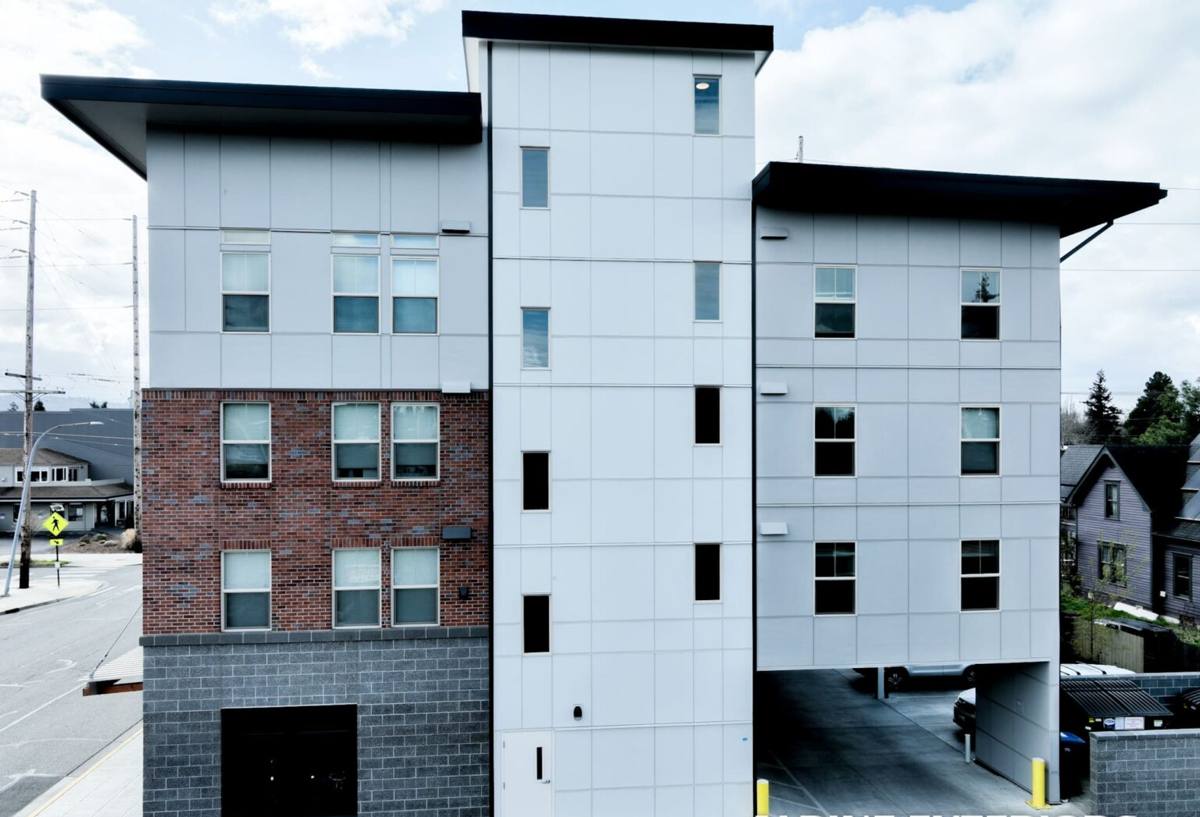
Signs a South Hill Home Actually Needs Replacement (Not Just a Repair)
Not every drafty window needs to come out. Here's how we tell the difference on a job:
- Fogging or a visible haze between the panes of a double-pane window — the seal has failed and no amount of caulking fixes it
- Wood sashes that have swollen shut or dried and cracked from repeated wet-dry cycles
- Visible moss or dark staining on the sill or lower frame, especially on north- and west-facing walls that catch the driving rain off the bay
- Soft or spongy wood when you press a thumb into the sill or the framing below it
- Single-pane glass with no storm window — fine historically, but a real energy and condensation liability now
- Drafts you can feel with a hand near the frame on a windy day, even with the window latched
If it's just hardware, weatherstripping, or a glazing bead, that's a repair, and we'll tell you that instead of selling a full replacement. If the frame itself has taken on water damage or the seal is gone, replacement is the honest recommendation.
What a Correct Window Replacement Actually Involves
The window unit itself is maybe half the job. The other half — the part that actually determines whether the install holds up through a Whatcom County winter — is what happens at the rough opening before the new window ever goes in.
Removal and Opening Inspection
We pull the old sash and frame out carefully and inspect the rough opening underneath. This is where hidden problems show up: soft framing, old caulk standing in for proper flashing, or insulation that's been wet and compressed for years. On a hillside home with real wind-driven rain exposure, this step matters more than it does in a sheltered lot — water finds the path of least resistance, and on South Hill that path usually points uphill into the wall.
Flashing and Moisture Management
Every opening gets flashed correctly — sill pan flashing at the bottom so any water that gets past the window sheds back outward instead of soaking into the framing, plus proper integration with the house wrap or building paper at the sides and top. This is the single most common corner cut on budget replacement jobs, and it's invisible once the trim goes back on — which is exactly why it's the step worth asking about before you hire anyone.
Setting, Shimming, and Sealing
The new window gets shimmed level and square, fastened per the manufacturer's schedule (not just a few screws wherever convenient), and sealed with the right sealant in the right locations — not smeared everywhere as a substitute for proper flashing. Interior and exterior trim get reset cleanly, and we match existing trim profiles where the home has real architectural character worth preserving.
Choosing the Right Window for a South Hill Exposure
Material choice matters more here than in a fully sheltered neighborhood. We steer most South Hill homeowners toward vinyl or fiberglass frames for exposed elevations, and reserve wood or wood-clad for covered porches, sheltered walls, or homes where matching original character is the priority and the owner understands the maintenance tradeoff.
| Frame Material | How It Handles South Hill Exposure | Maintenance Burden |
|---|---|---|
| Vinyl | Doesn't absorb moisture, holds up well to driving rain and salt-tinged wind; good value | Low — occasional cleaning |
| Fiberglass | Excellent dimensional stability in temperature and moisture swings; strong long-term option for exposed walls | Low |
| Wood / Wood-clad | Best for matching historic character; needs a well-protected location to avoid the swelling and rot we see on original sashes | Higher — periodic refinishing, more vigilance in wet-exposed spots |
| Aluminum | Durable but conducts cold and can condense heavily in our wet winters; we rarely recommend it for living spaces | Moderate |
None of these are wrong choices in the abstract — the mismatch happens when a maintenance-heavy material goes into a high-exposure spot with no plan to keep up with it. We'll walk each elevation of your house with you and recommend by wall, not just by house.
Glass Packages and Moss-Season Considerations
Whatcom County's long moss season isn't just a roof and gutter problem — it affects windows too. Shaded, north-facing glass that stays damp for months encourages moss and algae growth on sills, tracks, and exterior trim. A couple of choices at install time make ongoing upkeep easier:
- Low-E glass coatings reduce condensation buildup on the interior pane, which is the main driver of window-adjacent mold and mildew in our climate
- Sloped sill designs that shed water outward rather than pooling it against the frame
- Fusion-welded vinyl corners on the exterior frame, which resist the water intrusion that mitered, caulked corners can develop over time
- Screens and tracks sized for easy removal, so moss and debris don't get a chance to sit and grow through spring
Our Process on a South Hill Job
- Walkthrough and assessment — we look at every window by elevation, note exposure, existing damage, and which units are repair-worthy versus replacement candidates
- Honest scope and estimate — a written breakdown of what's being replaced, the material recommendation per elevation, and why
- Scheduling around weather — we sequence openings so no home sits with an exposed rough opening during an incoming storm system; on a hillside lot this planning matters more than it does downtown
- Removal, flashing, and install — done opening by opening, not all at once, to keep the home weather-tight throughout
- Site cleanup and walkthrough — every window operated and checked with you before we consider the job done
Why It Matters to Hire a Crew That Already Works This Neighborhood
South Hill has enough older, character-heavy homes that a crew unfamiliar with the area often defaults to modern assumptions that don't apply — standard rough openings on a house that has none, trim profiles that don't exist in a current catalog, or a flashing approach designed for a sheltered subdivision lot instead of an exposed hillside wall. A crew that's worked the neighborhood already knows which blocks catch the worst of the wind-driven rain, which era of home is likely to have hidden rot behind the trim, and how to match older exterior details instead of leaving an obvious patch.
There's also a practical side: Bellingham's permitting and, where applicable, any neighborhood or historic-character considerations are easier to navigate correctly the first time when the contractor has already been through the process locally, rather than learning City of Bellingham requirements on your job.
What Affects the Cost of a South Hill Window Replacement
| Factor | Why It Moves the Price |
|---|---|
| Number and size of openings | More or larger units means more material and labor |
| Frame material chosen | Vinyl is typically the most economical; fiberglass and wood-clad cost more upfront |
| Condition of the existing rough opening | Hidden rot or water damage found during removal adds repair scope before the new window goes in |
| Trim and exterior detail matching | Custom or historic-profile trim takes more time than standard stock trim |
| Access and elevation | Upper-story or hard-to-reach hillside windows can require additional staging |
We give a written, itemized estimate before any work starts, and if we find additional damage once an opening is exposed, we stop and talk to you before proceeding rather than surprising you on the invoice.
Keeping New Windows Performing Through Whatcom County Winters
A correctly installed window is mostly maintenance-free, but a few habits extend its life on an exposed South Hill wall:
- Clear moss and debris from sills and tracks each fall before the wet season sets in
- Check exterior caulking annually where trim meets siding — small gaps are easy to reseal before they become water intrusion
- Operate every window at least seasonally so mechanisms don't seize from disuse
- Keep gutters and downspouts clear above window openings — overflow is a common, avoidable source of window-adjacent water damage
If you're weighing whether your South Hill home's windows are due for replacement or just need attention, we're happy to take a look and give you a straight answer either way. Reach out for a free, no-pressure estimate using the form below.