 Bellingham Siding
 Sehome's Siding Problem Isn't Like Everywhere Else
Sehome sits on a wooded hillside near Western Washington University, and that setting cuts both ways. The tree canopy that makes the neighborhood attractive also means less direct sun on north- and east-facing walls, longer damp periods after rain, and a steady drift of leaf litter and debris into corners, dormers, and anywhere siding meets trim. Add Bellingham's marine climate — salt-laden air moving in off Bellingham Bay, driving rain that comes in sideways during winter storms, and a moss season that can run eight months or more in shaded spots — and you get siding conditions that punish anything not built and installed for sustained moisture exposure.
A lot of siding failure in this neighborhood isn't dramatic. It's slow: a hairline crack that lets water behind a board, a shaded corner where moss gets a foothold and holds moisture against the wall, a caulk joint that gave out three winters ago and nobody noticed until the sheathing underneath started to soften. By the time it's visible from the sidewalk, the damage has usually been building for years.
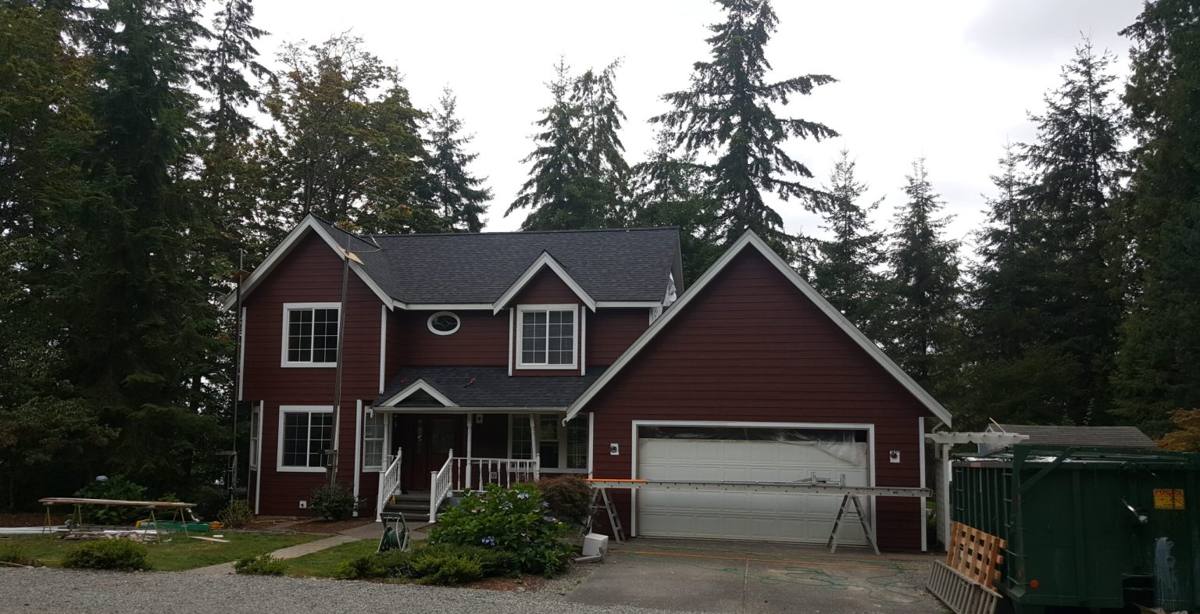
Signs a Sehome Home Needs Replacement, Not Another Repair
Not every siding problem calls for a full tear-off. But there's a point where patching stops making sense and replacement becomes the honest recommendation. Here's what we look for:
- Soft or spongy spots when you press on the siding, especially near the ground, around windows, or under roof valleys
- Persistent moss or algae growth that comes back within a season or two of cleaning, particularly on shaded north walls
- Paint that won't hold — if a wall needs repainting every two to three years instead of every seven to ten, the siding underneath is likely absorbing and releasing moisture it shouldn't
- Visible cupping, warping, or delamination on wood-based or engineered wood products
- Gaps opening up at seams, corners, or trim boards where caulk has failed and hasn't been resealed
- A musty smell or damp feeling on interior walls that back up to exterior siding
Any one of these on its own might be a repair. Several together, especially on a home that's had multiple siding types or patch jobs over the years, usually means the water management behind the siding has broken down and a full replacement is the more honest — and cheaper, long-run — answer.
What a Correct Siding Replacement Actually Involves
Siding replacement isn't just pulling off old boards and nailing up new ones. In a climate like Bellingham's, most of what determines whether siding lasts happens in layers you never see once the job is done.
The Weather-Resistive Barrier
Underneath the siding, a weather-resistive barrier (housewrap or building paper) is what actually stops bulk water from reaching the sheathing. It has to be installed shingle-style — overlapped correctly so water sheds down and out, never gets trapped behind a seam. On a hillside lot with prevailing wind-driven rain, this layer does more work than most homeowners realize.
Flashing at Every Penetration
Windows, doors, hose bibs, light fixtures, vents — every place something interrupts the siding is a place water can get in if it isn't flashed correctly. Correct flashing means water that reaches these points is directed back out and down, never sideways or in behind the barrier.
Drainage Gap and Ventilation
Modern fiber cement installation calls for a small air gap between the back of the siding and the weather barrier in most assemblies. That gap lets any moisture that does get past the outer layer drain and dry out instead of sitting against the sheathing — important in a neighborhood that stays damp and shaded for long stretches.
Fastening and Clearances
Fastener placement, nail spacing, and butt joint treatment all affect how well siding resists the freeze-thaw cycles and wind loads Bellingham sees in winter. Ground clearance and clearance from roof lines matter too — siding installed too close to grade or a roof surface stays wet longer and fails faster, regardless of what it's made of.
Why We Install Only James Hardie Fiber Cement
We don't install vinyl, LP SmartSide, primed wood siding, or other fiber cement brands. That's a standard we set for the whole company, not just Sehome jobs, but it matters more here because of the moisture load this neighborhood carries.
James Hardie fiber cement is a cement, sand, and cellulose fiber composite. It doesn't absorb water the way wood-based products do, it won't rot, and it's non-combustible. Hardie's HZ5 product line is engineered specifically for the kind of freeze-thaw and moisture-cycling climate found in the Pacific Northwest, which is a real factor on a shaded hillside lot where siding can stay damp for days after a storm. The factory-applied ColorPlus finish is baked on under controlled conditions and carries its own finish warranty, so you're not relying on field-applied paint to be the only thing standing between the siding and the weather — which matters a lot when a wall doesn't get much direct sun to help paint cure and hold.
That doesn't mean every other product is a bad product. Vinyl is inexpensive and low-maintenance in the right setting. Engineered wood siding can look good and install fast. But on a wooded, shaded, marine-climate lot, we've found the trade-offs on those products — moisture sensitivity, shorter service life in sustained damp conditions, or reliance on field-applied finishes — aren't ones we're willing to put our name behind. Fiber cement, installed correctly, is what we trust to hold up here.
Cost and Material Comparison
| Factor | James Hardie Fiber Cement | Vinyl | Engineered Wood (LP-type) |
|---|---|---|---|
| Moisture resistance | Does not absorb water or rot | Water-resistant but seams and joints can trap moisture | Treated to resist moisture but vulnerable if the coating is compromised |
| Moss/algae resistance | Non-organic surface; ColorPlus finish resists staining | Can trap moisture behind panels, promoting growth | Wood-fiber base can support growth if moisture gets in |
| Fire rating | Non-combustible | Combustible (melts/burns) | Combustible |
| Finish durability | Factory-baked ColorPlus, warrantied | Color molded in, can fade | Requires field-applied paint/primer maintenance |
| Typical service life (PNW conditions) | 30+ years when installed to spec | 20-30 years | 15-25 years, shorter with moisture exposure |
| Upfront material cost | Higher | Lowest | Mid-range |
Our Process for a Sehome Siding Replacement
- On-site assessment — we walk the exterior, check for soft spots, moisture intrusion, and problem zones specific to your lot's sun exposure and drainage
- Tear-off and sheathing inspection — old siding comes off and we inspect the sheathing underneath for rot or damage before anything new goes up; this step catches problems that were invisible from outside
- Weather barrier and flashing install — housewrap and flashing go in correctly at every window, door, and penetration, sequenced so water always sheds outward
- James Hardie installation — installed to manufacturer spec for fastening, clearances, and joint treatment, matched to the HZ5 climate zone
- Trim, caulking, and final detail — corners, trim boards, and transitions sealed and finished
- Walkthrough — we go over the finished work with you before calling the job done
What to Check Before You Hire Anyone for This Job
Siding replacement is one of those projects where a mediocre job looks fine for the first year or two and then fails early. Before hiring a contractor for a Sehome home, it's worth asking:
- Are they licensed and insured for exterior work in Washington State?
- Will they inspect and document sheathing condition before re-siding, not just cover it up?
- Do they follow manufacturer installation specs for fastener spacing, clearances, and flashing — and can they explain why those specs exist?
- Is the weather-resistive barrier and flashing detail part of the written scope, or just "siding install"?
- What's covered under warranty, and is it a manufacturer warranty, an installer warranty, or both?
- Have they worked on homes in your specific neighborhood, with its specific sun exposure and drainage patterns?
Why a Crew That Already Works Sehome Matters
Siding performance depends heavily on site-specific conditions — which walls get sun, how long moisture sits after a storm, how close the tree line sits to the house, how the lot drains. A crew that's worked this neighborhood before has already seen how these hillside, tree-shaded lots behave through a Bellingham winter, and that shapes real decisions on the job: where extra flashing attention matters most, which corners tend to hold moisture, how to sequence work around Whatcom County's wet season instead of fighting it.
That local familiarity doesn't replace following manufacturer spec — it's not a shortcut. It just means fewer surprises, because the crew has already seen how this kind of lot behaves under Bellingham's rain and moss cycle, not just how a spec sheet says it should perform in theory.
Maintenance After Replacement
James Hardie siding is low-maintenance compared to wood-based products, but "low-maintenance" isn't "no-maintenance" — especially under Sehome's tree cover. A simple yearly routine keeps it performing the way it's built to:
- Rinse the exterior annually to clear pollen, dust, and organic debris before it has a chance to hold moisture against the surface
- Keep gutters clear so overflow doesn't run down the face of the siding
- Trim back branches and vegetation that keep a wall shaded and damp longer than necessary
- Check caulking at trim and penetrations every couple of years and recaulk as needed
- Address any impact damage or cracking promptly rather than waiting
If your Sehome home is showing signs of siding trouble, or you're just planning ahead for a replacement, we're happy to take a look and give you a straight answer — no pressure, no upsell. Reach out for a free estimate using the form below.