 Bellingham Siding
 Composite Decking Built for Sehome's Conditions
Sehome sits close enough to Bellingham Bay and the surrounding wetlands that homeowners here deal with a specific combination of punishment on outdoor structures: salt-tinged air, long stretches of driving rain off the water, and a moss season that can run from October well into spring. A deck in this neighborhood isn't just furniture for the yard — it's a structure that has to shed water fast, resist organic growth, and hold up to humidity that rarely lets up for months at a time. Composite decking, installed correctly, handles that combination better than most alternatives. Installed poorly, it can trap moisture and grow moss just as fast as anything else.
This page is about composite decking specifically for Sehome homes — what the climate demands, what a correct installation actually involves, and why the details matter more here than they would in a drier part of the state.
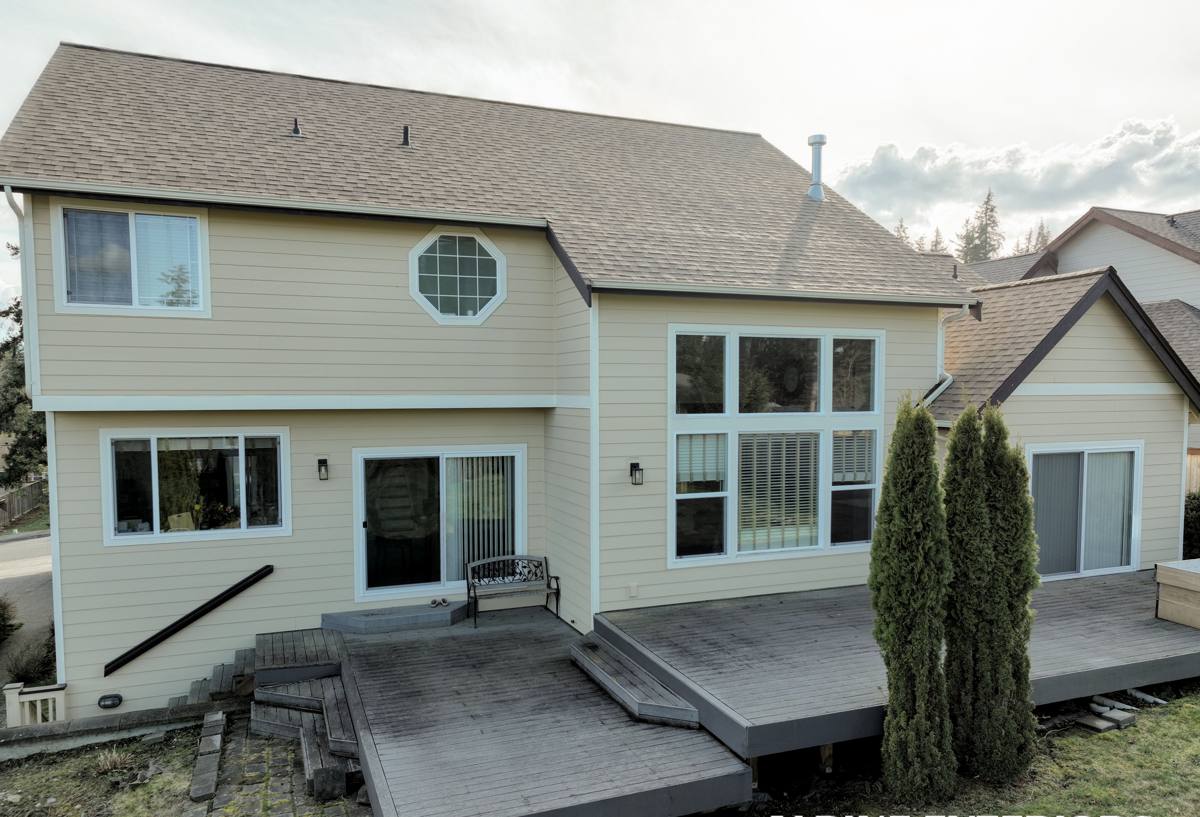
What Whatcom County's Climate Does to a Deck
Bellingham and Whatcom County get a lot of moisture, but it's the type and duration that matters for decking. Sehome's proximity to the bay means periods of salt-laden air, especially with onshore winds during storms. Add in the region's long, low-intensity rain events — days of steady drizzle rather than short downpours — and you get wood and fastener surfaces that stay damp far longer than they would in a climate with hard rain and quick drying between storms.
That extended dampness is what feeds moss and algae. Any horizontal surface that doesn't drain and dry quickly becomes a growing medium by late fall. Untreated wood decking is especially vulnerable because the surface itself is organic material; composite boards resist this far better, but only if the deck underneath is built to drain and the boards are installed with enough airflow to actually dry out between rain events.
The Three Things Local Decks Actually Fight
- Standing moisture — from slow drainage, clogged gaps between boards, or a substructure that doesn't slope away from the house
- Moss and algae growth — fed by shade, poor airflow, and the county's long wet season
- Corrosion of fasteners and hardware — accelerated by salt air near the bay, especially on ledger boards and joist hangers
Why Composite Makes Sense Here — And Where It Doesn't Automatically Solve Everything
Composite decking's main advantage in this climate is that the boards themselves don't rot, splinter, or absorb water the way wood does. That takes one major failure mode off the table. But composite isn't moss-proof — algae and moss can still grow on the surface of any composite board if it stays wet and shaded long enough, the same as it would on a sidewalk or a roof. The difference is that composite doesn't degrade structurally from that growth the way wood does; it's a cleaning issue, not a rot issue.
The other honest trade-off: composite boards vary a lot by manufacturer in how they handle moisture at the board's core and at cut ends. Some capped composite products handle exposed, uncapped cut ends and drilled holes reasonably well; others are more sensitive and need every cut end sealed or capped to keep water out of the board core. We treat every cut end and fastener penetration as a moisture entry point that needs attention, regardless of what the manufacturer's base warranty implies is required.
What a Correct Composite Deck Install Involves
A composite deck is only as good as what's underneath it. In Sehome's climate, the substructure work matters more than the decking material itself.
Substructure and Drainage
The frame needs to be built with slope away from the house and, ideally, a drainage plan underneath the deck rather than just gaps between boards. Joists should be protected with a joist tape or flashing to keep the wood framing itself from absorbing moisture over time, since most composite systems still use a wood or wood-hybrid substructure. Ledger board flashing where the deck meets the house is one of the most common failure points we see on older decks in this area — it's also one of the easiest to get right during a new build or a full tear-off.
Fastener and Hardware Selection
Given the salt air exposure around Sehome and the bay, we use fasteners and structural hardware rated for coastal or high-corrosion environments, not standard interior-grade hardware. This is a small cost difference upfront and a significant difference in how the deck's hidden structure holds up over ten or fifteen years.
Board Spacing and Airflow
Composite boards need proper gapping — both between boards and at the perimeter — to allow water to drain through and air to circulate underneath. Too tight, and the deck holds moisture against the substructure and grows moss faster on the surface. Too loose, and you get an uneven, unfinished look. We set spacing based on the specific board profile and the deck's expected seasonal movement, not a single generic number applied everywhere.
Cut Ends, Fascia, and Picture-Framing
Every cut end on a composite board is a place where the board's core can be exposed to moisture. We seal or cap cut ends per the manufacturer's actual specification for that product line, and we're careful with picture-framed borders and stair nosings, which involve more cuts and more exposed ends than a simple field of decking.
Comparing Decking Approaches for This Climate
| Factor | Composite Decking | Pressure-Treated Wood | Cedar |
|---|---|---|---|
| Moss/algae resistance (surface) | Good — can still grow, but doesn't cause structural harm | Poor without regular treatment | Fair — natural oils help, fade over time |
| Rot risk | Very low for the board itself | Moderate, increases with age and finish upkeep | Moderate to high without upkeep |
| Annual maintenance | Periodic cleaning | Re-staining/sealing every 1–2 years | Sealing/oiling every 1–2 years |
| Upfront cost | Higher | Lowest | Moderate to high |
| Long-term cost (10+ years) | Generally lower with proper install | Adds up with repeated treatment/replacement | Adds up with repeated treatment |
| Salt air tolerance | Good for the board; hardware still needs coastal-rated fasteners | Moderate, corrosion risk on fasteners | Moderate, corrosion risk on fasteners |
The table reflects general trade-offs, not a claim that any single product line performs identically — specific composite brands and board profiles vary in their moisture handling, warranty terms, and recommended installation details.
Our Process for a Sehome Composite Deck
- On-site assessment — we look at the existing structure (if replacing a deck), grade and drainage around the area, sun/shade exposure, and how close the deck sits to salt air influence from the bay
- Substructure plan — framing layout, joist protection, ledger flashing, and drainage slope specific to your yard's grade
- Material selection — we walk through composite board options with you honestly, including cost, color/finish life, and how each handles cut ends and fastening
- Installation — framing first, then decking with correct spacing, sealed cut ends, and coastal-rated fasteners throughout
- Finish details — stair nosings, picture framing, fascia, and any transitions to existing patios, siding, or steps
- Walkthrough — we go over basic care so the deck actually gets the lifespan it's built for
Maintenance Realities for This Neighborhood
Composite decking is often marketed as "no maintenance," which isn't quite accurate in a climate like this. It's low maintenance compared to wood, but Sehome's wet season means a deck still benefits from periodic attention.
A Practical Seasonal Checklist
- Sweep debris (leaves, needles, moss spores) off the deck surface regularly through fall and winter, since standing organic debris is what feeds surface moss
- Rinse or lightly scrub the deck surface once or twice a year, more often in shaded areas that stay damp longer
- Check that gaps between boards stay clear of compacted debris that blocks drainage
- Inspect ledger flashing and any visible fastener heads annually for signs of corrosion or water staining
- Trim back vegetation that shades the deck and keeps it from drying out between rain events
Why It Matters That the Crew Already Works in This Area
A lot of decking problems in Bellingham and Whatcom County aren't material failures — they're installation choices made without accounting for this specific climate. A crew that's used to building in a drier or more temperate region might not default to coastal-rated fasteners, might under-spec drainage slope, or might not think twice about sealing every cut end on every board. None of those are dramatic mistakes on day one; they show up as moss, staining, or loosening hardware three to five years in.
Working regularly in Sehome and the surrounding Bellingham neighborhoods means we're not guessing at how this climate behaves — we're building around what we've already seen happen to decks that weren't. That includes knowing which areas of a yard hold shade and moisture longer, how close a given lot is to salt air influence, and what a realistic maintenance routine looks like for a homeowner here rather than a generic manufacturer pamphlet.
What a Composite Deck Project Typically Involves Cost-Wise
Costs vary based on deck size, substructure condition (new build versus replacing an existing structure), board selection, and finish details like railings, stairs, and picture framing. Rather than quote a number that doesn't reflect your specific yard, we walk every project through an on-site estimate so you're pricing your actual deck, not a generic average.
If you're considering a new composite deck or replacing an aging one in Sehome, we're happy to take a look and give you an honest, no-pressure estimate — including what your specific yard and sun exposure mean for drainage, board choice, and long-term upkeep. Use the form below to get started.