 Bellingham Siding
 What Puget's Climate Does to Siding
Homes in the Puget area near Bellingham sit in a specific weather pattern: salt-laden air moving in off the water, long stretches of driving rain, and a wet season that runs far longer than most homeowners expect when they first move to Whatcom County. That combination is hard on exterior materials in ways that don't show up in year one or two — they show up in year eight or ten, when the siding that looked fine at installation starts cupping, staining, or letting moisture behind it.
Salt air accelerates corrosion on fasteners and trim metal, and it breaks down cheaper paint films faster than inland weather does. Driving rain — rain that comes in sideways during a wind event rather than falling straight down — tests every seam, joint, and piece of flashing on a house. And the moss and algae that thrive in this region's damp shade don't just look bad; they hold moisture against the siding surface for weeks at a time, which is exactly the condition that rots wood-based products and stresses the paint and caulk lines on lower-quality claddings.
None of this is unusual for the area — it's just the reality of building near Puget Sound. The point of a siding replacement here isn't to install something that looks good on day one. It's to install something engineered to hold up through repeated wet-dry cycles, year after year, without babysitting.
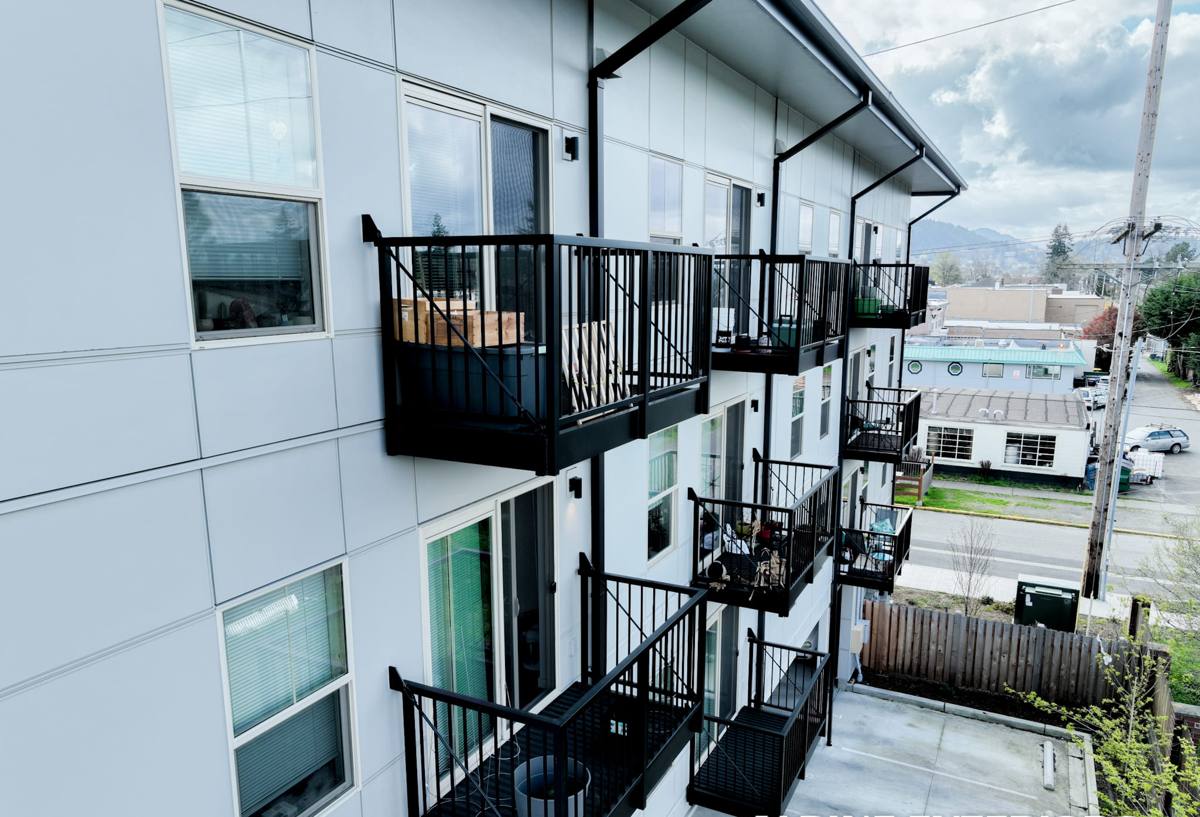
What a Correct Siding Replacement Actually Involves
Siding replacement is often talked about like it's just swapping old boards for new ones. It isn't. The siding itself is the least complicated part of the job — the water management system underneath it is what actually determines whether the house stays dry.
Tear-Off and Inspection
Once the old siding is off, we inspect the sheathing underneath for rot, soft spots, or existing water damage — which is common on older Whatcom County homes that have been through decades of wet winters. Any damaged sheathing gets repaired or replaced before anything new goes up. Skipping this step is one of the most common ways a siding job fails early.
Weather-Resistive Barrier
A correctly lapped weather-resistive barrier (WRB) goes on next, integrated with window and door flashing so water is directed out and down, never trapped behind the wall. In a driving-rain climate like this one, the WRB and flashing details matter more than the siding brand — they're the actual first line of defense.
Flashing at Every Penetration
Every window, door, vent, and hose bib penetrating the wall is a potential entry point for water. Proper flashing at each one, done in the right sequence with the WRB, is what separates a siding job that lasts thirty years from one that starts leaking behind the walls in five.
Siding Installation to Manufacturer Spec
Fastener placement, gapping, clearance from grade and roofing, and caulking at butt joints all have to follow the manufacturer's installation instructions exactly — not "close enough." Fiber cement in particular is unforgiving of shortcuts here: incorrect fastening or gapping can void the product warranty even if the siding itself is high quality.
Why We Only Install James Hardie in This Climate
We install James Hardie fiber cement siding exclusively — we don't install vinyl, LP SmartSide, primed spruce, cedar, or other fiber cement brands. That's a deliberate standard, not a sales preference, and it matters most in a climate like Puget's.
Fiber cement is non-combustible and dimensionally stable, meaning it doesn't expand and contract with moisture the way wood-based siding does. That stability matters in a region with long wet seasons, because wood-based products that swell and shrink repeatedly are more prone to cracking, warping, and paint failure over time. James Hardie's ColorPlus finish is a factory-applied, baked-on finish designed to resist fading and hold up to UV and moisture exposure better than field-applied paint — which matters here, since salt air is genuinely tougher on paint films than typical inland exposure.
James Hardie also engineers specific product lines for different climate zones (their HZ5 line, for example, is built for the wetter Pacific Northwest), and the company backs the product with a strong, transferable limited warranty when it's installed by a factory-trained installer. That warranty structure and the product's proven track record in wet coastal climates is why we standardized on it rather than offering multiple brands.
We're not going to tell you other siding products don't have a place — vinyl and engineered wood both have honest use cases elsewhere. But for Puget-area homes dealing with salt air, driving rain, and a long moss season, we've made the call that fiber cement done right is the product that holds up without high maintenance demands, and James Hardie is the manufacturer whose system, warranty, and climate-specific engineering we trust to back that up.
Signs a Puget-Area Home Needs Siding Replacement Now
Not every siding problem needs a full replacement — some can be repaired. But certain signs mean the underlying water management has likely already failed, and patching won't fix it:
- Soft or spongy spots when you press on the siding, especially near the bottom courses or below windows
- Persistent moss or algae growth that comes right back after cleaning
- Paint that's peeling, bubbling, or failing in patches rather than evenly across the wall
- Visible warping, cupping, or gaps opening up between boards or panels
- Rising energy bills with no other explanation — often a sign of moisture-compromised insulation behind the siding
- Interior signs like musty smells, peeling interior paint, or staining near exterior walls
- Siding that's original to a home built more than 20-25 years ago, especially wood-based products
If you're seeing more than one of these, it's worth having someone look at the sheathing, not just the surface.
How the Project Runs, Start to Finish
Every home is different, but the sequence stays consistent:
- Walkthrough and assessment — we look at the current siding, trim, flashing, and any visible problem areas, and talk through what we're seeing.
- Written estimate — scope, product selection, color, and price, with no pressure to decide on the spot.
- Tear-off and sheathing inspection — old siding comes off, sheathing is inspected and repaired as needed.
- WRB and flashing installation — the water management layer goes in and gets integrated at every window, door, and penetration.
- James Hardie installation — siding, trim, and accessories installed to manufacturer spec.
- Final walkthrough — we go over the finished work with you before calling the job done.
Weather is a real factor in this region — we schedule around forecasted rain where possible and protect open wall sections during any unavoidable weather delays.
What Drives Siding Replacement Cost
Every home is priced individually after a walkthrough, but the factors that move the number are consistent across the Puget area:
| Factor | Why It Matters |
|---|---|
| Home size and wall complexity | More corners, gables, and dormers mean more cutting, flashing, and labor time |
| Sheathing condition | Rot found during tear-off adds repair cost before new siding can go on |
| Siding profile chosen | Lap, shingle, and panel styles vary in material and labor cost |
| Trim and accessory scope | Corner boards, window trim, and fascia work add to the total |
| Site access | Tight lots, multi-story walls, or limited staging area affect labor time |
| Paint/finish selection | ColorPlus factory finishes vs. field-applied paint affect both cost and long-term maintenance |
We'll walk through all of this during the estimate so there are no surprises once work starts.
Why a Crew That Already Works This Area Matters
Siding installation isn't one-size-fits-all across Washington. A crew that mostly works drier inland climates can install technically correct siding that still underperforms here, simply because they're not used to detailing flashing and WRB laps for the volume and frequency of driving rain this region gets. A crew that works Puget-area homes regularly knows which details need extra attention — flashing laps, weep gaps, clearance at grade — because they've seen what happens on this coastline's homes when those details are shorted.
There's also a practical side: local crews know realistic scheduling around this area's wet season, understand common sheathing and framing conditions in older Whatcom County homes, and can talk through material choices with a straight answer about what actually holds up here versus what performs fine somewhere drier.
Get a Straight Answer for Your Home
If your siding is showing wear, or you just want an honest read on whether it's holding up the way it should in this climate, we're glad to take a look. The estimate is free, there's no pressure, and you'll get a straight answer about what your home actually needs.