 Bellingham Siding
 Windows Built for Sudden Valley's Microclimate
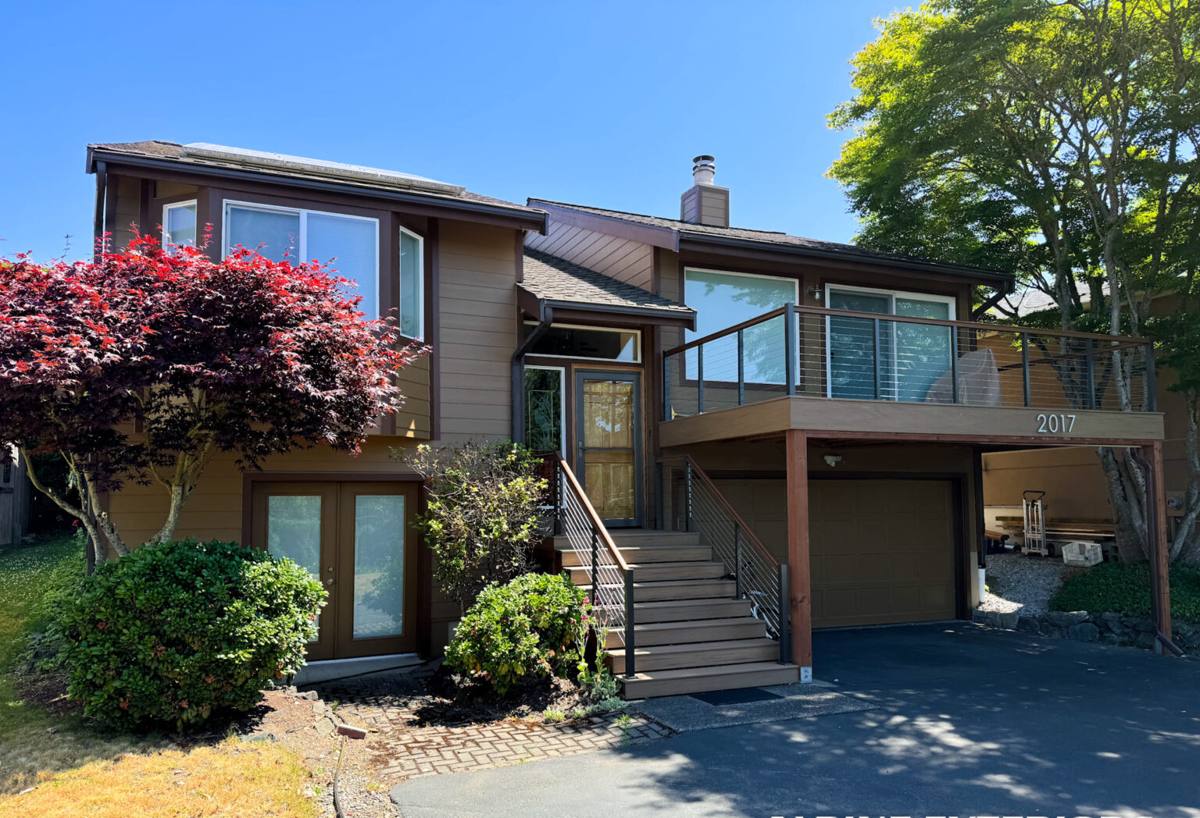
Sudden Valley sits along the shore of Lake Whatcom in a heavily wooded pocket of Whatcom County, and that setting creates a window environment that's a little different from a typical Bellingham lot. Tree canopy keeps homes shaded most of the year, which sounds like a plus until you factor in what shade actually does to a house: slower drying times after rain, more moss and algae growth on siding and trim, and window openings that stay damp longer than a home out in open sun. Add in the lake's humidity and the long stretches of driving rain that move through Whatcom County every fall and winter, and you've got conditions that will find any weakness in a window's flashing, sealant, or frame material faster than most places in the county.
None of that means Sudden Valley homes need exotic window systems. It means the installation has to be done correctly the first time, with materials and flashing details that account for sustained moisture exposure rather than occasional rain. That's the difference between a window that lasts twenty-plus years and one that starts showing rot or fogging at the corners in five.
What the Local Climate Actually Does to Windows
Shade and Moss
Homes tucked under mature trees dry out slower after every rain event. Moisture that would evaporate off a sun-exposed wall in a few hours can linger on a shaded sill or lower sash for a day or more. That extended dampness is exactly what moss and algae need to take hold, and once they're established on a windowsill or the siding around a window, they hold even more moisture against the wood or trim underneath.
Driving Rain
Wind-driven rain off the lake doesn't just fall straight down — it pushes sideways into wall assemblies, testing every seam around a window opening. A window that's caulked but not properly flashed will often look fine for a few seasons before water finds its way behind the trim and into the wall framing, where you won't see it until there's a stain on the interior drywall or soft wood at the sill.
Older Housing Stock
A lot of homes in this part of Whatcom County were built decades ago with original single-pane or early dual-pane windows and flashing methods that don't meet current standards. When those units start failing — fogged glass, drafts, wood rot at the corners — it's rarely just a window problem. It's usually a sign the surrounding flashing and water management need attention too, not just a swap of the sash.
What a Correct Installation Involves
Replacing a window is straightforward. Doing it in a way that holds up to years of shade and driving rain takes more attention to the details most homeowners never see once the trim goes back on.
- Full opening inspection: Before anything goes in, we check the rough opening for rot, soft framing, or old water damage — issues that are common in older, shaded homes and need to be fixed before a new window is installed, not after.
- Proper flashing sequence: Sill pan flashing, side flashing, and head flashing installed in the correct shingle-lap order so water is always directed outward and down, never trapped behind the window.
- Weather-resistive barrier integration: The window's flashing has to tie into the home's house wrap or building paper correctly — lapped, not just taped — so the whole wall assembly sheds water as one system.
- Quality sealants rated for sustained moisture: Not all caulks and sealants perform the same in a shaded, damp environment. We use products rated for long-term exterior exposure, not just interior-grade fillers.
- Insulation and air-sealing around the frame: Gaps around a new window should be filled with low-expansion foam or backer rod and sealant — enough to stop drafts and moisture infiltration without bowing the frame out of square.
- Trim and finish work that sheds water: Sill angles, drip caps, and trim profiles are set up to move water away from the window face, not let it pool.
Skipping any one of these steps is how a window that looks fine on day one ends up with rot, mold, or a fogged pane a few years down the road — especially in a shaded, moisture-heavy setting like Sudden Valley.
We treat flashing and water management as the real job. The window unit itself is almost always reliable; it's the installation around it that determines whether water stays out for the long haul.
Choosing Windows for a Shaded, Damp Lot
Material choice matters more here than on an open, sun-exposed lot because everything dries slower.
| Window Frame Type | How It Handles Sudden Valley's Climate | Trade-Offs to Know |
|---|---|---|
| Vinyl | Won't rot, low maintenance, performs well in sustained moisture | Limited color/finish options compared to other materials; quality varies by manufacturer |
| Fiberglass | Very stable in temperature and moisture swings, holds paint well, strong long-term performer in wet climates | Higher upfront cost than vinyl |
| Wood-clad | Classic look, good insulating properties | Exposed wood at any breach point (sill, corners) is vulnerable in a shaded, damp setting — cladding integrity and flashing quality matter even more |
| Aluminum | Durable and low-maintenance | Poor insulating value and prone to condensation in cool, humid conditions unless thermally broken |
We don't push one brand or material on every job — the right choice depends on the home's exposure, existing trim style, and your budget. What we won't do is install a window system in a shaded, wet location without the flashing and moisture-management details to back it up, regardless of how good the glass package is.
Our Process for Sudden Valley Homeowners
1. On-Site Assessment
We walk the exterior and look at more than just the windows you want replaced — shade patterns, existing moss or algae growth, drainage around the foundation, and the condition of the siding and trim near each opening. That tells us whether we're dealing with a straightforward window swap or if there's rot or water damage to address first.
2. Honest Scope and Estimate
You get a clear estimate that separates window unit cost from labor, and calls out any additional work — rot repair, re-flashing, trim replacement — as its own line item, not buried in the total.
3. Careful Removal
Old windows and trim come out carefully so we can inspect the rough opening and existing flashing before anything new goes in. This is often where we find out why an old window was failing in the first place.
4. Correct Installation
New flashing, air-sealing, and the window unit go in following manufacturer specs and the sequencing described above — not shortcuts to save an afternoon.
5. Finish and Walkthrough
Trim, caulking, and touch-up paint are finished cleanly, and we walk the job with you so you know what was done and what to watch for.
Why Local Experience with This Kind of Site Matters
A crew that mostly works open, sun-exposed lots in flatter parts of Whatcom County can still do a technically fine window install and have it underperform on a shaded lakeside property, simply because they're not used to designing for slow-drying, moss-prone conditions. Working regularly in and around Sudden Valley means we've seen how these homes behave over time — where moisture tends to collect, which trim details hold up and which don't, and how tree cover changes the maintenance timeline compared to a home a few miles away in full sun.
That local pattern recognition doesn't replace good installation practice, but it does mean fewer surprises. We're not guessing at how a shaded Whatcom County lot near the lake will treat a new window over the next fifteen years — we're building for it from the start.
Maintenance That Extends the Life of New Windows
A correct installation is most of the battle, but a little seasonal attention keeps things performing well for the long haul, especially under tree cover.
- Clear leaves and debris from sills and tracks each fall before the heavy rains set in.
- Rinse moss or algae off sills, trim, and nearby siding before it has a chance to spread or hold moisture against the surface.
- Check caulking around frames annually — small cracks are easy to reseal before they let water behind the trim.
- Trim back branches or foliage that keep a window in constant shade or drip directly onto the sill.
- Watch for soft spots, discoloration, or peeling paint at the corners of window trim — early signs worth addressing before they spread.
If you're planning window replacements in Sudden Valley or want a second opinion on windows that are already showing signs of trouble, we're glad to take a look. Reach out for a free, no-pressure estimate using the form below.