 Bellingham Siding
 Why Birch Bay Roofs Take a Different Kind of Beating
Birch Bay sits right on the water, which means the wind that rolls in off the Strait of Georgia doesn't just blow past — it drives rain sideways, works shingles loose at their edges, and pushes moisture into places a roof was never designed to handle. Add in the salt-laden air that settles on every surface near the shoreline, and you've got a roof environment that's noticeably harder on materials than what you'd see a few miles inland in Bellingham proper.
We've worked enough roofs along this stretch of Whatcom County to know that "storm damage" here rarely looks like a single dramatic event. More often it's a winter of driving rain finding a weak spot, a windstorm that lifts a few shingle tabs nobody notices from the ground, and months of shaded moss growth quietly working its way under the shingle line. By the time a leak shows up on a ceiling, the roof has usually been compromised for a while.
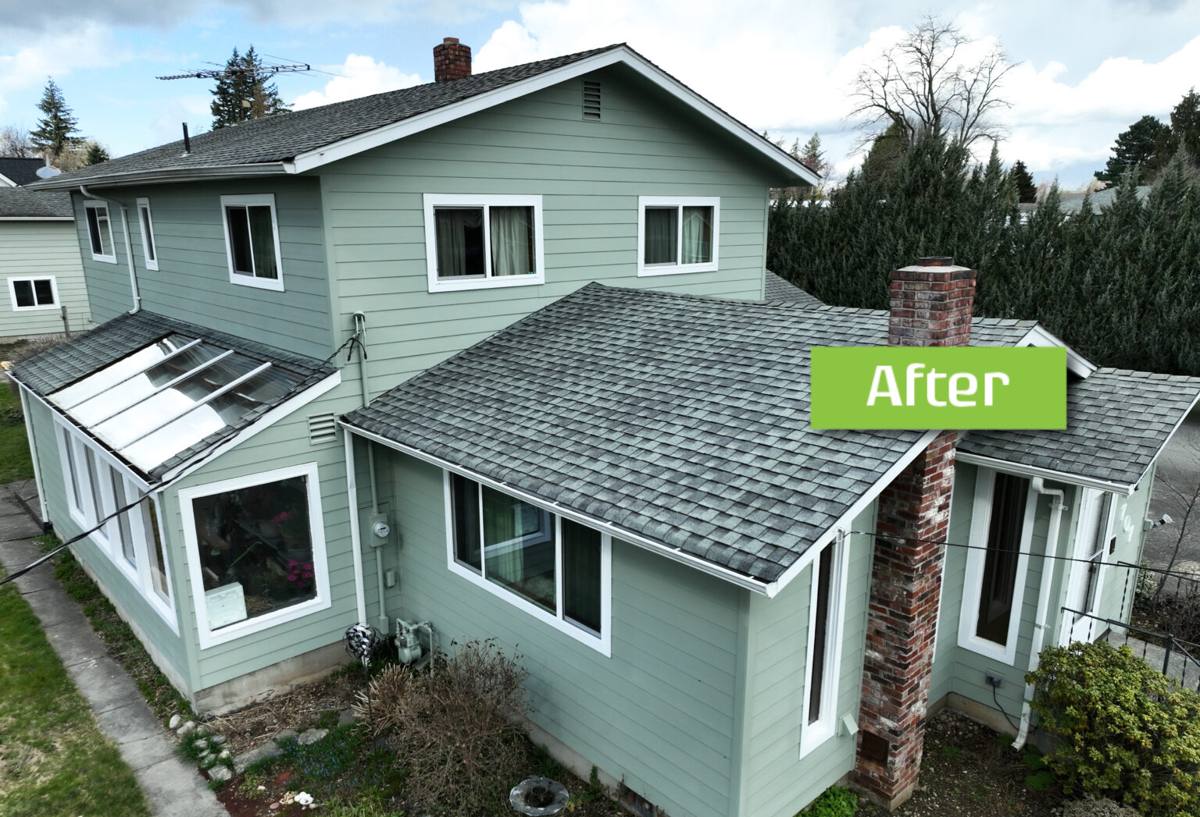
What Actually Counts as Storm Damage
Homeowners often assume storm damage means missing shingles or a visible hole. In practice, most of what we repair after a Birch Bay storm falls into a handful of categories:
- Wind-lifted or creased shingle tabs — the sealant strip breaks and the shingle no longer lies flat, even if it's still attached
- Flashing pulled loose or bent around chimneys, vents, and roof-to-wall transitions
- Fastener backout, where nails work their way up as the roof deck flexes in high wind
- Granule loss from wind-driven debris or hail, which thins the shingle's UV and weather protection
- Gutter and fascia damage that lets water track back up under the roof edge
- Moss-related rot at the eaves and valleys, which storms expose rather than cause outright
That last one matters for this area specifically. A lot of what gets blamed on "the last storm" is really moss and standing moisture damage that a storm simply pushed past the point of holding back water. We try to be honest about which is which, because it changes both the repair and whether it's worth filing with insurance.
Salt Air, Wind, and the Long Moss Season
How each factor actually degrades a roof
These three conditions don't act alone — they compound each other. Salt air accelerates corrosion on exposed metal fasteners and flashing. Wind stresses the seal strips and mechanical fastening that hold shingles down. And Whatcom County's long, wet moss season keeps roof surfaces damp for extended stretches, which is exactly the environment moss and algae need to take hold — especially on the north-facing and shaded slopes common on Birch Bay lots with mature trees.
| Local factor | What it does to a roof | Where it shows up first |
|---|---|---|
| Salt-laden coastal air | Corrodes exposed nails, flashing, and metal drip edge over time | Flashing seams, exposed fastener heads, gutter hangers |
| Wind-driven rain off the Strait | Forces water under shingle edges and through marginal flashing seals | Roof-to-wall transitions, chimney flashing, eaves |
| Extended moss/algae season | Holds moisture against shingles, lifts tabs, and rots decking underneath | Shaded north slopes, valleys, areas under overhanging trees |
A roof repair that only addresses the visible storm damage but ignores these underlying conditions tends to fail again within a season or two. That's the biggest difference between a quick patch and a repair that actually holds up in this climate.
Our Storm Damage Repair Process
1. Inspection before anything gets touched
We walk the roof (not just look from the ground) and document what we find — wind damage, moss and moisture damage, and anything that was already a problem before the storm. We tell you which is which. If moss or age is doing most of the damage, we say so instead of blaming it all on the weather.
2. A clear, itemized plan
You get a written explanation of what needs fixing, why, and what happens if it's left alone. No vague line items. If a full section of decking needs replacing versus a shingle-and-flashing repair, we explain the difference and the cost logic behind it.
3. The repair itself
For most storm repairs this means removing and replacing damaged shingles, resealing or replacing flashing, securing loose fasteners, and — where moss has already gotten into the deck — cutting out and replacing rotted sheathing before anything gets covered back up. We don't shingle over a soft deck.
4. Documentation
We provide photos and a written summary of the repair, which matters if you're working with an insurance adjuster or just want a record for your own files.
Common Repair Types We See in Birch Bay
Wind-lifted and creased shingles
Once a shingle's seal strip breaks, it won't reseal on its own — it needs to be either hand-sealed with roofing cement or replaced if it's creased or cracked. Left alone, the next windstorm usually finishes the job.
Flashing failures
Chimney flashing, step flashing along dormers, and valley flashing are the most common failure points we find after coastal storms. Salt air corrosion and repeated flexing from wind both shorten flashing life compared to more sheltered inland homes.
Moss-compromised eaves and valleys
These are the repairs that take longer than expected, because the visible damage is often smaller than what's underneath. We won't quote a "quick patch" price and then find rotted decking mid-repair — the inspection is where we catch that.
Insurance and Documentation
Most homeowner policies cover sudden storm damage — a windstorm that tears shingles loose, for example — but they typically don't cover damage from long-term neglect or moss that's been growing for years. That's part of why an honest inspection matters: it protects you from a denied claim as much as it protects the roof. We're happy to provide the photos and written scope an adjuster will ask for, and we'll tell you plainly if something looks more like a maintenance issue than a storm claim.
Choosing a Contractor Who Actually Works Birch Bay
A lot of roof repair calls after a storm come from Bellingham-area crews who've never worked this specific stretch of coastline. That matters more than it sounds like it should. A crew that knows Birch Bay's exposure knows to check flashing corrosion before it's asked to, knows which slopes hold moss longest, and doesn't get surprised by how fast conditions change coming off the water.
What to check before you hire
- Do they carry current WA state contractor licensing and liability insurance — and will they show you proof without hesitation?
- Do they inspect the whole roof, or just the spot you called about?
- Will they put the scope of repair in writing before starting work?
- Do they explain the difference between storm damage and pre-existing wear, or do they just blame everything on the weather?
- Do they have experience with coastal Whatcom County homes specifically, not just general Bellingham roofing?
- Will they walk you through material options and trade-offs instead of pushing one product?
What Repairs Typically Cost — and Why It Varies
Every roof is different, so we won't quote a number without seeing the damage in person. But the honest answer is that cost depends less on the storm and more on what the storm exposed.
| Cost factor | Why it matters |
|---|---|
| Extent of shingle damage | A handful of lifted shingles is a small repair; a full slope with granule loss and creasing is closer to a partial re-roof |
| Condition of the decking underneath | Rotted or soft sheathing from prior moss damage adds material and labor beyond the visible repair |
| Roof pitch and access | Steeper slopes and hard-to-reach areas take longer and require more safety setup |
| Flashing complexity | Chimneys, skylights, and multiple valleys mean more flashing work than a simple gable roof |
| Matching existing materials | Older roofs may need a close shingle match, which can limit sourcing options |
As a general rule, straightforward shingle and flashing repairs are a modest expense; anything involving deck replacement or a larger wind-damaged section costs more, and a full re-roof is a different conversation altogether. We'll always tell you which category your roof falls into before we start.
Get an Honest Look at Your Roof
If a recent storm left you with lifted shingles, a slow leak, or you just want a professional set of eyes on a roof that's been through a few too many Birch Bay winters, we're glad to come take a look. The estimate is free, there's no pressure, and you'll get a straight answer about what's storm damage, what's wear, and what it'll actually take to fix it right. Use the form below to get started.