 Bellingham Siding
 Why Fairhaven Windows Wear Out Faster Than You'd Expect
Fairhaven sits close enough to the water that salt-laden air is a daily fact of life, not an occasional nuisance. That air finds its way into window hardware, aluminum cladding, and exposed fasteners, and it corrodes things that would last decades further inland. Add Whatcom County's long stretch of driving rain — the kind that comes in sideways off Bellingham Bay — and you've got moisture pressure testing every seam in a window assembly for months at a time. Then there's moss season, which in this part of Washington isn't really a season so much as most of the year. Moss and algae hold moisture against siding, trim, and window frames long after a storm has passed, which means wood components stay damp far longer than they were ever designed to.
None of this means windows in Fairhaven are doomed to fail early. It means they need to be installed correctly the first time, with materials and flashing details that account for sustained moisture exposure — not just a builder-grade install that assumes a drier climate.
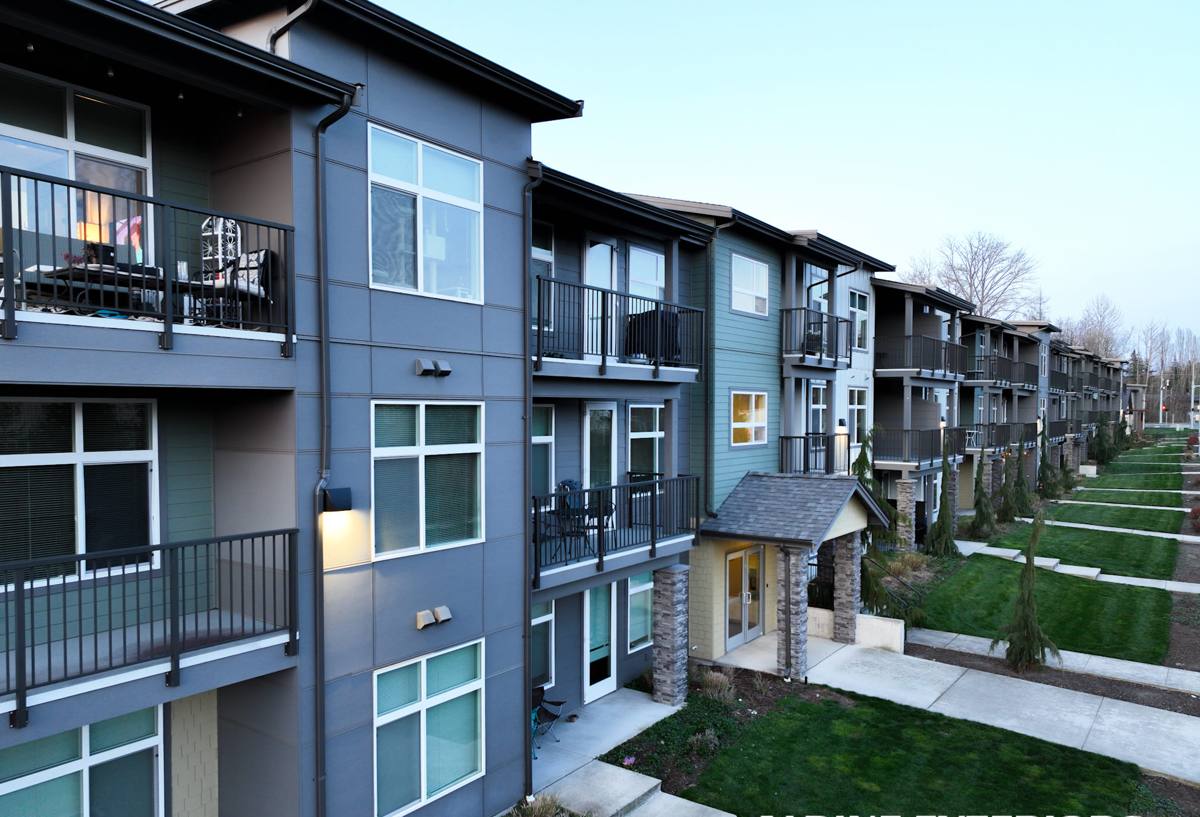
Signs Your Fairhaven Home Is Ready for Window Replacement
Older homes in this neighborhood — a lot of them with real character and older construction — tend to show the same handful of warning signs before a window fully fails. Catching these early saves money and prevents damage from spreading into the wall framing.
- Fogging or moisture between panes on double- or triple-glazed units — a sign the seal has failed
- Wood sash or sill that feels soft, spongy, or shows dark staining
- Visible gaps between the window frame and siding, often with old caulk that's cracked or pulled away
- Windows that are hard to open, close, or lock — frames can swell or warp with repeated wetting and drying
- Noticeable drafts or a cold spot near the window even when it's fully closed
- Paint that keeps failing on the interior or exterior trim no matter how often it's redone
- Visible corrosion on aluminum frames, hinges, or hardware
Any one of these on its own might just need a repair. Several together, especially on a window that's original to an older Fairhaven home, usually means replacement is the more cost-effective path.
What a Correct Window Replacement Job Actually Involves
It's Not Just the Window — It's the Opening
A lot of window problems trace back not to the window itself but to how the rough opening was flashed and sealed. In a climate that gets this much wind-driven rain, the water management details around the window matter as much as the window's own quality. That means proper flashing tape at the sill and jambs, a sloped sill pan to direct any intruded water back out rather than into the wall cavity, and integration with the home's weather-resistive barrier so water sheds down and over the window, not behind it.
Sealing Without Trapping Moisture
It's tempting to just caulk everything heavily and call it sealed, but over-sealing can trap moisture inside a wall assembly instead of letting it escape. Correct installation uses sealant and flashing in the right order and the right locations — sealed where water needs to be kept out, left open where the assembly needs to breathe or drain.
Fastening and Shimming
Windows need to be shimmed level, plumb, and square before they're fastened, or you end up with operational problems down the road — sashes that bind, locks that don't align, and stress points where seals fail early. This step gets rushed on lower-quality installs and it's one of the most common causes of a window that "should" be fine but isn't.
Choosing the Right Window Type for Fairhaven's Climate
There's no single "best" window material — it depends on your home's age, your budget, and how much upkeep you want to take on. Here's how the common options hold up against the salt air, rain, and moss exposure typical of this area.
| Frame Material | Salt Air Resistance | Moisture Behavior | Upkeep |
|---|---|---|---|
| Vinyl | Very good — won't corrode | Doesn't absorb water; seams need periodic recaulking | Low |
| Fiberglass | Excellent — dimensionally stable | Very stable in wet/dry cycles, resists warping | Low |
| Wood-clad | Good on the exterior clad face | Exterior protected, but any breach exposes wood core to rot | Higher — needs monitoring at joints |
| Aluminum | Poor near salt air without upgraded finishes | Conducts cold, prone to condensation | Moderate to high |
Our general standard for homes this close to the water is fiberglass or quality vinyl for most replacements, because both shrug off salt exposure and don't give moss and algae a food source the way bare wood can. Wood-clad windows still have a place on homes where matching a historic look matters, but we're upfront that they carry more long-term maintenance in this specific climate — that's a trade-off worth going into with eyes open, not a reason to rule them out.
Glass and Glazing Choices That Make Sense Here
Beyond frame material, the glazing package affects comfort and condensation control, which matters in a climate with persistent damp air. Double-pane with a low-E coating is the standard baseline for this region. Argon-filled units add a modest efficiency bump. For homes on busier streets or closer to Bellingham Bay's wind exposure, a slightly heavier glass package can also cut down on noise and drafts. We'll walk through what makes sense for your specific window openings rather than defaulting to the most expensive option across the board.
Our Window Replacement Process
- On-site assessment — we look at each window individually, not just the whole house at once, since sun exposure and wind exposure can vary window to window even on the same wall
- Honest scope — we tell you which windows genuinely need replacement now, which can wait, and which just need resealing or minor repair
- Material selection — we walk through frame and glazing options against your budget and how the window is exposed
- Removal and opening inspection — once the old window is out, we check the framing and sheathing underneath for hidden moisture damage before anything new goes in
- Flashing and sill pan installation — built for this rainfall pattern, not a generic install
- Window setting, shimming, and fastening — level, plumb, square, every time
- Exterior and interior finish work — trim, caulking, and paint or stain matched to the rest of the home
- Final walkthrough — we test operation and locks on every window before we consider the job done
What Window Replacement Typically Costs
Exact pricing depends on window size, quantity, material, and whether the opening needs any repair once the old window comes out. In general terms, expect the following cost drivers to move the number up or down:
| Factor | Effect on Cost |
|---|---|
| Frame material (vinyl vs. fiberglass vs. wood-clad) | Vinyl typically lowest, wood-clad typically highest |
| Window size and configuration (single unit vs. bay/picture window) | Larger and multi-panel units cost more per opening |
| Hidden rot or framing damage found during removal | Adds labor and material for repair before the new window goes in |
| Number of windows replaced at once | Doing several at once usually lowers the per-window cost |
| Trim and finish work required | Matching existing exterior trim profiles can add time |
We give firm, itemized quotes after seeing the actual windows — we don't like guessing over the phone on a job where hidden damage is common enough to matter.
Questions Worth Asking Before You Hire Anyone
- Do you inspect the framing and sheathing after removing the old window, or just install and go?
- What flashing and sill pan method do you use, and why?
- Is your crew licensed and insured to work in Washington State?
- Will the same crew be on-site for the whole job, or is work subcontracted out?
- What's the warranty on both the window itself and your labor?
- Can you show me examples of similar homes you've worked on in this area?
A contractor who answers these clearly and specifically, without dodging the framing and flashing questions, is one worth trusting with an opening in your home's exterior wall.
Why It Matters That We Already Work in Fairhaven
A crew that regularly works this neighborhood already knows what the older housing stock here tends to look like behind the trim, what kind of rot patterns show up on the water-facing sides of a house, and how much moss buildup is normal versus a sign of a bigger drainage issue. That's not something you can fully replicate by reading a spec sheet — it comes from doing the work here, repeatedly, in the actual conditions Fairhaven homes deal with. It also means we're a known, findable business if a warranty question comes up five years down the line, not a crew that drove in from out of the area for one job.
Get a Free, No-Pressure Estimate
If you're noticing drafts, fogged glass, or sticking sashes on your Fairhaven home, it's worth having someone take a real look before winter's rain picks back up. We'll assess your windows honestly, tell you what actually needs replacing, and give you a straightforward quote — no pressure, no upsell. Use the form below to request your free estimate.