 Bellingham Siding
 Why Metal Roofing Makes Sense for Puget Homes
Puget sits close enough to the water that homes here deal with a specific mix of weather stress: salt-laden air drifting in off the Sound, wind-driven rain that doesn't just fall straight down but gets pushed sideways into laps and seams, and a moss season that runs long and wet for most of the year. Asphalt shingle roofs can handle all of this reasonably well when they're new, but they wear against exactly these conditions — granule loss from wind-driven rain, moss roots working into the mat, and salt air accelerating the breakdown of adhesive strips and metal flashing components over time.
Metal roofing is a direct answer to that combination. A correctly installed metal roof sheds water fast, gives moss very little to hold onto, and — when the right alloy and coating are specified — resists the corrosion that salt air causes faster here than it does further inland in Whatcom County. That's the whole case for it in one sentence: less surface area for moss to colonize, faster water shedding in driving rain, and better long-term corrosion resistance near the Sound. Everything else in this guide is about doing that correctly.
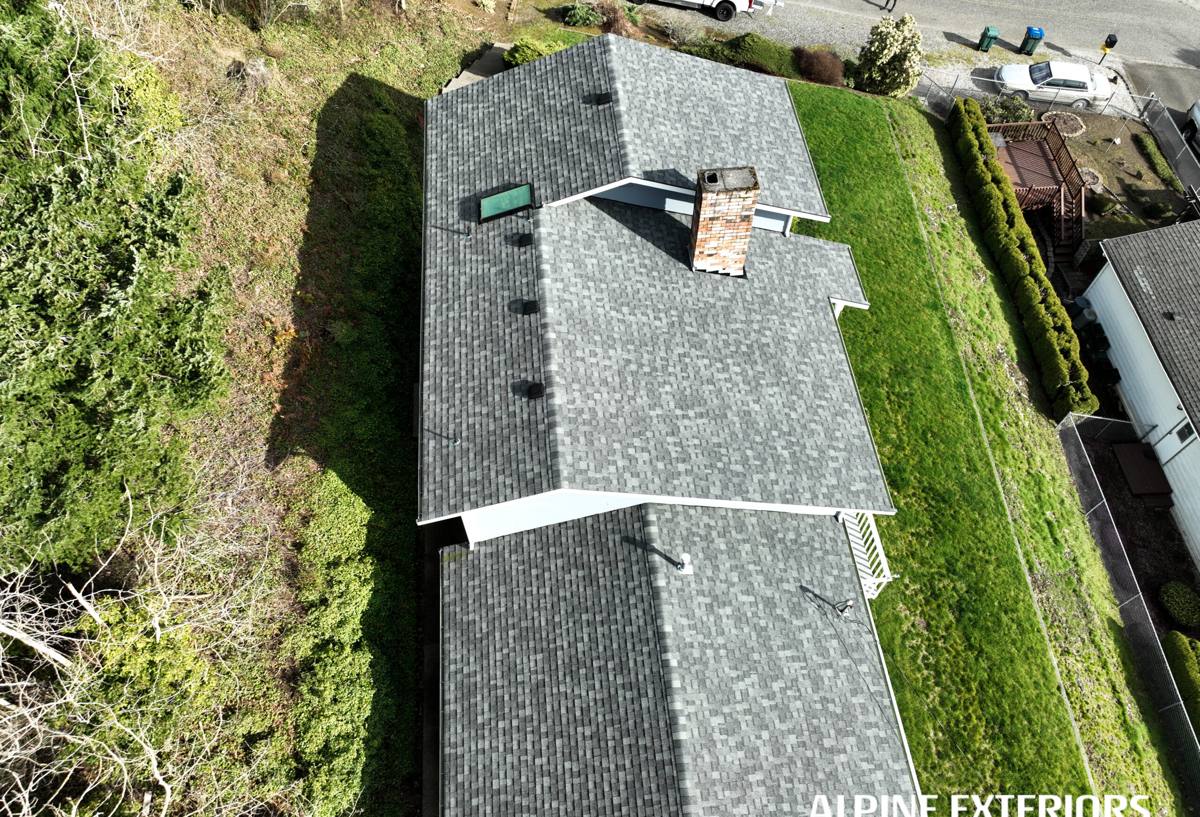
What Driving Rain and Salt Air Actually Do to a Roof
It helps to be specific about the failure modes, because they shape how we detail a metal roof here versus how a generic install manual describes it.
Driving rain
When rain comes in at an angle instead of straight down, it pushes water sideways under laps, around fasteners, and into any gap in flashing that a plumb-vertical rain wouldn't reach. This is why lap direction, fastener sealing, and flashing at every roof-to-wall and roof-to-roof transition matter more here than they would in a drier, calmer climate. A roof that would be fine in a low-wind region can leak in Puget if those details are rushed.
Salt air
Proximity to the Sound means airborne salt settles on exposed metal — fasteners, flashing, panel edges — and accelerates corrosion, especially at cut edges and fastener penetrations where the protective coating has been disturbed. Bare or poorly coated steel components can start showing rust streaks years before they would inland. This is a material selection issue as much as an installation issue.
Moss and prolonged moisture
Whatcom County's wet season is long, and shaded, north-facing, or tree-covered sections of a roof stay damp for extended stretches. Moss and algae take hold wherever debris collects and moisture lingers, and on shingle roofs the moss roots actually lift and separate the granule mat. Metal doesn't give moss the same foothold, but it isn't moss-proof either — a metal roof with poor drainage design or debris-catching valleys can still grow a moss mat on top of the panels over time.
Metal Roofing Systems: What We Recommend and Why
Not all metal roofing is the same product wearing a different color. The two systems homeowners in Puget typically choose between are standing seam and exposed-fastener panels, and the difference matters more here than in a drier climate.
| System | How it sheds water | Fasteners | Best fit |
|---|---|---|---|
| Standing seam | Concealed clips, raised interlocking seams — no fastener penetrations through the panel face | Hidden, panel expands/contracts independently | Full roofs in high-exposure, wind-driven-rain areas; longest low-maintenance lifespan |
| Exposed-fastener (screw-down) panel | Overlapping ribs, fasteners driven through the panel face with sealing washers | Visible, washers degrade over time and need eventual replacement | Lower upfront cost projects, outbuildings, budget-conscious re-roofs |
For most primary Puget homes, we lean toward standing seam specifically because it removes the recurring maintenance item that exposed-fastener systems carry: the rubber washers under every screw eventually harden and shrink from UV and weather cycling, and in a driving-rain climate a failed washer becomes a leak point faster than it would somewhere drier. Exposed-fastener panels are still a legitimate, more affordable option for detached garages, shops, or budget-driven projects — we'll walk through the trade-off honestly rather than upselling a system a given roof doesn't need.
Coating and material
Given the salt air, we favor coated steel panels with a quality paint or Galvalume-type finish rated for coastal exposure, along with matched, compatible flashing metal at every penetration. Mixing incompatible metals (bare aluminum flashing against steel panels, for instance) can set up galvanic corrosion at the contact point — a detail that's easy to get wrong and expensive to fix once it's under a finished roof.
What a Correct Metal Roof Install Involves
The panels themselves get most of the attention, but the components underneath and around them are what actually determine whether the roof performs in Puget's weather over the next few decades.
- Underlayment: a synthetic or high-temp ice-and-water-shield underlayment as a backup water barrier beneath the panels, critical in wind-driven rain conditions
- Deck inspection and repair: checking the roof deck for rot or soft spots before panels go down — common on older Whatcom County homes with a history of moisture intrusion
- Ventilation: proper intake and exhaust airflow so moisture doesn't condense against the underside of the metal in our humid, mild climate
- Flashing at every transition: valleys, chimneys, skylights, roof-to-wall intersections, and eaves — each detailed for the specific panel system, not a generic template
- Fastener and seam sealing: correct fastener spacing and torque, or on standing seam, properly engaged and clipped seams with room for thermal movement
- Drip edge and gutter integration: water directed cleanly off the roof edge and into drainage rather than back under the fascia
Skipping or rushing any one of these doesn't usually show up on day one — it shows up two or three wet seasons later as a leak at a valley, a rusting fastener, or moisture damage nobody can see until it's inside the attic. That's why we treat these as non-negotiable steps rather than line items to shortcut on a bid.
Our Process for a Puget Metal Roof
- On-site assessment: we look at the existing roof, deck condition, ventilation, exposure to prevailing wind and rain, and any moss or moisture history specific to the home's shading and orientation
- System recommendation: standing seam or exposed-fastener, panel gauge, and coating recommended based on that assessment and your budget — not a one-size answer
- Tear-off or overlay decision: most metal re-roofs mean a full tear-off to inspect and repair the deck, though some situations allow installing over existing roofing with the right underlayment; we'll tell you honestly which your roof needs
- Installation: deck repair, underlayment, panels, and flashing installed in sequence, with attention to every transition point noted above
- Cleanup and walkthrough: job-site cleanup including magnetic sweep for stray fasteners, and a walkthrough so you understand what was done and how to maintain it
Maintenance: What Metal Actually Needs in This Climate
One of the real advantages of metal roofing in Puget is how little ongoing maintenance it needs compared to shingles — but "little" isn't "none."
- Clear valleys and gutters of needles and debris a couple times a year so water and any moss spores don't sit and accumulate
- Check exposed-fastener washers periodically if that's the system you have — they're the one component that ages faster than the panel itself
- Watch for scratches or scuffs in the coating (from ladders, branches, or debris) and touch them up before bare metal is exposed to salt air and moisture
- Keep overhanging branches trimmed back — less shade means less prolonged dampness and less debris landing on the roof
Cost Factors for a Puget Metal Roof
Metal roofing costs more upfront than asphalt shingles, and the total depends on several project-specific factors rather than a flat per-square-foot number.
| Factor | Why it moves the price |
|---|---|
| Panel system | Standing seam runs higher than exposed-fastener panels due to material and labor |
| Roof complexity | Valleys, dormers, and multiple pitches mean more flashing, cutting, and labor time |
| Deck condition | Rot or soft decking found during tear-off adds repair costs before panels go on |
| Tear-off vs. overlay | Full tear-off costs more than an overlay but is usually the more honest long-term choice |
| Coating and gauge | Heavier gauge steel and premium coastal-rated coatings cost more but pay off in corrosion resistance near the Sound |
We give straight, itemized estimates so you can see where the cost is coming from rather than a single lump number — and we'll tell you plainly if a lower-cost option is a fair trade-off for your specific roof or if it's cutting a corner you'll regret in this climate.
Why a Crew That Already Works Puget Matters
Metal roofing installation isn't forgiving of guesswork — flashing details and fastener choices that work fine in a dry inland climate can fail within a few years against Puget's combination of wind-driven rain and salt exposure. A crew that regularly works homes in and around Bellingham and Whatcom County already knows which transitions tend to leak first in this weather, which coatings actually hold up near the Sound, and how local moss and moisture patterns should shape ventilation and drainage decisions. That local pattern-recognition is the difference between a roof that's technically installed to spec and one that's actually built for where it sits.
Get a Straight Answer About Your Roof
If you're weighing metal roofing for a home in the Puget area, we're happy to take a look and give you an honest read on what your roof actually needs — no pressure, no inflated scare tactics about moss or leaks that aren't there. Fill out the form below for a free estimate, and we'll walk you through your options in plain terms.