 Bellingham Siding
 Building New in Lynden? The Windows Have to Match the Climate, Not Just the Floor Plan
Lynden sits far enough inland from Bellingham Bay that salt exposure is lighter than it is right on the water, but the moisture load is still heavy year-round. Long stretches of driving rain, high humidity off the Nooksack valley, and a moss season that runs most of the year all put steady pressure on a building envelope. On a new-construction project, the windows aren't a retrofit decision made under time pressure — they're part of the original envelope design, and getting the flashing, sealants, and glass package right the first time matters more here than almost anywhere else in the state.
We install new-construction windows for builders and owner-builders throughout the Bellingham and Whatcom County area, including Lynden. This page covers what a correct new-construction window installation actually involves in this climate, not just the window itself.
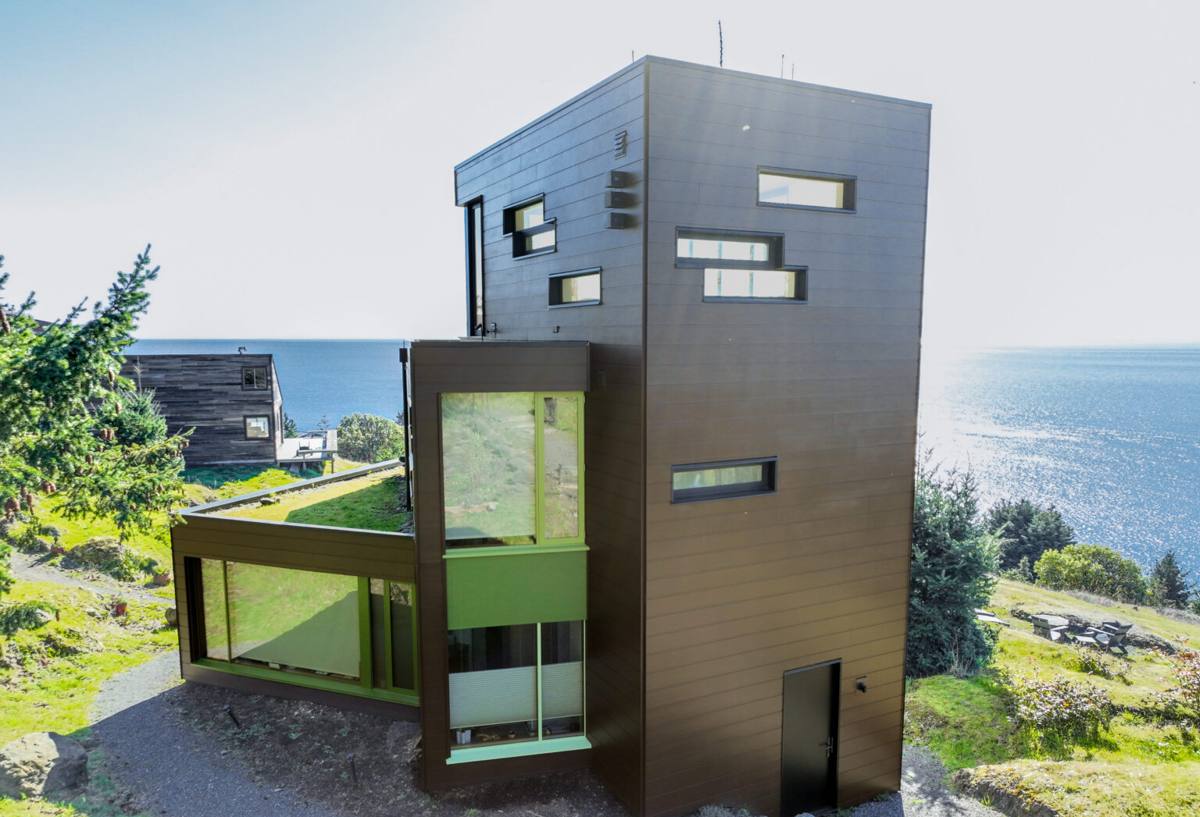
What "New-Construction" Windows Actually Means
New-construction windows have a nailing fin (or flange) built into the frame that gets fastened directly to the sheathing before siding or trim goes on. That's different from a replacement or "insert" window, which fits inside an existing frame after the old sash is removed. On a new build, we get to install the window as part of the original weather-resistive barrier system — house wrap, flashing tape, sill pans, and window all layered in the correct order — instead of working around whatever's already there.
This is the best-case scenario for long-term performance. It's also the stage where mistakes are cheapest to avoid and most expensive to fix later, because once siding and trim are closed up, a bad flashing detail is hidden until it fails.
Why the Installation Sequence Matters More Than the Window Brand
Homeowners often focus on which window brand to buy. That matters, but in this climate the installation sequence — sill pan flashing, back dam, jamb flashing, head flashing with a drip cap, and correct integration with the house wrap — determines whether water gets managed or trapped. A mid-grade window installed with a correct sill pan and flashing order will outperform a premium window installed with shortcuts, every time.
What Whatcom County's Climate Does to a Window Opening Over Time
A few things specific to this region shape how we detail new-construction windows here:
- Driving rain: Winter storms push rain sideways, not straight down, which means water hits the vertical face of the window and works its way toward any gap in the flange or trim, not just the sill.
- Extended humidity and moss season: Long wet stretches keep exterior surfaces damp for days at a time, which is exactly the condition that lets moss and mildew establish on sills, trim, and any spot where water sits instead of draining.
- Salt-influenced air: Even inland from the water, Whatcom County sees salt-laden air move through on marine weather systems, which accelerates corrosion on unprotected fasteners and lower-grade hardware.
- Temperature swings: Cool damp winters and warmer summers cause building materials to expand and contract, which is why sealant choice and joint design matter as much as the sealant application itself.
None of this means new construction here is harder than anywhere else — it means the details that are optional in a dry climate are not optional here.
What a Correct New-Construction Window Installation Involves
Sill Pan and Back Dam
Every rough opening gets a sloped sill pan with a back dam before the window ever goes in. The back dam stops any water that gets past the window from running back into the wall cavity, and the slope directs it back outside instead of pooling on the sill. This is the single most important detail on a new-construction install and the one that's easiest to skip if a crew is moving fast.
Flashing Order
Flashing has to be layered so water always sheds outward and downward, like shingles: sill pan first, then the window, then jamb flashing over the nailing fin, then head flashing last, integrated with the house wrap above it. If this order gets reversed anywhere, water gets funneled into the wall instead of away from it.
Nailing Fin Fastening
The fin gets fastened per the manufacturer's schedule — skipping fasteners to save time is a common shortcut that shows up later as air infiltration or a window that isn't square. We follow the manufacturer's pattern because it's also what keeps the warranty valid.
Sealant and Backer Rod
Interior and exterior sealant joints use backer rod where the gap calls for it, so the sealant forms a proper bead instead of a thin skin that cracks with the first temperature swing. Sealant is not a substitute for correct flashing — it's a secondary barrier, not the primary one.
Insulation and Air Sealing
The gap between the rough opening and the window frame gets filled with a low-expansion foam or backer rod and sealant, not standard can foam that can bow the frame out of square. A window that's out of square won't operate correctly for the life of the house.
Choosing a Glass and Frame Package for This Climate
New construction is the one time you can spec the window package to the house instead of working within the constraints of an existing opening. A few decisions worth making deliberately in Whatcom County:
| Factor | Why It Matters Here |
|---|---|
| Frame material | Vinyl and fiberglass both resist moisture well; fiberglass holds paint and dimensional stability better over decades, vinyl is more budget-friendly and performs fine when installed correctly |
| Glass package (Low-E, gas fill) | Reduces heat loss during long cool, wet stretches and cuts condensation risk on interior glass during winter |
| U-factor | Lower U-factor keeps interior glass surfaces warmer, which matters for comfort and condensation control in a humid marine climate |
| Cladding/finish durability | Exterior-facing hardware and cladding should be rated for coastal or near-coastal exposure given the region's salt-influenced air |
| Weep system design | Sill weep holes need to stay clear and function correctly since the window will be shedding water regularly, not occasionally |
We'll walk through these trade-offs against your budget rather than defaulting to one brand or package for every job — the right spec depends on orientation, exposure, and how much of the house faces prevailing weather.
Our Process for New-Construction Window Installs
- Plan review: We look at the rough openings, window schedule, and elevations before framing is finalized so any sizing or header issues get caught early.
- Coordination with the framer and siding crew: Window installation timing has to sync with house wrap and flashing tape installation — we coordinate directly with whoever's running those trades.
- Sill pan and flashing install: Every opening gets the full sill pan, back dam, and flashing sequence described above, not a shortcut version.
- Window set and fastening: Windows are set plumb, level, and square, then fastened per manufacturer spec and checked for operation before trim goes on.
- Final seal and inspection: Interior and exterior sealant, insulation, and a final check of every opening before siding closes it up.
A Practical Checklist for Homeowners and Builders
- Confirm the sill pan and back dam are part of the install spec, not an upsell
- Ask what flashing tape and house wrap system will be used and how they integrate with the window
- Get the manufacturer's fastening schedule followed, not shortcuts to save labor time
- Choose a glass package based on your home's orientation and exposure, not just price
- Make sure weep holes and drainage paths are checked before siding closes up the opening
- Ask for photos or a walkthrough of the flashing before it's covered — it's the one chance to see it
Why Hiring a Crew That Already Works in Lynden and Whatcom County Matters
New-construction window installation isn't complicated in principle, but it's unforgiving of shortcuts in a climate that gets this much sustained moisture. A crew that works Lynden and the surrounding Bellingham area regularly already knows how local weather patterns behave, what exposure levels different lot orientations see, and how to sequence flashing work around Whatcom County's wetter build seasons. That's different from a crew that installs windows occasionally and treats every region the same.
We also coordinate directly with framers, siding installers, and general contractors on new builds, which matters for keeping the schedule moving without compromising the flashing sequence to hit a deadline.
Get a Straightforward Estimate
If you're planning a new build in Lynden or anywhere in the Bellingham area and want the window package specified and installed correctly the first time, we're happy to walk through your plans and give you a clear, no-pressure estimate. Use the form below to get started.