 Bellingham Siding
 Siding Replacement Built for Lynden's Weather, Not Just Its Curb Appeal
Lynden sits inland from Bellingham Bay, but it doesn't escape the marine air that moves through Whatcom County most of the year. Homes here still take on long stretches of driving rain, damp shoulder seasons that never fully dry out, and the kind of shaded, moisture-holding conditions that grow moss on roofs, fences, and siding alike. Add the wind that comes off the open farmland surrounding town, and siding on a Lynden home is working harder than most homeowners realize — every single day, not just during a storm.
A siding replacement here isn't a cosmetic upgrade. It's the point where you decide whether the next 30-plus years of weather protection are handled correctly, or whether you're setting up the same problems to resurface in another decade or two. We replace siding in Lynden the way we'd want it done on our own homes: with attention to what's happening behind the siding, not just what's visible from the driveway.
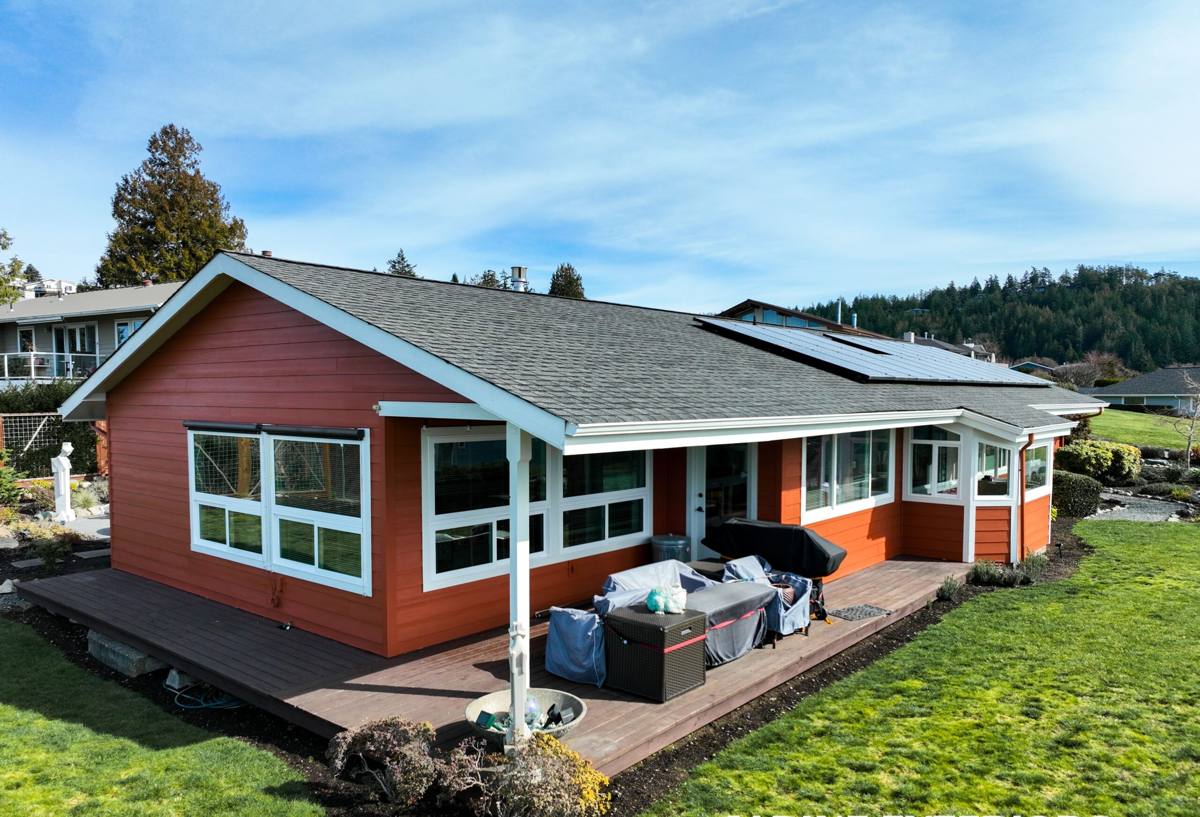
Signs a Lynden Home Is Due for Siding Replacement
Most siding failures don't announce themselves with a single dramatic event. They show up as a pattern of small issues that add up over a few wet seasons. Watch for:
- Boards that are soft, spongy, or crumbling at the edges when pressed
- Paint that won't hold anymore, even after repeated repainting
- Persistent moss or algae staining that returns within a season of cleaning
- Visible gaps, warping, or cupping in individual boards or panels
- Bubbling or peeling near trim, corners, and window edges — common entry points for water
- A musty smell near exterior walls or a noticeable rise in indoor humidity
- Siding that's original to a home built more than 20-25 years ago, especially wood or older composite products
Any one of these on its own might be a repair. Several at once, especially on a home that's taken a few decades of Whatcom County winters, usually means the siding system as a whole has reached the point where patching is a temporary fix, not a solution.
What a Correct Siding Replacement Actually Involves
It's Not Just Removing Old Boards and Nailing Up New Ones
The siding itself is the least complicated part of a replacement. What determines whether the job holds up through Lynden's wet winters is everything underneath it:
- Full tear-off and inspection — old siding comes off so the sheathing underneath can actually be checked for rot, soft spots, or prior water damage, not guessed at from the outside.
- Water-resistive barrier — a correctly lapped, sealed weather barrier goes on before any new siding, giving the wall a second line of defense if water ever gets past the surface.
- Flashing at every penetration — windows, doors, hose bibs, vents, and anywhere else something interrupts the wall plane needs flashing detailed to shed water down and out, not into the wall cavity.
- Proper fastening and clearances — siding installed too tight to the ground, deck, or roofline traps moisture against the bottom edge, which is where a lot of premature failure starts.
- Trim and caulking done last, done right — trim that's sealed and painted correctly keeps water out of the one place most siding failures actually begin: the seams.
Skip any one of these steps and the new siding can look great for a few years while the same underlying problems quietly continue. This is where a lot of siding jobs go wrong — not in the product chosen, but in what corners got cut installing it.
Why We Install Only James Hardie Fiber Cement Siding
We made the decision to install exclusively James Hardie fiber cement siding, and we don't install vinyl, LP SmartSide, cedar, primed spruce, or other fiber cement brands. That's a deliberate standard, not a lack of options.
Fiber cement is non-combustible, doesn't expand and contract with moisture the way wood-based products do, and holds paint and factory finishes far longer than wood siding in a climate that stays damp for months at a time. James Hardie's ColorPlus factory finish is baked on and warrantied against fading and chipping, which matters in a region where repainting siding every few years isn't realistic for most homeowners. Hardie also engineers its HZ5 product line specifically for climates like ours — colder, wetter, and prone to the freeze-thaw cycles Whatcom County sees through the winter.
We're not going to tell you every other siding product is worthless — plenty of products have legitimate uses. But when we're the ones standing behind the installation and the warranty conversation five, ten, twenty years from now, we want a product with a track record of holding up to exactly the conditions Lynden throws at it. That's Hardie, and that's the only thing we put on homes.
Comparing Siding Options for Lynden's Climate
| Factor | Vinyl | Wood / Primed Spruce | James Hardie Fiber Cement |
|---|---|---|---|
| Moisture resistance | Doesn't absorb water, but seams and panels can warp or buckle | Absorbs moisture; prone to rot without diligent maintenance | Engineered to resist moisture damage; doesn't rot |
| Fire resistance | Melts and can deform in heat | Combustible | Non-combustible |
| Finish longevity | Color molded in, can fade and chalk over time | Requires repainting every few years in this climate | Factory ColorPlus finish, warrantied against fading |
| Moss and algae resistance | Moderate — smooth surface, but still stains | Low — porous surface holds moisture and growth | Moderate to good with correct clearances and maintenance |
| Typical lifespan when installed to spec | 20-30 years | 15-25 years, shorter without upkeep | 30-50 years |
Cost matters, and vinyl or engineered wood products often carry a lower sticker price upfront. But the comparison that actually matters is cost over the life of the siding — repainting cycles, repair frequency, and how the product performs after fifteen wet Whatcom County winters, not just how it looks the day it's installed.
Our Siding Replacement Process
1. On-Site Assessment
We walk the exterior with you, look at the current siding, sheathing condition where accessible, and any trouble spots you've noticed — recurring stains, soft areas, drafts near certain walls.
2. Written Scope and Estimate
You get a clear breakdown of what's being removed, what's being inspected and repaired underneath, the Hardie product and color selected, and the total cost — no vague allowances that turn into surprise change orders.
3. Tear-Off and Inspection
Old siding comes off in sections so sheathing can be checked as we go. Any rot or damage gets addressed and documented before new material goes up over it.
4. Weather Barrier and Flashing
Water-resistive barrier and flashing go in at every window, door, and penetration, lapped correctly so water sheds outward at every layer.
5. Hardie Installation
Siding is installed to James Hardie's fastening and clearance specifications — the details that keep the manufacturer's warranty valid and keep the wall assembly dry long-term.
6. Trim, Caulking, and Final Walkthrough
Trim goes on last, seams are sealed correctly, and we walk the finished exterior with you before calling the job done.
What to Ask Before Hiring a Siding Replacement Contractor
- Do you remove the old siding completely, or install over what's there?
- Who inspects the sheathing once the old siding is off, and what happens if there's rot?
- What weather-resistive barrier and flashing details do you use around windows and doors?
- Are you a certified installer for the siding product you're recommending?
- What's covered under warranty — material, labor, or both — and for how long?
- Have you worked in Lynden or elsewhere in Whatcom County before, and do you understand the moisture and moss conditions here?
- Will I get a written scope of work before the project starts, not just a verbal estimate?
A contractor who can't answer these clearly and specifically is telling you something about how the job will go.
Timeline and What to Expect During the Project
Most single-family siding replacements in Lynden take one to three weeks depending on the size of the home, the amount of trim and detail work involved, and what we find once the old siding is off. Weather plays a role too — we schedule tear-off during stretches with a reasonable dry window, since an open wall shouldn't sit exposed to Whatcom County rain any longer than necessary. You'll have some noise and activity around the exterior of the home, but the property stays accessible and usable throughout.
Why a Crew That Already Works Lynden Matters
Siding installation isn't one-size-fits-all across regions. A crew used to installing in a dry climate makes different assumptions about moisture management than one that's replaced siding through a decade of Whatcom County winters. We know what driving rain does to poorly flashed trim, how fast moss establishes itself on north-facing walls in this area, and which details actually matter versus which ones are just upsells. That local track record shows up in how the job is scoped, how it's installed, and how it holds up five and ten years later.
If your Lynden home's siding is showing its age, we're happy to take a look and give you a straightforward, no-pressure estimate — just fill out the form below.