 Bellingham Siding
 Roof Repair Built for Lynden's Weather, Not Just Any Roof
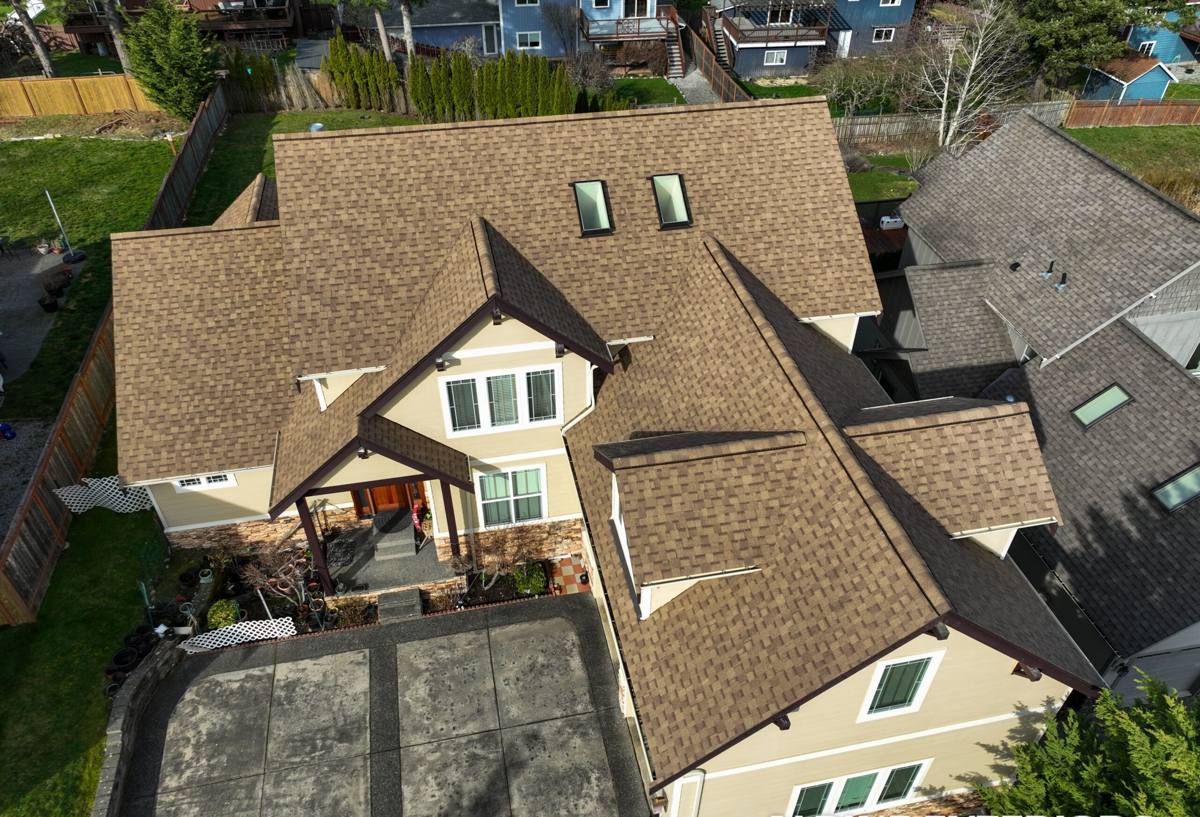
Lynden sits inland from Bellingham Bay in the Nooksack Valley, surrounded by farmland and open sky — which sounds calmer than a roof closer to the water, but it isn't always easier on a roof. The valley still gets salt-tinged air carried in off Puget Sound on a west wind, long stretches of driving rain through fall and winter, and a moss season that can run most of the year in shaded or north-facing sections of a roof. A roof repair here has to account for all three, not just patch the spot that's leaking today.
We work on Lynden roofs regularly, and the calls we get are rarely a single obvious problem. Usually it's a combination — moss that's been holding moisture against shingles for months, a flashing detail that was never quite right, and a section of underlayment that's finally given out. A repair that only addresses the visible leak and ignores the rest tends to come back within a year or two.
Why Local Climate Drives What a Roof Repair Needs to Include
Salt Air and Slow Corrosion
Whatcom County isn't oceanfront, but Lynden is still close enough to Bellingham Bay that airborne salt reaches roofing metal — flashing, fasteners, gutter hangers, vent caps. Salt-laden moisture accelerates corrosion on lower-grade metal and fasteners faster than a homeowner usually expects. A repair that reuses corroded fasteners or unprotected metal flashing is a repair that's already on borrowed time.
Driving Rain and Wind-Driven Water
Rain in this part of Washington doesn't always fall straight down. When wind pushes it sideways, water finds its way under shingle edges, around poorly lapped flashing, and into any gap that a calm, vertical rain would never reach. Roofs here need laps, flashing, and sealant details oriented to handle wind-driven rain specifically, not just standard rainfall.
A Long Moss Season
Shaded roof slopes, tree cover, and the valley's damp air give moss a long runway to establish itself — often close to year-round on north-facing or heavily shaded sections. Moss doesn't just look bad. It holds moisture against the roofing surface, lifts shingle edges, and works its way under flashing over time, which is one of the most common root causes behind leaks we're called out to repair.
Common Roof Repair Issues We See in Lynden Homes
Moss-Related Shingle and Deck Damage
Long-term moss growth is one of the most frequent underlying causes of roof leaks in this area. By the time a stain shows up on a ceiling, moss has often been trapping moisture against the roof deck for a long while, softening the wood beneath and degrading the shingles' ability to shed water.
Flashing Failures
Flashing around chimneys, skylights, vent pipes, and roof-to-wall transitions is where most leaks actually originate — not in the open field of the roof. Old sealant cracks, metal corrodes, or a flashing detail was undersized or installed with the wrong lap direction to begin with.
Gutter and Edge Issues
Clogged or undersized gutters back water up under the first course of shingles, especially during heavy fall rain. Combined with moss debris, this is a common cause of edge rot that shows up as soft, discolored fascia or sagging gutter lines.
Ventilation-Related Wear
Roofs with poor attic ventilation trap moisture from inside the home, which speeds up deck rot and shingle failure from underneath — a problem that's easy to miss because the visible surface can look fine while the structure underneath is already compromised.
What a Correct Roof Repair Actually Involves
A proper repair starts with figuring out the actual cause, not just where the water showed up inside the house. Water travels along rafters and decking before it drips, so the interior stain and the exterior source are often several feet apart. We trace it back before we start pulling shingles.
Matching Materials, Not Just Covering the Spot
Shingle color, profile, and granule wear all shift over time, and a patch using mismatched material stands out and can behave differently in wind and rain than the surrounding roof. Where an exact match isn't available, we're upfront about it rather than pretending a mismatched patch will blend in.
Getting the Flashing Detail Right
Since most leaks trace back to flashing, a repair that reuses failing flashing or re-seals it with caulk instead of correcting the lap and fastening is not a repair we consider done — it's a delay.
Checking the Deck, Not Just the Surface
Any time shingles come up around a repair area, we check the condition of the roof deck underneath. Soft or delaminated decking needs to be addressed before new roofing goes back down, or the repair is only as good as the wood it's nailed to.
Repair or Replace? How We Help You Decide
Not every roof problem needs a full replacement, and not every leak can be fixed with a patch. The honest answer usually comes down to how much of the roof is affected, its age, and what's happening underneath the surface.
| Factor | Leans Toward Repair | Leans Toward Replacement |
|---|---|---|
| Roof age | Under roughly 15 years | Approaching or past expected shingle lifespan |
| Extent of damage | Isolated to one section or detail | Spread across multiple slopes |
| Deck condition | Solid, no soft spots | Widespread rot or delamination |
| Moss history | Recently treated, limited spread | Long-term, untreated growth |
| Leak pattern | Single, traceable source | Multiple or recurring leak points |
We'll tell you plainly which category your roof falls into. If a repair genuinely solves the problem, that's what we recommend — a roof doesn't need to be replaced just because it's convenient for us to sell a bigger job.
Our Repair Process
- Inspection: We walk the roof (or use a camera when access or steepness makes that safer) to trace the leak to its actual source, not just the nearest visible damage.
- Assessment: We check flashing, decking, ventilation, and moss coverage together, since these problems usually overlap.
- Honest scope and estimate: You get a plain explanation of what's actually wrong, what it takes to fix it correctly, and a written estimate before any work starts.
- Repair: We remove and replace only what's compromised, correct the underlying flashing or ventilation issue, and match materials as closely as possible.
- Cleanup and check: Debris is cleared, gutters are checked for blockage from the work, and we confirm the repair is watertight before we consider the job finished.
Materials We Work With
Most Lynden homes we repair are asphalt composition shingle roofs, with a growing number of metal roofs and some cedar shake on older properties. Each material fails differently and needs a different repair approach.
Asphalt Composition Shingles
The most common roofing in the area. Repairs typically involve replacing damaged shingles, correcting flashing, and addressing moss and moisture at the source rather than just the surface symptom.
Metal Roofing
Metal roofs handle wind-driven rain well but are more sensitive to fastener and flashing corrosion from salt-tinged air. Repairs on metal roofs focus heavily on fastener condition and sealant at penetrations.
Cedar Shake
Older cedar shake roofs in the area are especially vulnerable to moss and moisture retention. We're honest that shake roofs carry a higher long-term maintenance burden in this climate than composition or metal, and we'll say so rather than oversell a repair that's fighting the material's nature.
Timing Your Repair Around Lynden's Seasons
Late spring through early fall is the most reliable window for roof repair work — drier weather means better material adhesion and safer working conditions. But a leak doesn't wait for good weather, and we handle emergency and off-season repairs when needed, with weather-appropriate materials and methods for wet conditions.
Moss treatment and prevention work well as a fall task, ahead of the winter rains, so growth doesn't get another full wet season to establish itself before it's addressed.
Signs You Likely Need a Roof Repair
- Visible moss growth, especially thick or spreading patches on shaded slopes
- Granules collecting in gutters or at downspout outlets
- Curling, cracked, or missing shingles
- Staining or discoloration on interior ceilings or upper walls
- Daylight visible through the roof deck from inside the attic
- Rusted or lifting flashing around chimneys, vents, or skylights
- Sagging sections along the roofline or at gutter edges
- A musty smell in the attic, which often signals trapped moisture
Why It Matters to Hire a Crew That Already Works in Lynden
A roofer who mainly works drier, milder climates can miss how much moss, salt-tinged air, and wind-driven rain actually shape a repair here. Flashing details that hold up fine elsewhere can fail within a season or two under Whatcom County's rain patterns. A crew that regularly works Lynden roofs knows which failure points show up again and again in this specific climate, and builds the repair to hold against them — not just to look finished on the day the work wraps up.
If you're dealing with a leak, moss buildup, or damaged flashing on a Lynden roof, we're happy to take a look and give you a straightforward, no-pressure assessment of what it actually needs. Use the form below to request a free estimate.