 Bellingham Siding
 Why Birch Bay's Waterfront Climate Is Tougher on Siding Than Most of Whatcom County
Birch Bay sits right on the water, and that changes what siding has to deal with day in and day out. Homes a few miles inland in Bellingham still get plenty of rain, but waterfront and near-waterfront properties in Birch Bay take on salt-laden air, stronger and more frequent wind-driven rain, and a longer stretch of the year where surfaces simply never fully dry out. Siding that isn't built or installed for that combination tends to show problems years before it should.
Salt Air and Metal Fasteners
Airborne salt accelerates corrosion on anything metal — nail heads, flashing, trim fasteners. Once a fastener starts rusting, it can bleed through the finish and, over time, lose its grip on the siding it's holding. This is one of the biggest differences between a Birch Bay installation and one a few miles inland: fastener selection and placement matter more here, not less.
Wind-Driven Rain at Wall Assemblies
Open water exposure means rain doesn't just fall straight down — it gets pushed sideways into walls, corners, and anywhere a joint or penetration isn't detailed correctly. A siding system that relies on caulk alone to keep water out will eventually fail in this kind of exposure. The wall assembly behind the siding has to be able to shed and drain water on its own.
Moss, Algae, and Prolonged Dampness
Whatcom County's moss season already runs long; Birch Bay's added humidity and shade from mature trees on many lots stretch it further. Moss and algae growth on siding isn't just cosmetic — trapped moisture underneath organic growth keeps the surface wet longer, which is exactly the condition that causes rot in wood-based products and finish breakdown in lower-quality claddings.
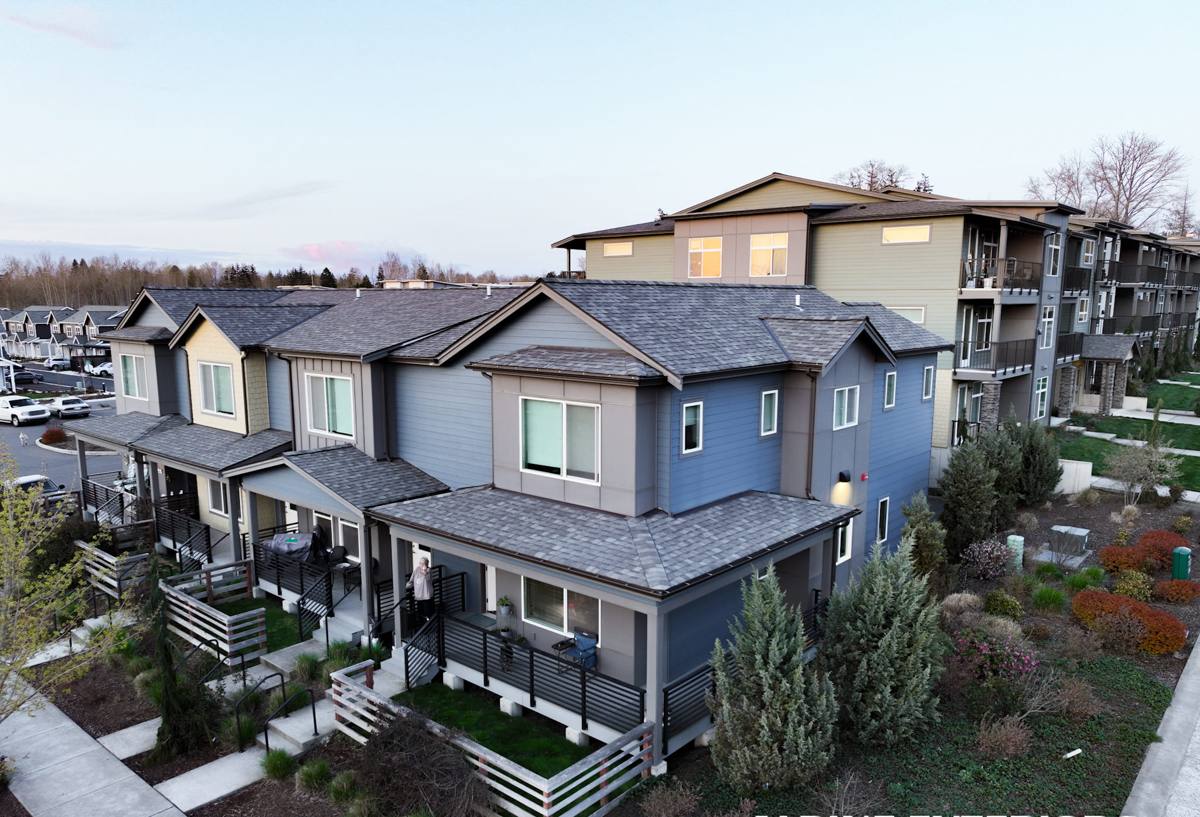
Why We Install Only James Hardie Fiber Cement in This Area
We made the decision years ago to install James Hardie siding exclusively, and areas like Birch Bay are a big part of why. Fiber cement doesn't rot, doesn't feed moss and algae the way wood fiber products can, and is non-combustible. James Hardie also engineers its board formulations for regional moisture and freeze-thaw exposure rather than using one blend nationwide, and our crews spec the version built for the Pacific Northwest's wet marine climate rather than a generic formulation. That's a meaningful difference in an area where siding sits wet more often than it sits dry.
We don't install vinyl, LP SmartSide, or cedar, and it's not because those products have no merit — it's because we've standardized our crews, our fastening details, and our warranty conversations around one system we trust to hold up on homes exposed the way Birch Bay homes are exposed.
What a Correct Installation Looks Like Here
The siding itself is only part of the equation. Most siding failures we get called out to inspect — regardless of brand — trace back to installation shortcuts, not the product. On a Birch Bay home, a few details matter more than they would somewhere drier and more sheltered.
Moisture Management Behind the Siding
A correctly installed wall has a drainage plane behind the cladding: a weather-resistive barrier, properly lapped and taped, with flashing at every window, door, and roof-to-wall transition so water is directed out and down rather than into the sheathing. Kick-out flashing where a roofline meets a wall is a small detail that's easy to skip and expensive to fix later — we don't skip it.
Fastening and Panel Layout for Wind Exposure
We use corrosion-resistant fasteners appropriate for coastal exposure, follow James Hardie's nailing pattern and clearance specs exactly, and stagger joints so the wall isn't relying on any single seam to keep water out. Butt joints get treated, not just butted together and caulked over.
Caulking That's Built to Last, Not Just Look Good
Caulk is a backup, not a primary defense, in a correctly built wall — but the caulk we do use is chosen for flexibility and adhesion in a marine climate, since joints here move more with temperature and moisture swings than they would in a drier region.
Choosing the Right Hardie Product Line for a Birch Bay Home
James Hardie makes several product lines, and the right choice depends on the home's style, exposure, and what look the owner wants. Here's how the main options compare for this area:
| Product | Best Use | Notes for Birch Bay Exposure |
|---|---|---|
| HardiePlank lap siding | Traditional horizontal siding, most home styles | Most common choice; wide range of widths and textures |
| HardiePanel vertical siding | Modern, board-and-batten, accent walls | Works well on gables and accent areas facing the water |
| HardieShingle siding | Cottage or craftsman-style homes | Popular for coastal-style aesthetics; same durable material |
| HardieTrim boards | Corners, window and door trim, fascia | Matched material prevents mismatched wear at trim vs. field |
We'll walk through these options during your estimate based on your home's actual exposure — a wall facing open water and prevailing wind gets treated differently than a sheltered side yard, even on the same house.
ColorPlus Factory Finish vs. Site-Painted Siding in a Salt Air Environment
James Hardie's ColorPlus finish is baked on at the factory in multiple coats, which matters more in a salt air environment than most homeowners realize. Site-applied paint on any siding material has to fight UV, moisture, and salt exposure from day one with a single field-applied coat; a factory finish is cured and hardened before it ever reaches your wall. In practice, that means better fade and chalking resistance over time and less of the peeling and touch-up work that salt-air-exposed paint jobs tend to need. It also comes with its own finish warranty separate from the substrate warranty, which is worth understanding before you pick a color and finish level.
What This Actually Costs
We don't like giving a number without seeing the house, but homeowners deserve a straight answer on what drives the price up or down. Broadly, fully installed James Hardie siding on homes in this area tends to fall somewhere in the range of $9 to $16 per square foot, with the final number depending on the factors below. Waterfront and bluff-adjacent properties in Birch Bay sometimes land toward the higher end simply due to access and the extra moisture detailing involved.
| Factor | Why It Moves the Price |
|---|---|
| Tear-off and disposal | Removing existing siding, especially layered or damaged siding, adds labor |
| Sheathing and framing repair | Hidden rot found after tear-off has to be fixed before new siding goes on |
| Product line and profile | Shingle-style and wider-board profiles cost more than standard lap |
| Trim and detail work | Homes with more corners, windows, and rooflines need more flashing and trim |
| Site access | Waterfront lots, steep grades, or tight access can slow the work |
Our Process, From First Call to Final Walk-Through
- On-site inspection of existing siding, trim, and any visible moisture or rot signs
- A written scope and product recommendation specific to your home's exposure
- Careful tear-off, with sheathing and framing repairs addressed before anything new goes up
- Installation to James Hardie's published specifications, including flashing and drainage details
- A final walk-through with you before we consider the job done
- Warranty registration paperwork handled on your behalf
Why Hiring a Crew That Already Works in Birch Bay Matters
Siding crews that mostly work drier, more sheltered neighborhoods don't always adjust their habits for a waterfront job — and habits are exactly what determines whether a wall holds up. Working regularly in Birch Bay and along the rest of the Whatcom County coastline means we're not guessing at fastener choice, flashing details, or product formulation; we're applying what we've already confirmed works here. It also means we're familiar with Whatcom County's permitting expectations and can plan around this area's weather windows instead of losing time to it mid-project.
Maintenance Your Birch Bay Home Will Actually Need
James Hardie siding installed correctly is low-maintenance, not no-maintenance. In a salt air, high-moss environment, a little attention once or twice a year keeps small issues from becoming expensive ones.
- Rinse salt residue off exterior walls periodically, especially on sides facing open water
- Check caulked joints annually for cracking or separation and have them redone before they fail
- Keep moss and organic debris cleared from siding, especially in shaded, damp areas
- Inspect flashing at rooflines and window heads for gaps or rust streaks
- Watch for any rust-colored staining around fastener heads and have it checked promptly
If you're weighing siding options for a Birch Bay home, we're glad to come take a look and give you a straight, no-pressure estimate — no obligation, just an honest read on what your home actually needs.