 Bellingham Siding
 Why Ferndale's Climate Is Hard on Siding
Ferndale sits close enough to Bellingham Bay and the Salish Sea that salt-laden air is a normal part of the weather here, not an occasional event. Add Whatcom County's long wet season, wind-driven rain off the water, and the shade and dampness that keep moss and algae active for much of the year, and you get a climate that is genuinely tough on exterior building materials. Siding on a Ferndale home isn't just dealing with rain — it's dealing with rain that arrives sideways, humidity that lingers for days after a storm passes, and organic growth that never fully goes dormant the way it might in a drier climate.
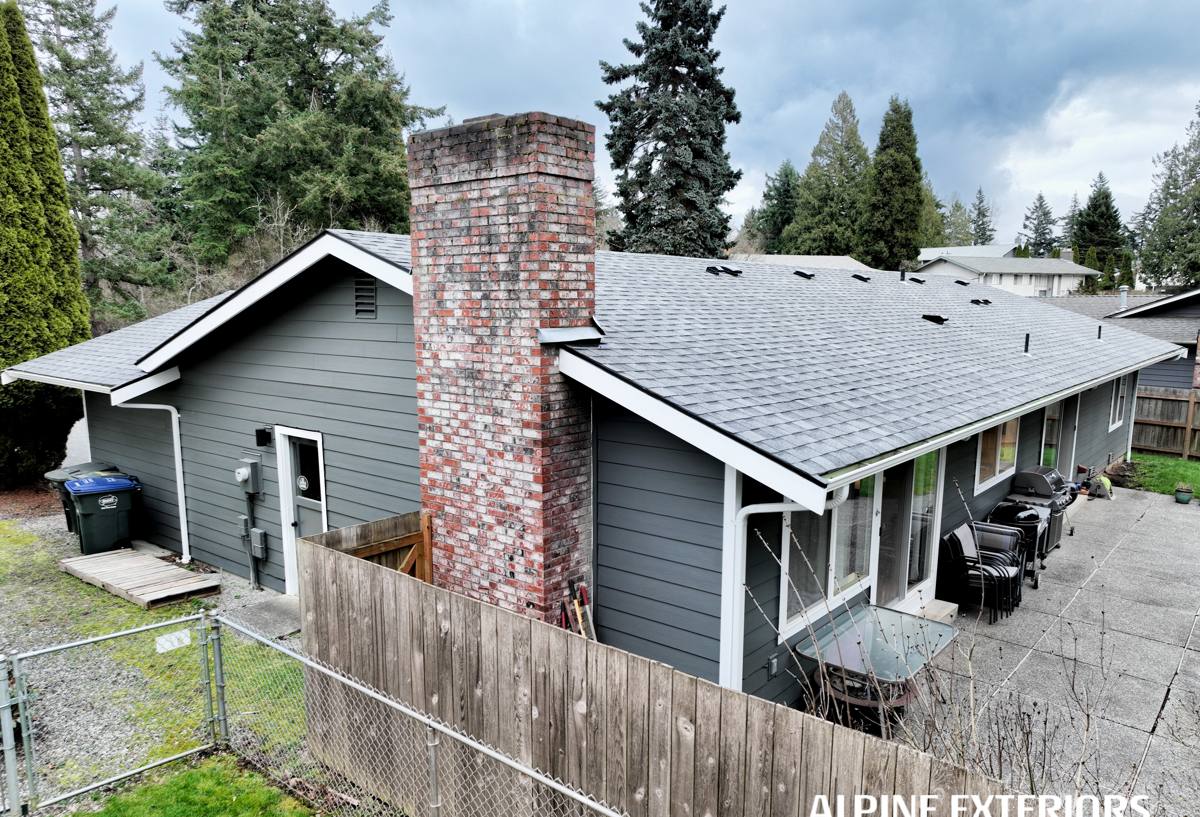
Homes closer to the water or in low, tree-shaded lots tend to show the effects first: chalky or peeling paint, soft spots at the bottom courses, dark streaking under gutters, and green or black growth on north-facing walls that never get direct sun. None of that is unusual for the area — it's what happens to siding that wasn't built or installed with this specific climate in mind.
What Ferndale Homes Actually Need From Their Siding
Given the local conditions, siding on a Ferndale home needs to do three things well: shed water fast, resist moisture absorption at the material level, and hold a factory finish long enough that repainting isn't a recurring maintenance chore. A lot of siding failures we see in this area aren't dramatic — they're slow. Moisture gets behind a poorly lapped panel, or wicks up through an end cut that was never sealed, and by the time it shows on the surface, there's already damage underneath.
This is also why we don't treat "siding" as a single category of product. Wood-based composites, vinyl, and fiber cement all respond to sustained moisture and salt exposure differently, and in a climate like Whatcom County's, that difference shows up on the exterior of a house within a handful of years, not decades.
Why We Standardized on James Hardie
We install James Hardie fiber cement exclusively — not as a sales preference, but because it's the product we're willing to stand behind in this climate. Fiber cement is non-combustible, doesn't swell or rot the way wood-based siding can when it stays wet, and Hardie's ColorPlus factory finish is baked on and warranted, which matters in a region where a homeowner might otherwise be repainting every several years just to keep ahead of moisture and mildew staining. Hardie also engineers regional product lines (HZ5 for colder, wetter climates) specifically for the conditions we get here, which is a level of climate-specific engineering most competing products don't offer.
What a Correct Fiber Cement Installation Actually Involves
Fiber cement is only as good as its installation. The product itself resists moisture well, but every seam, fastener, and cut edge is a potential entry point if it's not handled correctly — and in a high-moisture area like Ferndale, those small mistakes get found by the weather faster than they would somewhere drier. A correct install includes:
- A properly flashed and ventilated weather-resistive barrier behind the siding, not just the siding nailed over the sheathing
- Correct starter strip installation so the bottom course sheds water instead of trapping it
- Minimum clearance from grade, decks, and roof lines so siding isn't sitting in standing water or snow load
- Factory-cut or field-cut edges sealed per manufacturer spec, since raw cut edges are the most common place fiber cement absorbs moisture
- Correct fastener type, spacing, and depth — overdriven nails crack the board's outer shell and create a weak point
- Proper panel gaps and caulking at joints, trim, and penetrations, sized to allow for material movement without opening a gap
Every one of those steps is spelled out in Hardie's published installation manual, and every one of them is a place where a rushed or unfamiliar crew can cut a corner that isn't visible until moisture finds it — usually years later, when the fix costs a lot more than doing it right the first time would have.
Our Process, Start to Finish
We keep the process straightforward because homeowners deserve to know what's actually happening on their house and why.
1. On-Site Assessment
We walk the exterior with you, looking at existing siding condition, trim, flashing at windows and rooflines, and any signs of moisture already present — soft siding, staining, or gaps at penetrations. This tells us what's driving the need for new siding and whether there's underlying sheathing or framing damage to address before new siding goes on.
2. Product and Color Selection
We walk through Hardie's plank profiles, textures, and ColorPlus palette so you can see options in person rather than guessing from a screen. We'll also talk through which HardieZone product line fits your specific exposure — a wall that takes direct weather off the water may warrant different detailing than a sheltered, tree-covered elevation.
3. Tear-Off and Prep
Old siding comes off, sheathing is inspected and repaired where needed, and the weather-resistive barrier and flashing are installed or corrected before a single new board goes up. This step gets skipped by crews trying to move fast, and it's the step that determines whether the new siding actually performs.
4. Installation to Manufacturer Spec
Fastening, gapping, flashing, and caulking are done to Hardie's written specifications — not "close enough." This is also what keeps the manufacturer's warranty intact; installation that deviates from spec can affect warranty coverage.
5. Final Walkthrough
We go over the finished work with you, point out anything you should watch for over the first year, and give you basic maintenance guidance specific to your home's exposure.
Fiber Cement Compared to Other Siding Options
Homeowners researching siding in this area often come across several materials. Here's an honest comparison of how they tend to hold up under Whatcom County's salt air, driving rain, and extended moss season.
| Material | Moisture/Salt Air Behavior | Finish Longevity | Fire Resistance |
|---|---|---|---|
| James Hardie fiber cement | Highly resistant when installed to spec; engineered HZ lines for wet climates | Factory ColorPlus finish, long warranty life | Non-combustible |
| Vinyl | Doesn't rot, but can warp, crack in impact, and fade; seams can allow water behind panels | Color molded in, but fades and chalks over time; not repaintable easily | Combustible, can melt/deform near heat sources |
| Wood-based composite (e.g., LP SmartSide) | Engineered wood core is vulnerable to sustained moisture at cut edges and seams if not maintained | Factory finish, but wood core needs edge sealing diligence | Combustible |
| Primed cedar or spruce | Natural wood; absorbs moisture readily without disciplined repainting and sealing | Requires repainting on a recurring cycle in this climate | Combustible |
This isn't a claim that every alternative product fails — it's a summary of the maintenance burden and moisture sensitivity trade-offs that led us to install only fiber cement. In a climate as consistently wet and salt-exposed as Ferndale's, those trade-offs matter more than they might somewhere drier.
Cost Factors for a Ferndale Siding Project
Every home is different, but a few things reliably move the price on a fiber cement job in this area:
| Factor | Why It Matters Here |
|---|---|
| Sheathing/framing condition | Homes with existing moisture damage need repair before new siding goes on — common on older homes near the water |
| Wall exposure | Elevations facing prevailing wind and rain off the water may need heavier-duty flashing detail |
| Trim and detail work | Window, corner, and fascia trim add labor but are also common failure points if skipped |
| Home height and access | Multi-story or steep-lot homes require more staging and time |
| Color and texture selection | Some ColorPlus finishes and profiles carry different material costs |
Maintenance: What Fiber Cement Still Needs From You
Fiber cement is low-maintenance compared to wood or vinyl, but "low-maintenance" isn't "no-maintenance," especially in Ferndale's moss-friendly climate. A simple annual routine keeps siding performing for decades:
- Rinse siding annually with a garden hose (not a pressure washer directly on seams) to clear salt residue, pollen, and organic buildup
- Trim back vegetation and tree cover that keeps a wall shaded and damp longer than necessary
- Check caulking at trim, window, and door joints yearly and re-caulk if it's cracked or pulling away
- Watch north-facing and shaded walls for early moss or algae growth and address it before it spreads
- Keep gutters clear so overflow isn't running down the siding face
Why a Crew That Already Works Ferndale Matters
Installation quality is the single biggest factor in how long fiber cement siding actually performs — more than the product line or color chosen. A crew that regularly works Whatcom County homes already knows how local exposure, rainfall patterns, and moss growth tend to concentrate on specific elevations, and builds the flashing, gapping, and caulking details accordingly rather than treating every wall the same. That familiarity is the difference between siding that sheds this climate for decades and siding that looks fine on installation day but starts showing moisture problems within a few wet seasons.
If you're weighing a siding replacement or new construction siding for a home in Ferndale, we're happy to walk the exterior with you, talk through what your home's specific exposure needs, and put together a straightforward, no-pressure estimate. There's no obligation — just an honest look at what's on your walls now and what would actually hold up here.