 Bellingham Siding
 Blaine's Climate Is Hard on Windows — Here's Why
Blaine sits right on the water, tucked against Semiahmoo Bay and Drayton Harbor with Boundary Bay just to the north. That location is part of what makes it a great place to live, but it's also exactly the kind of environment that wears out windows faster than most manufacturers' warranties assume. Salt-laden air off the bay works its way into aluminum hardware, vinyl weep systems, and exposed fasteners over time. Add in driving rain that comes sideways off the water during winter storms, and you've got two separate problems: corrosion on the outside and water intrusion risk at every seam if the window wasn't installed with a coastal-grade approach from the start.
Then there's moss and organic growth. Whatcom County's long wet season keeps north- and west-facing exteriors damp for months at a time, and older window installations without proper drainage paths trap that moisture instead of shedding it. We see it constantly on service calls in this area: windows that look fine from the street but have soft framing, fogged glass, or mold starting behind the trim because water had nowhere to go.
None of this means Blaine homes need exotic products. It means the installation details — flashing, sealant selection, drainage, and hardware — matter more here than they would in a drier inland climate. That's the lens we bring to every window job in this area.
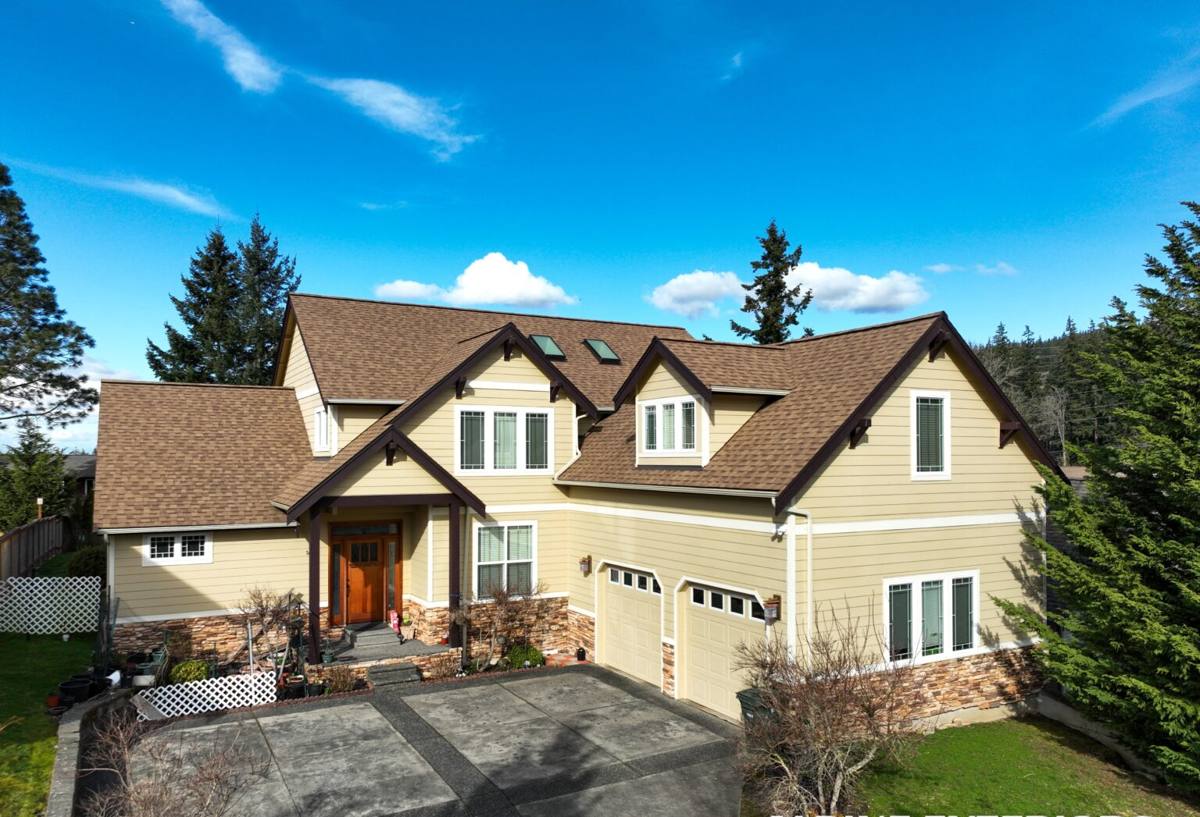
What "Energy-Efficient" Actually Means for a Window
The term gets used loosely in this industry, so it's worth breaking down into the parts that actually affect your comfort and your heating bill.
The Glass Package
Double-pane glass with a low-E coating and argon gas fill is the practical baseline for this climate. Low-E coatings reflect radiant heat back into the room in winter and block excess solar heat in summer, without noticeably changing how much light comes through. Triple-pane glass adds another layer of insulation and can be worth it on north-facing rooms or homes closer to the water where wind exposure is higher, but it adds weight and cost, so it's a room-by-room decision, not an automatic upgrade for the whole house.
The Frame
Frame material affects both insulation value and how the window holds up to salt air over the years. We'll cover the trade-offs in the table below.
U-Factor and Air Leakage
U-factor measures how well the whole window unit — glass and frame together — resists heat transfer. Lower is better. Air leakage ratings matter just as much in a windy coastal spot like Blaine, since a window can have great glass and still leak air around a poorly sealed sash. Look for both numbers on the label, not just one.
| Frame Material | Insulation Performance | Coastal Durability | Maintenance |
|---|---|---|---|
| Vinyl | Good | Good — won't rust, but hardware and welded corners need quality control | Low |
| Fiberglass | Very good | Excellent — dimensionally stable, resists salt corrosion well | Low |
| Wood-clad | Very good | Fair — cladding protects the exterior, but any breach exposes wood to moisture | Moderate to high |
| Aluminum | Poor without thermal break | Poor — prone to corrosion and pitting in salt air over time | Moderate |
We generally steer Blaine homeowners toward vinyl or fiberglass for most of the house. It's not that wood-clad or aluminum products are bad products — it's that in a salt-air, high-moisture environment, the extra maintenance burden and corrosion exposure usually outweigh the appearance benefit, especially on street-facing or water-facing elevations. If you have a specific look you want, we'll talk through it honestly rather than talk you out of it.
Signs Your Current Windows Are Costing You Money
You don't need a home energy audit to know when windows are underperforming. Walk through your house on a windy or rainy day and check for these:
- Cold draft you can feel with your hand near the sash, even with the window fully latched
- Condensation or fogging between the panes — this means the seal has failed and the gas fill is gone
- Visible corrosion, chalky residue, or pitting on aluminum hardware or frames
- Soft or discolored trim/sill wood, or a musty smell near the window when it rains
- Difficulty opening, closing, or locking — frames can warp slightly from repeated moisture cycling
- Moss or dark streaking on the exterior sill or trim that keeps coming back after cleaning
- Noticeably higher heating bills in winter compared to similar-sized homes nearby
Any one of these on its own isn't necessarily an emergency, but a few together usually mean the window assembly — not just the glass — is due for replacement.
What a Correct Installation Actually Involves
This is the part that gets skipped when a job goes wrong, and it's the part that matters most in a wind-driven-rain climate. A good window and a bad installation will still leak.
Flashing and Drainage
Every opening needs proper flashing tape and a drainage path so any water that gets past the exterior seal has somewhere to go besides your wall cavity. This is non-negotiable on any west- or water-facing wall in Blaine.
Sealant Selection
Not all exterior sealants hold up the same way to UV, salt, and constant wet-dry cycling. We use products rated for the exposure the window will actually see, and we don't rely on caulk alone to do a flashing system's job.
Fastening and Shimming
A window that isn't shimmed level and square will bind, won't seal evenly, and puts uneven stress on the frame over time — which shows up years later as air leaks or hardware failure.
Interior and Exterior Trim
Trim isn't just cosmetic. It's part of the weather barrier and needs to be integrated with your siding's own drainage plane, not just caulked on top of it.
Our Process
1. On-Site Assessment
We look at each window opening individually — not just the glass, but the sill condition, framing, and how water currently moves (or doesn't move) around that opening. Salt air and driving rain affect different sides of a house differently, so a west-facing window and a sheltered east-facing one may need different specs even on the same home.
2. Product Selection
We'll walk you through frame material, glass package, and U-factor options based on that specific opening and your budget — no upsell to triple-pane everywhere if it's not doing much for a given room.
3. Removal and Prep
Old windows come out carefully so we can inspect the framing underneath for hidden rot or moisture damage before anything new goes in. If we find a problem, we tell you before we cover it back up, not after.
4. Installation
Flashing, shimming, sealing, and fastening done to a coastal standard, followed by exterior and interior trim work that ties into your home's existing weather barrier.
5. Walkthrough and Cleanup
We test operation, check seals, and walk the job with you before we consider it done.
Cost Factors to Expect
Every home is different, so we won't quote a number without seeing the openings, but these are the main things that move the price:
| Factor | Why It Matters |
|---|---|
| Number and size of openings | Larger and more windows mean more material and labor |
| Frame material | Fiberglass typically costs more upfront than vinyl but lasts longer in salt air |
| Glass package | Double-pane low-E vs. triple-pane changes both cost and performance |
| Existing framing condition | Hidden rot or moisture damage found during removal adds repair time |
| Exposure | Water- or wind-facing walls may warrant upgraded flashing detail |
| Trim and siding tie-in | Matching existing trim profiles or siding takes more labor than a plain reinstall |
Why a Crew That Already Works Blaine Matters
Window installation standards that work fine in a dry inland climate can fail within a few years right on the water. A crew that regularly works Blaine and the surrounding Whatcom County coastline already knows which details — flashing overlap, sealant type, hardware selection — need to be upgraded for salt exposure and wind-driven rain, instead of learning it the hard way on your house. We also know what moss and organic growth do to exterior trim here over a wet winter, and we build installations that shed water instead of holding it.
Maintenance That Actually Extends Window Life Here
Energy-efficient windows installed correctly are close to maintenance-free, but a coastal environment still asks a little more of you than an inland home:
- Rinse salt residue off exterior frames and hardware a couple times a year, especially after storms
- Keep weep holes and drainage tracks clear of debris and moss so water can exit
- Check exterior caulking annually for cracking or separation, and have it addressed before it becomes a leak path
- Trim back vegetation that keeps a window shaded and damp longer than the rest of the house
If your windows are drafty, fogged, or just past their prime, we're happy to take a look and give you a straightforward, no-pressure estimate — no obligation, just an honest read on what your home actually needs. The form below gets you on our schedule.