 Bellingham Siding
 Windows in Edgemoor Face a Different Set of Demands
Edgemoor sits close enough to Bellingham Bay that its homes take on a coastal weather pattern most inland Whatcom County neighborhoods don't deal with in the same way. Salt-laden air moves in off the water, wind-driven rain hits west- and south-facing walls at an angle instead of straight down, and the shaded, tree-lined lots that make the area beautiful also mean surfaces stay damp longer through our long moss season. None of that is dramatic on its own, but window by window, year by year, it adds up. Frames corrode faster, seals fail sooner, and moisture finds its way into places it was never supposed to be.
We've worked on homes throughout Edgemoor and the surrounding bluff and waterfront-adjacent streets long enough to know this isn't a neighborhood where a generic, one-size-fits-all installation holds up. Window replacement here has to account for the salt exposure, the rain load, and the shade and moisture that come with mature tree canopy — and it has to be installed with flashing and sealing details that match those conditions, not just the manufacturer's minimum spec.
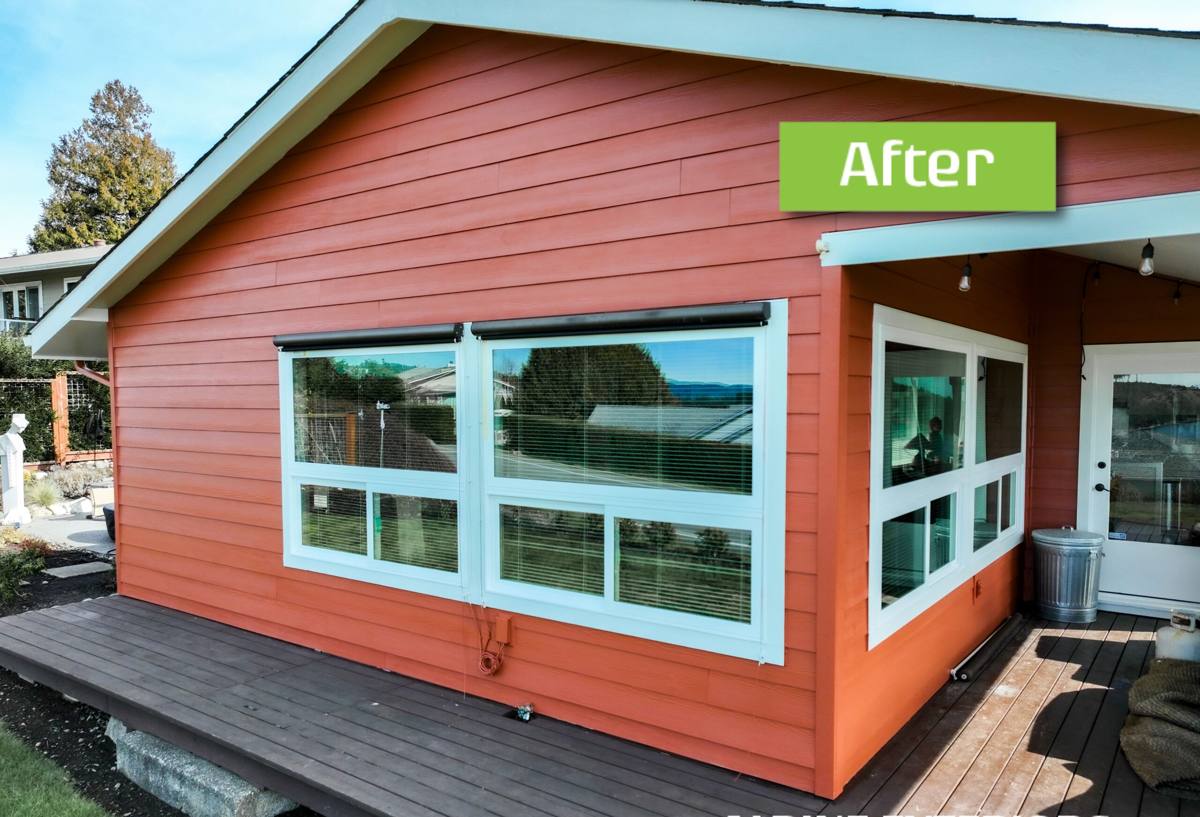
What Bellingham's Coastal Climate Does to Aging Windows
Salt Air and Metal Components
Aluminum window frames and hardware — hinges, cranks, balance mechanisms, even fasteners — corrode faster near the water. Salt air accelerates oxidation, and once corrosion starts on a frame or hardware component, it rarely reverses. Older aluminum-frame windows in Edgemoor are frequently the first place we see this show up: stiff or seized hardware, pitting on exposed metal, and finishes that have dulled or chalked well ahead of what you'd expect inland.
Wind-Driven Rain and Water Intrusion
Rain that comes in at an angle, pushed by wind off the bay, tests window seals and flashing in a way that straight-down rain doesn't. Water gets driven up and under trim, into gaps around the frame, and against seals that were never designed for sustained lateral pressure. This is almost always a flashing and installation issue rather than a window-quality issue — even a well-made window will leak if the water management around it wasn't detailed correctly.
Moss, Shade, and Prolonged Moisture Contact
Edgemoor's tree cover is part of what makes the neighborhood desirable, but shaded exterior walls and sills dry out slower after every rain event. Combined with our extended moss season, that means more time with moisture sitting against wood trim, sills, and the perimeter of the window opening. Left unaddressed, that's a direct path to wood rot, sill deterioration, and — eventually — moisture reaching the wall framing behind the window.
Signs an Edgemoor Home Needs Window Replacement, Not Just Repair
- Visible condensation or fogging between the panes of a double-pane window — the seal has failed and the gas fill is gone
- Soft, discolored, or crumbling wood trim or sills around the window opening
- Drafts you can feel with a hand near the frame on a windy day, even with the window latched
- Hardware that's corroded, seized, or won't latch tightly anymore
- Paint or finish that's bubbling, peeling, or chalking faster on window trim than on the rest of the wall
- Visible daylight or gaps around the frame from outside
- A noticeable rise in heating costs that lines up with when the windows were last replaced or serviced
Any one of these can sometimes be handled with repair or re-caulking. But when several show up together, or when the sash, frame, or sill itself has started to deteriorate, replacement is the more honest recommendation — patching a failing frame just delays the same problem a year or two.
What a Correct Installation Looks Like Here
Flashing and Water Management First
The window unit itself is only part of the job. The flashing, sill pan, and sealant details around it are what actually keep wind-driven rain out over the long term. For Edgemoor homes, we pay particular attention to sill pan flashing that directs any water that does get past the exterior seal back outward, rather than letting it pool at the sill or migrate into the wall cavity. This is the step that's most often shortcut on lower-bid replacement jobs, and it's the one that causes hidden rot problems years down the road.
Frame Material Suited to Salt Air
Given the corrosion pressure from salt air, we steer clients toward frame materials and finishes that hold up well in that environment — vinyl, fiberglass, or properly clad/coated wood, depending on the home's style and budget. We're candid about the trade-offs of each rather than pushing one product line as a cure-all; the right choice depends on your home's exposure, existing trim, and how it's cared for.
Glass Package for a Shaded, Damp Environment
Double or triple-pane glass with a quality low-E coating and warm-edge spacer helps on two fronts here: it reduces condensation risk on interior glass during our cool, damp months, and it improves comfort near the window on windy days. In a neighborhood with a lot of shade and moisture in the air, condensation control matters as much as insulation value.
Sealing That Accounts for Building Movement
We use sealants and backer rod sized and installed to stay flexible through seasonal expansion and contraction, rather than a single bead of caulk expected to do all the work. A rigid, over-relied-on sealant joint is one of the first things to crack and let water in during a wet, windy winter.
How Our Process Works
- On-site assessment. We look at each window's condition, the trim and sill beneath it, and any signs of past water intrusion — not just the glass and sash.
- Honest scope and product recommendation. We tell you which windows need full replacement, which could be serviced, and why — including the trade-offs of the frame materials we'd suggest for your specific exposure.
- Removal with attention to what's underneath. Old windows come out carefully so we can inspect the framing and sill for hidden rot or prior water damage before anything new goes in.
- Correct flashing and sill pan installation. This happens before the new window is set, not as an afterthought.
- Window installation, shimming, and insulation. Properly shimmed and insulated around the perimeter to avoid air gaps and uneven pressure on the frame.
- Exterior and interior trim and sealing. Finished to match your home, with sealant details built for wind-driven rain, not just still-air conditions.
- Final walkthrough. We check operation, sealing, and answer questions before we consider the job done.
Comparing Frame Materials for Edgemoor's Conditions
| Frame Material | Salt Air / Corrosion Resistance | Maintenance | Typical Trade-offs |
|---|---|---|---|
| Vinyl | Good — won't corrode | Low | Limited color/finish options; can look less traditional on older homes |
| Fiberglass | Very good — stable and corrosion-resistant | Low | Higher upfront cost than vinyl |
| Wood, clad exterior | Good on the clad side; interior wood needs protection from interior moisture | Moderate | Higher cost; classic look many Edgemoor homes call for |
| Bare aluminum | Poor in salt air without upgraded finishes | Higher — hardware and finish need monitoring | We generally steer clients away from unclad aluminum this close to the bay |
None of these is automatically "wrong" — the right pick depends on your home's architecture, your budget, and how much upkeep you want to take on. We'll walk through the real trade-offs for your specific windows rather than defaulting to whatever's easiest to install.
Cost Factors Worth Understanding Upfront
Window replacement pricing varies enough between homes that a single number isn't honest. What actually moves the price on an Edgemoor project:
- Number and size of windows — straightforward, but larger or custom-shaped units cost more per opening
- Frame material — vinyl is typically the most budget-friendly; fiberglass and clad wood cost more upfront
- Condition of existing trim and sills — hidden rot found during removal adds repair work, which is better to know about than to ignore
- Glass package — double-pane vs. triple-pane, and coating options, affect both comfort and cost
- Access and site conditions — second-story windows, tight lot access, or landscaping near the work area can affect labor time
We give straightforward, itemized estimates so you can see what you're paying for rather than a vague lump sum.
Why a Crew That Already Works This Neighborhood Matters
Window replacement done by a crew unfamiliar with Bellingham's coastal exposure tends to treat every home the same way — standard flashing, standard sealant, standard frame recommendation, regardless of how close the house sits to the bay or how much shade and moisture it deals with. In Edgemoor, that approach shows up as callbacks: a leak two winters later, hardware that seizes up early, trim that starts rotting again in the same spot.
Because we've done this work throughout Whatcom County and specifically in neighborhoods with this kind of salt and moisture exposure, we build the flashing, sealing, and material decisions around what actually happens to windows here — not around a generic national installation checklist. That's the difference between a window replacement that looks fine for a season and one that holds up through fifteen or twenty Bellingham winters.
Ready to Talk About Your Windows?
If you're noticing drafts, fogged glass, soft trim, or windows that just aren't performing the way they used to, we're happy to take a look and give you a straight answer about what's going on and what it would take to fix it right. Reach out for a free, no-pressure estimate using the form below — we'll walk your home's windows with you and explain exactly what we see.