 Bellingham Siding
 Composite Decking for Edgemoor Homes
Edgemoor sits close enough to the water that homes here deal with a different set of conditions than decks built ten miles inland. Salt-laden air off Bellingham Bay, driving rain that comes in sideways during winter storms, and a moss season that can stretch from October well into April all put real stress on an exterior deck. A composite deck built for Edgemoor needs to handle all three at once, not just look good in the brochure photo.
We install composite decking as a dedicated service in this neighborhood, not as an add-on to a siding job. That matters because a deck lives outside in a way siding doesn't — it's walked on, it pools water if it's not sloped right, and it's the first thing to show neglect if the substructure underneath was cut corners on. Getting it right the first time is cheaper than fixing it in five years.
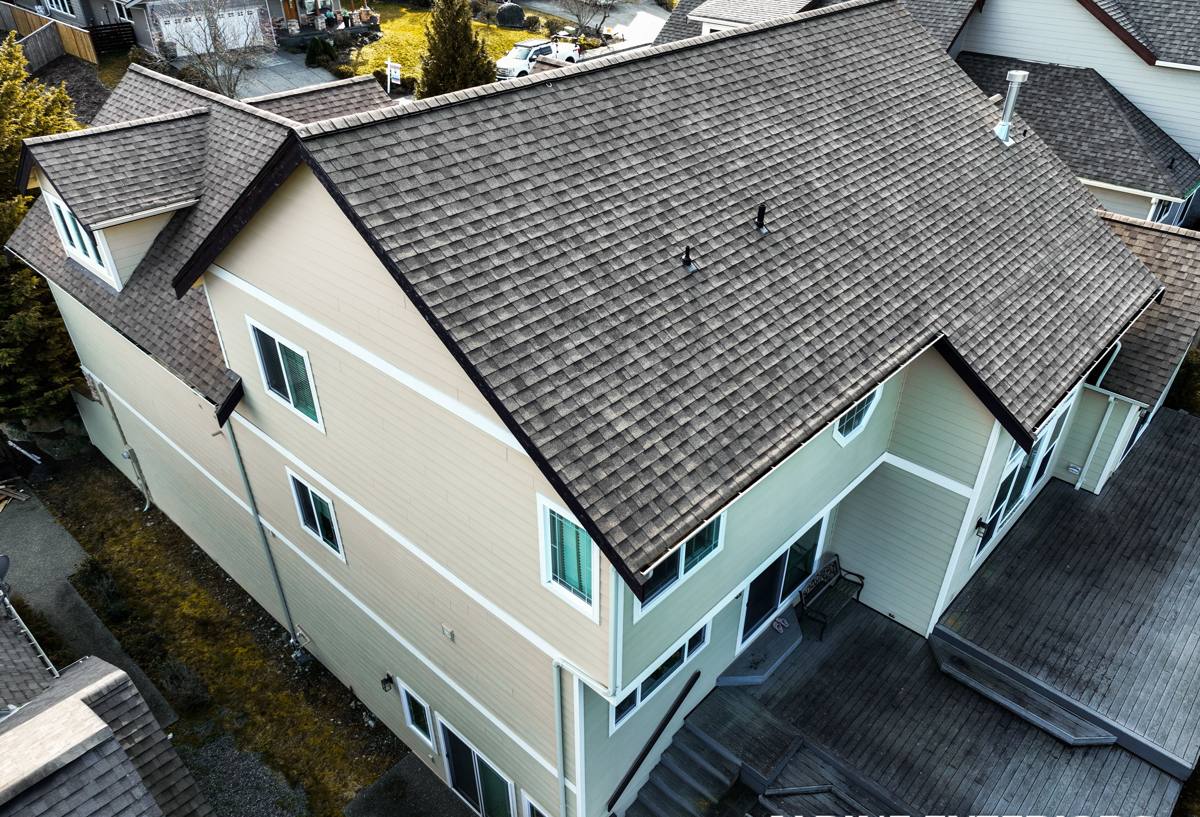
What Whatcom County Weather Actually Does to a Deck
Salt Air and Fasteners
Homes near Bellingham Bay get low-level salt exposure carried in on marine air, even without being right on the shoreline. Over years, that exposure corrodes cheap fasteners and hardware faster than it would inland. It's not dramatic — it's slow, and it shows up as rust streaks and loosening boards long before the decking itself fails.
Driving Rain and Water Management
Bellingham's rain doesn't fall straight down most of the year. Storms off the Sound push rain sideways, which means water finds its way under railings, into fastener holes, and along any seam that wasn't sealed or flashed correctly. A deck that isn't pitched to shed water, or that traps moisture against the house band board, will hold dampness far longer here than in a drier climate.
Moss and Organic Growth
Whatcom County's moss season is long, and it doesn't just grow on roofs. Shaded decks, north-facing decks, and decks under mature trees — which describes a lot of Edgemoor lots — collect moss and algae on the deck surface and especially in the gaps between boards where debris settles and stays damp. That buildup isn't just cosmetic; damp organic matter sitting against decking year-round accelerates surface wear and makes boards slick and unsafe underfoot.
Why Composite Makes Sense Here
Composite decking isn't the right call for every situation, but for the conditions Edgemoor sees, it solves problems that wood decking struggles with:
- No annual staining or sealing to keep moisture out — the board itself doesn't absorb water the way untreated or even treated wood does over time
- Consistent color and texture won't show water spotting or blotchy staining the way wood can after a wet winter
- Resists the surface softening and splintering that wood decking develops once it's cycled through repeated wet-dry seasons
- Better resistance to mold and algae staining on the board surface itself, though gaps and hardware still need attention
Composite isn't maintenance-free — no exterior decking product is, in this climate — but it shifts the maintenance burden from sanding and refinishing to simple cleaning, which is a better trade for most homeowners here.
What a Correct Installation Actually Involves
The composite boards themselves are the visible part, but the substructure underneath is what determines whether the deck holds up in Edgemoor's conditions for the long haul.
Framing and Ledger Attachment
Where the deck attaches to the house, the ledger board connection needs proper flashing so water is directed away from the band board and wall assembly behind it, not trapped against it. This is one of the most common failure points we see on older decks in wet climates — a ledger that was lag-bolted straight to the house with no flashing detail, which lets water track into the framing over years.
Joist Spacing and Protection
Composite boards have manufacturer-specified joist spacing requirements, often tighter than what traditional wood decking allows, especially at angles, stair treads, or diagonal patterns. We also wrap or tape joists with a protective membrane so the framing lumber underneath isn't taking on moisture directly from contact with wet decking above.
Drainage and Slope
A deck surface should have a slight pitch away from the house so water sheets off rather than pooling. On a re-deck project, this is a chance to correct a flat or poorly sloped original build — something that's easy to get wrong on a first install and hard to fix later without pulling the decking back up.
Fastener and Hardware Choice
Given the salt air exposure in Edgemoor, hardware selection isn't a place to save money. Stainless or coated fasteners rated for coastal exposure cost more up front but avoid the rust streaking and premature loosening that cheaper hardware develops within a few seasons here.
Board Gapping
Correct gapping between boards allows drainage and airflow, which matters directly for the moss and debris problem described above. Gaps that are too tight trap organic matter; gaps that are too wide create a tripping and heel-catch hazard. Manufacturer spec, adjusted slightly for our wetter climate, is the right target.
Comparing Decking Materials for This Climate
| Factor | Composite | Pressure-Treated Wood | Cedar |
|---|---|---|---|
| Maintenance | Periodic cleaning, no staining | Annual sealing recommended | Regular staining/sealing |
| Moisture resistance | Strong — doesn't absorb like wood | Moderate, depends on sealing upkeep | Moderate, natural rot resistance fades over time |
| Moss/algae staining | Better surface resistance | Prone to staining if not maintained | Prone to staining if not maintained |
| Upfront cost | Higher | Lowest | Mid-range |
| Long-term cost | Lower over 15-20 years | Adds up with repeated maintenance | Adds up with repeated maintenance |
| Appearance consistency | Stays consistent | Grays and weathers unevenly | Grays unless maintained |
None of these materials is wrong in every situation — a lot depends on budget, how much upkeep a homeowner wants to do, and what the deck is used for. We'll walk through the honest trade-offs for your specific project rather than push one product across the board.
Our Process for an Edgemoor Deck Project
- On-site assessment — we look at the existing deck or build site, check for drainage issues, sun/shade exposure, and proximity to trees or water that affects moss and moisture load
- Substructure evaluation — if it's a re-deck, we inspect the existing ledger, joists, and footings before deciding what can be reused and what needs to be rebuilt
- Material and layout discussion — board direction, color, railing style, and any stair or multi-level considerations specific to the lot
- Framing and flashing work — the structural and water-management work that doesn't show once the decking is down, but determines how the deck ages
- Composite board installation — following manufacturer spacing and fastening requirements, adjusted for our climate
- Final walkthrough — checking gaps, fastener finish, railing stability, and slope before we call it done
Signs an Existing Deck Needs Attention
If you're not sure whether your current deck is due for a rebuild or just a repair, a few signs are worth flagging before winter rain sets in again:
- Standing water that doesn't drain within an hour or two after rain stops
- Soft, spongy spots in the decking or noticeable give in the framing underneath
- Rust streaking around fasteners or corroded hardware at railings and stair connections
- Persistent moss or dark staining in board gaps that comes back quickly after cleaning
- Gaps or separation where the deck meets the house at the ledger board
Any of these can be isolated repairs rather than a full rebuild, but it's worth having it looked at rather than waiting for a wet winter to make the decision for you.
Why a Crew That Already Works Edgemoor Matters
Edgemoor's mix of waterfront and near-waterfront lots, mature tree cover, and older home stock means deck projects here run into details that don't come up as often on a standard inland lot — ledger connections on older framing, drainage on sloped yards, and moss exposure from tree canopy. A crew that's already done deck work in this specific part of Bellingham has seen those conditions before and builds for them by default, rather than treating them as surprises mid-project.
There's also a practical side: knowing the neighborhood means realistic scheduling around Whatcom County's wetter months, and knowing which permit and inspection steps apply locally without guessing.
Get a Straight Answer for Your Deck
Whether you're replacing an aging deck or building new, we're happy to take a look and give you an honest read on what your Edgemoor property needs — no pressure, no upsell. Reach out using the form below for a free estimate.