 Bellingham Siding
 Why Decks in Cordata Take a Different Kind of Beating
Decks in the Cordata area of north Bellingham don't fail the way decks do in drier climates. It's rarely one dramatic event — a storm, a falling branch, a single bad winter. It's the slow, steady combination of moist marine air drifting in off the Salish Sea, long stretches of driving rain through fall and winter, and a moss season that can run six months or more in shaded, north-facing yards. Add in Whatcom County's cool, damp summers that never fully dry out a deck's hidden framing, and you get a slower but more persistent kind of wear than most homeowners expect.
We repair decks all over Bellingham, but Cordata's mix of newer construction alongside older homes means we see everything from young decks with early moisture problems to twenty- and thirty-year-old structures that have been patched more than once. The climate factors are the same across the neighborhood; what changes is how much prior maintenance — or neglect — has caught up with the structure.
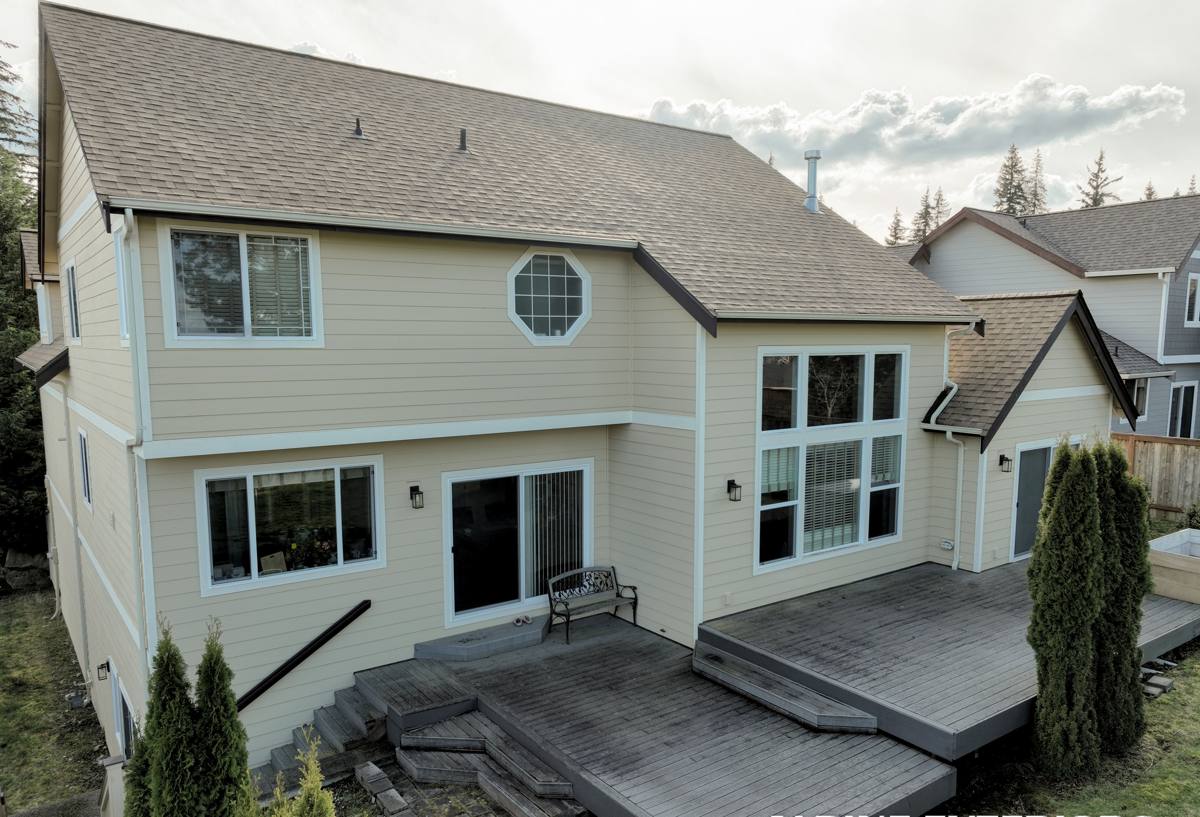
The Deck Problems We Actually Find in This Area
Rot at the Ledger Board and Rim Joist
The ledger board — where the deck attaches to the house — is the single most common failure point we find on local repairs. Driving rain gets pushed sideways against the house by wind off the water, and if the original flashing was undersized or missing, water tracks behind the ledger for years before it ever shows on the surface. By the time a homeowner notices soft framing or a gap opening up at the house, there's usually been rot developing for a while.
Corroded or Failing Fasteners
Salt-laden air doesn't just affect waterfront homes — it travels well inland, and Bellingham's prevailing weather carries enough of it to accelerate corrosion on fasteners that weren't rated for the exposure. We regularly find electro-galvanized nails and screws that have rusted through, staining the decking and weakening the connection long before the wood itself is compromised.
Cupped, Soft, or Splintering Deck Boards
Repeated wet-dry cycling through the rainy months causes wood decking to cup and check. Once the surface coating or sealer has worn through — which happens faster here than in drier regions — boards start absorbing water directly, and soft spots follow.
Moss and Algae on Deck Surfaces and Framing
Shaded lots and low winter sun angles mean many Cordata backyards stay damp for months at a time. Moss on the walking surface is a slip hazard, but moss and algae growing on the underside of a deck or on framing members trap moisture against the wood and quietly speed up decay in areas homeowners rarely inspect.
Loose Stairs, Railings, and Ledger Connections
Wood movement from constant moisture exposure works fasteners loose over time. Railings that flex, stair stringers that have shifted, and post bases sitting in standing water are all things we check on every repair call, even when the original complaint was something else entirely.
What a Correct Deck Repair Actually Involves
Diagnosis Before Any Repair
We don't quote a repair off a visual look at the surface. Soft decking is often just the visible tip of a problem that started underneath. We probe suspect boards and framing with an awl, check moisture content where rot is suspected, and get under the deck to look at joists, beams, posts, and footings — not just the ledger connection. A repair that only replaces the boards you can see, without checking what's underneath them, tends to fail again within a couple of seasons.
Structural Repairs vs. Cosmetic Repairs
There's an important difference between a deck that needs new decking boards and a deck that needs structural framing repair. Replacing worn boards on a sound frame is a straightforward cosmetic repair. Replacing a rotted ledger, sistering a compromised joist, or resetting a footing that's heaved or settled is structural work, and it needs to be treated — and priced — differently. Part of an honest estimate is telling you clearly which category your repair falls into, and why.
Repair or Replace? How We Make That Call
Homeowners often ask whether a repair is even worth doing versus a full rebuild. It depends on how much of the structure is affected and where the damage is concentrated.
| What We Find | Typical Recommendation | Why |
|---|---|---|
| Rot limited to a few boards or one section | Targeted repair | Frame is sound; localized decking replacement solves it |
| Ledger board rot, frame otherwise solid | Ledger repair/rebuild + reflashing | Fixes the root cause without rebuilding the whole deck |
| Corroded fasteners, wood underneath still sound | Fastener replacement | Cheaper fix that stops staining and loosening before it spreads |
| Rot in multiple joists or the main beam | Partial-to-full frame rebuild | Structural integrity is compromised beyond a spot fix |
| Failing or heaving footings | Footing replacement, often full rebuild | Everything above an unstable footing is at risk |
| Deck is 25+ years old with widespread wear | Full replacement | Repair costs approach rebuild costs with less long-term value |
We'll always tell you honestly when a repair makes sense and when you'd be spending money to delay an inevitable rebuild by a year or two.
Our Deck Repair Process
- On-site inspection of the full structure — decking, framing, ledger, posts, footings, and railings, not just the reported problem area.
- Moisture and probe testing to identify hidden rot before it's visible from the surface.
- A written scope that separates structural work from cosmetic work, so you know exactly what you're paying for and why.
- Removal of damaged material and any moss, algae, or debris trapping moisture against the structure.
- Structural repairs first — ledger, framing, posts, footings — using fasteners and connectors rated for our exposure.
- Decking, stair, and railing repair or replacement, matched to your existing material where possible.
- Final check of drainage paths and flashing details so water is shed away from the structure going forward, not just patched over.
Materials We Use, and Why
What goes into a deck repair matters more here than in a dry climate, because every material choice either sheds our rain and humidity or slowly absorbs it.
Fasteners
We use hot-dip galvanized or stainless steel fasteners and structural connectors on repairs, not the lighter-duty coated fasteners sometimes used in new construction elsewhere. It costs a bit more up front, but replacing rusted screws every few years is a worse long-term deal for the homeowner.
Framing Lumber
Pressure-treated lumber rated for ground contact goes anywhere near soil, footings, or persistent moisture exposure. It's a small spec detail that matters a great deal once wet-dry cycling starts working on a deck year after year.
Decking Material
Wood decking gives a natural look but requires real maintenance discipline in this climate — regular cleaning and resealing, or moss and moisture will win. Composite decking costs more initially and needs less upkeep, but it isn't maintenance-free either; debris and organic buildup still need to be cleared so moisture doesn't sit against the boards. We'll walk through the honest maintenance trade-offs of each option for your specific deck rather than push one product as a cure-all.
Timing Matters in This Climate
Late spring through early fall is the ideal window for deck repair work in Whatcom County — drier conditions let framing dry out properly before it's closed back up, and sealants and finishes cure the way they're supposed to. That said, structural problems like ledger rot or failing footings shouldn't wait for the "right season." Deferred structural repairs tend to get worse through a wet Bellingham winter, not better.
Maintenance Checklist for Cordata Homeowners
- Clear leaves and debris from between deck boards regularly, especially under trees and in shaded corners
- Keep gutters and downspouts clear so runoff doesn't dump directly onto or under the deck
- Treat visible moss growth promptly, on both the walking surface and underneath the deck
- Check and reseal wood decking on a regular schedule rather than waiting for visible graying or cupping
- Inspect fasteners and connectors yearly for rust staining, which often shows up before structural weakness does
- Look underneath the deck at least once a year for soft framing, standing water, or moss on structural members
- Have the ledger board connection checked periodically, since it's hidden against the house and easy to overlook
Why Hire a Crew That Already Works in Cordata
A repair crew that regularly works in this neighborhood already knows what to expect before they climb under the deck — which fastener grades hold up, where ledger flashing tends to fail first, and how much moss and moisture buildup is normal versus a sign of a bigger problem. That familiarity means a more accurate diagnosis on the first visit and a repair scope that reflects what actually needs fixing, not a generic checklist. It also means we're not guessing at how Bellingham's specific mix of salt air, rain, and shade affects deck longevity — we see the results of it on repair calls throughout the year.
If your deck has soft spots, rust stains, loose railings, or moss that keeps coming back no matter what you do, we're happy to take a look and give you a straight answer about what's going on and what it would take to fix it properly. Reach out for a free, no-pressure estimate using the form below.