 Bellingham Siding
 Decks Built for Columbia's Conditions, Not Just Its View
A deck in the Columbia neighborhood has to do more than look good on a sunny afternoon. It has to survive a Bellingham winter of driving rain, hold up under salt-tinged air coming off Bellingham Bay, and shed moss instead of growing it. We build and repair decks throughout Whatcom County, and the projects that hold up longest are the ones designed from the start for our climate, not adapted to it after the fact.
This page covers what actually matters for a custom deck built for a Columbia property: the materials that make sense here, the structural details that keep water and rot out, and the process we follow from first walk-through to final inspection.
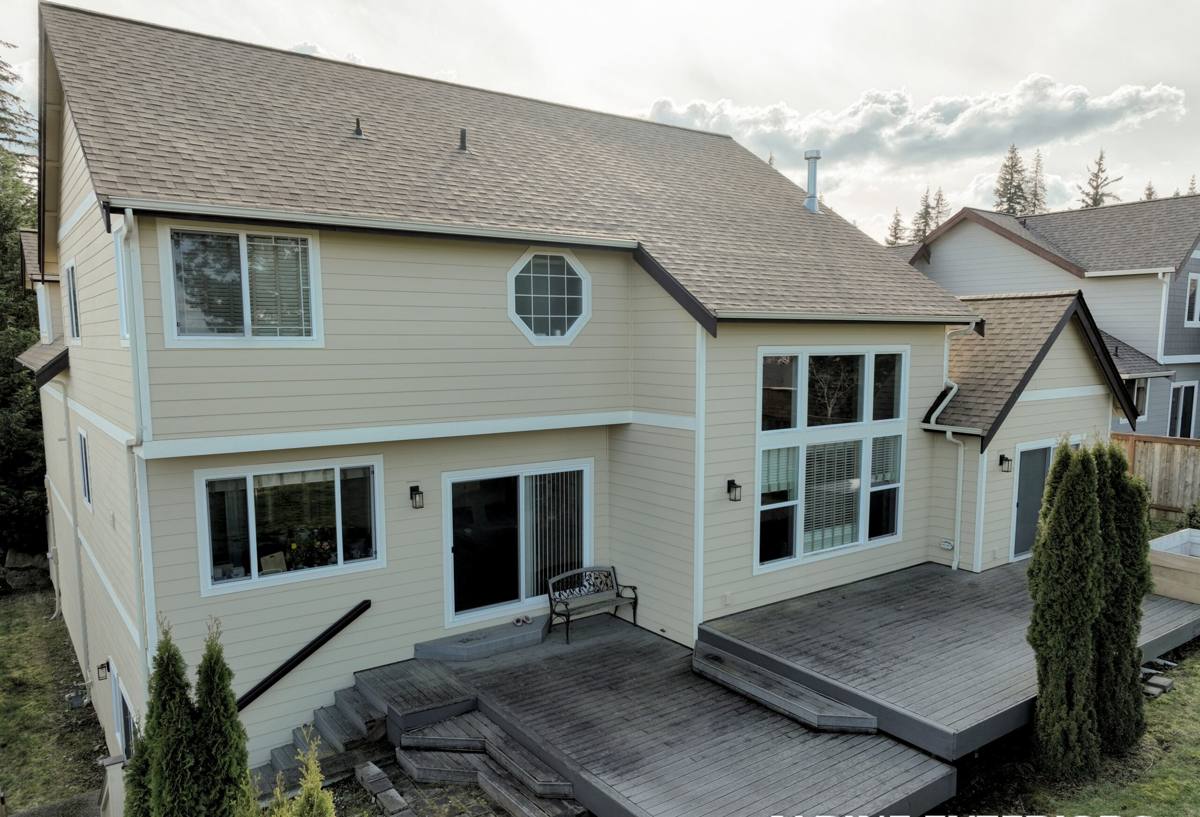
What Bellingham's Weather Does to an Outdoor Deck
Whatcom County's marine climate is easy to love and hard on exterior wood. Three conditions in particular shorten the life of a poorly built deck.
Salt Air and Corrosion
Proximity to the bay means airborne salt finds its way onto exposed metal. Standard hardware corrodes faster here than it would inland, and corroded fasteners are one of the most common causes of deck failure we see on older structures. Every fastener, bracket, and connector we use is rated for exterior, corrosion-prone environments — not just "outdoor use."
Driving Rain and Moisture Intrusion
Wind-driven rain doesn't just fall on a deck, it gets pushed sideways into ledger boards, post bases, and any gap in the flashing. Once water gets behind a ledger or pools under a post, rot starts in a place you can't see until the damage is structural. Correct flashing and drainage detailing matters more here than in drier climates.
The Long Moss Season
Bellingham's extended damp season gives moss and algae months to establish themselves on horizontal surfaces. Moss holds moisture against decking boards, stains the surface, and makes stairs and walkways slick. A deck built with the wrong material, the wrong board spacing, or too little airflow underneath will show moss within a season or two, regardless of how well it was installed.
Choosing a Decking Material That Actually Holds Up Here
There's no single "best" decking material — the right choice depends on your budget, how much maintenance you're willing to do, and how much shade and moisture the site gets. Here's how the common options compare for a Columbia lot specifically.
| Material | Moisture Behavior | Maintenance | Typical Lifespan |
|---|---|---|---|
| Pressure-treated wood | Absorbs water; prone to cupping and splintering if not sealed regularly | Annual cleaning and resealing recommended | 10–15 years with upkeep |
| Cedar | Naturally rot-resistant but still needs sealing in a wet climate | Sealing every 1–2 years, moss cleaning | 15–20 years with upkeep |
| Composite (capped) | Resists moisture absorption; won't rot or splinter | Periodic washing to keep moss/algae from staining the cap | 25–30 years |
| PVC decking | Fully synthetic, no wood fiber to absorb water or feed mold | Lowest maintenance; occasional washing | 25–30+ years |
For homes in Columbia with shaded yards or limited sun exposure to dry the surface after rain, we generally steer clients away from uncapped wood-composite blends, since the exposed wood fibers in older-style composite boards can still take on moisture and support mold growth. Capped composite and PVC decking cost more up front but spend a lot less time wet, which matters when a deck gets months of damp shade every year.
Railings and Fasteners Matter Too
The decking surface gets most of the attention, but railings, stair stringers, and the fasteners holding everything together see the same weather. We match railing material to the decking system and use fastener systems designed to resist the specific corrosion risks of a coastal-influenced climate, not generic exterior-grade hardware.
What's Under the Boards Matters More Than What's On Top
A beautiful deck surface over a poorly built substructure is a deck that fails early. The framing is where most long-term problems start, and it's the part homeowners can't inspect once the boards are down.
- Ledger flashing: Where the deck attaches to the house, proper flashing keeps rain from working its way behind the siding — a common source of hidden rot in wet climates.
- Joist protection: Capping joists with a waterproof tape barrier prevents standing water from soaking into the top of the framing lumber, where rot typically starts.
- Footings below frost and grade requirements: Footings need to be set to the depth and bearing standards required for the site, so the structure doesn't shift with seasonal ground moisture changes.
- Airflow underneath: Adequate clearance and spacing under the deck lets air move and moisture evaporate instead of sitting against the framing — a major factor in how fast moss and mildew take hold.
- Corrosion-resistant structural hardware: Joist hangers, post bases, and structural screws rated for exterior and coastal-adjacent exposure, not standard interior-rated fasteners.
Site-Specific Design Decisions for Columbia Lots
Every deck project starts with a look at how water actually moves across the specific yard. Grading, existing drainage, tree cover, and sun exposure all shape decisions that a generic deck plan won't account for.
Lots with mature tree cover — common in many of Bellingham's established residential neighborhoods — hold shade and moisture longer after a rain, which means board spacing, material choice, and under-deck ventilation deserve extra attention. Lots with more open sun exposure dry faster but may need different considerations for UV fading on certain composite colors. Where a deck sits relative to downspouts, gutters, and existing grade also determines whether we need to add drainage work before building, so water isn't funneled toward the footings.
How We Approach a Custom Deck Project
- On-site walkthrough: We look at the house connection point, grading, drainage, sun/shade exposure, and existing structure (if replacing a deck) before discussing design.
- Design and material selection: We go over material options honestly, including trade-offs in cost, maintenance, and expected lifespan for your specific site conditions.
- Permitting: We handle the permit application and inspection scheduling required for the project.
- Framing and structural work: Footings, framing, ledger flashing, and joist protection go in first — the part that determines how long the deck actually lasts.
- Decking, railing, and finish work: Surface material and railings are installed to the manufacturer's specifications for fastening and spacing.
- Final walkthrough: We review the completed deck with you, including basic care and maintenance guidance specific to the material installed.
Permits and Code Requirements in Bellingham
Most decks attached to a house, or built above a certain height, require a permit from the City of Bellingham (or Whatcom County, for properties outside city limits) along with inspections at key stages of construction. Requirements around guardrail height, stair geometry, and footing depth exist because they address real failure points — not paperwork for its own sake. We manage the permitting and inspection process as part of the build so you're not left tracking down inspections yourself.
Keeping a Deck Ahead of Moss and Mildew
Even a well-built deck needs some seasonal attention in a climate this wet. A little regular care goes a long way toward protecting the investment.
- Sweep debris and leaves off the deck regularly — trapped organic matter holds moisture and feeds moss growth.
- Wash the surface at least once a year (more often in heavy shade) to remove early moss and algae before it stains or gets slick.
- Check that gutters and downspouts near the deck are directing water away from the structure, not onto it.
- Reseal wood decking on the schedule appropriate to the product — skipping a season is when cupping and checking start.
- Walk the underside of the deck periodically to check for standing water, sagging, or discoloration in the framing.
- Keep an eye on stair treads and railings, which take the most direct weather exposure and wear.
Why Local Experience in Columbia Matters
A deck design that works in a drier inland climate can fail early here. Framing details, material choices, and drainage planning that ignore Whatcom County's rain, salt air, and moss season end up costing homeowners more in repairs than they saved up front. Working with a crew that already builds decks in this climate means the flashing, fastener selection, and material recommendations are based on what actually holds up here — not a generic build sheet.
If you're considering a new deck or replacing one that's showing its age, we're happy to take a look and talk through honest options for your property. Request a free, no-pressure estimate using the form below.