 Bellingham Siding
 Building in Cordata? Get the Windows Right the First Time
Cordata is one of the faster-growing corners of north Bellingham, and a lot of what's going up there right now is new construction — single-family infill, townhomes, and additions on lots that were farmland or forest not long ago. When you're building new, windows aren't a retrofit problem to solve later. They're part of the building envelope from day one, installed into open framing before siding, house wrap, or trim ever go on. Get that sequence wrong and you've built a leak path into the wall that won't show up until years later, usually as rot, mold, or a stained ceiling below a window head. Get it right and the window becomes one of the strongest parts of the wall, not the weakest.
This page is about that specific job: installing new-construction (flanged) windows correctly in a Whatcom County climate, on a Cordata-area build, from a crew that already knows the inspectors, the weather patterns, and the framing habits common to this part of Bellingham.
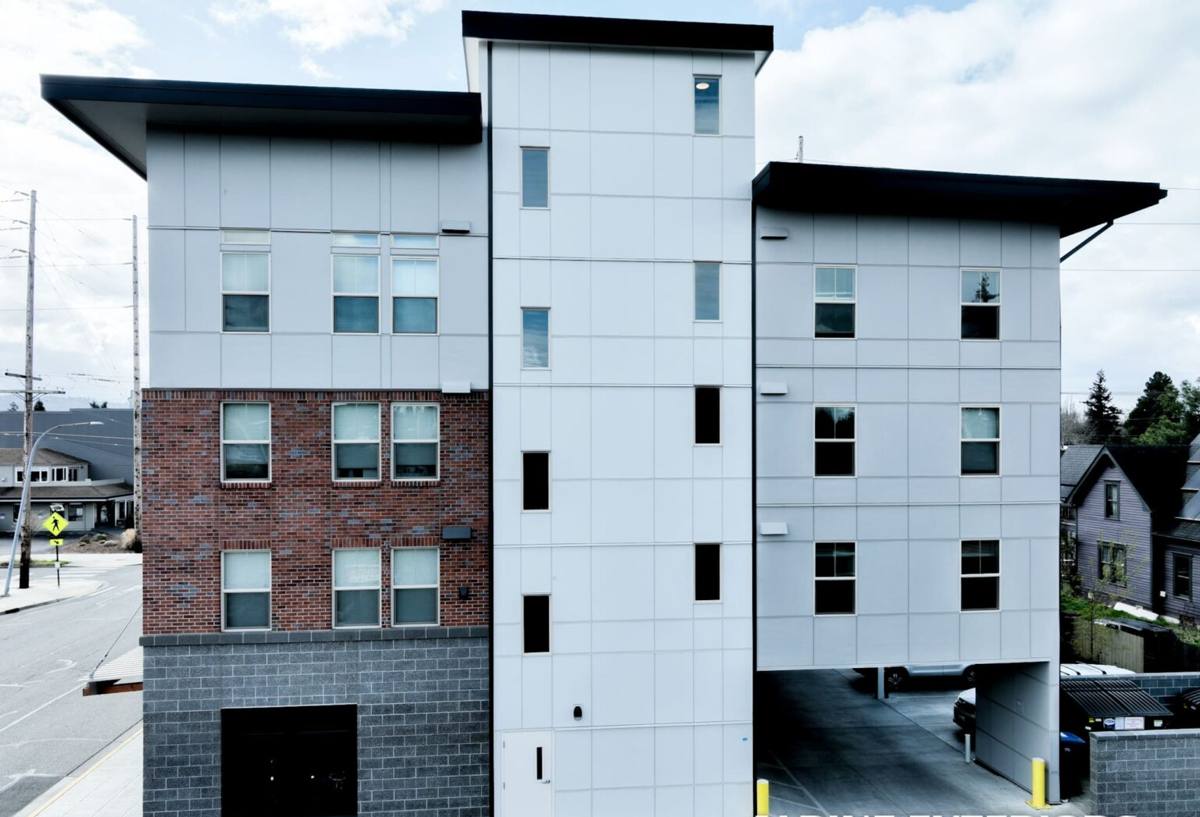
New-Construction Windows Are a Different Job Than Replacement
People sometimes use "window installation" as one catch-all phrase, but new-construction and replacement work are genuinely different trades within the same trade.
- New-construction (flanged) windows have a nailing flange around the perimeter that gets integrated directly with the house wrap and flashing before siding goes on. They're installed from open framing, which means the crew controls the entire water-management sequence.
- Replacement (insert) windows get set into an existing opening with the old siding and trim still in place, working around what's already there instead of building the assembly from scratch.
On a Cordata new-build, you want a crew that treats the flange, the flashing, and the wall's water-resistive barrier as one connected system — because that's exactly what it is. A window that's technically "installed" but not properly flashed into the wall assembly will pass a casual glance and still fail in five to ten years.
What Whatcom County Climate Demands From the Install
Bellingham sits in a spot where three separate moisture problems overlap, and Cordata's mix of open, newer-development lots and proximity to Bellingham Bay means new builds feel all three.
Salt air and coastal exposure
Even a few miles inland, salt-laden air off the bay accelerates corrosion on lower-grade fasteners, hardware, and metal flashing. New-construction installs give us the chance to choose corrosion-resistant flashing tape, fasteners, and window hardware before the wall is ever closed up — much cheaper to get right now than to correct after siding is on.
Driving rain and wind-driven moisture
Whatcom County storms don't just rain straight down — wind pushes water sideways and upward under sills and around trim. A window opening built on new framing lets us shingle every layer (house wrap, flashing tape, sill pan, flange) so water is directed out and down at every course, the way it's supposed to work on paper and not just in theory.
A long moss and damp season
Our extended wet season keeps sills, sashes, and cladding damp for months at a stretch. Moss and algae don't just grow on roofs here — they'll colonize a poorly drained sill or a window with no slope built into the pan. On new construction we can set a slight outward pitch into the rough sill before the window ever goes in, which is a much easier fix now than after drywall and trim are finished.
What a Correct New-Construction Install Actually Involves
A properly installed new-construction window in this climate follows a specific, layered sequence. Skipping or reordering any layer is how "new" windows end up with old-house water problems within a few years.
- Rough opening check — squared, level, and sized to the manufacturer's tolerance before anything else happens.
- Sill pan flashing — a sloped, sealed pan at the bottom of the opening so any water that gets past the window has somewhere to go besides the framing.
- Weather-resistive barrier integration — house wrap cut and lapped in the correct order (bottom to top, side to side) so every layer sheds water onto the layer below it.
- Window set and shimmed — plumb, level, and square, fastened per the manufacturer's schedule (this affects both performance and warranty validity).
- Flange sealed and flashed — flashing tape over the nailing flange at the sides and head, lapped correctly with the house wrap above.
- Head flashing — a drip cap or head flashing detail above the window so water is thrown clear of the opening rather than run down the face of the flange.
- Interior air seal — low-expansion foam or backer rod and sealant around the interior perimeter for both energy performance and to stop interior humidity from reaching the sheathing.
Every one of those steps is inspectable while the wall is open. Once siding goes on, most of them are hidden for the life of the house — which is exactly why the sequence has to be right the first time.
Frame Material — What Fits a Cordata Build
New-construction windows come in several frame materials, and the right choice depends on budget, exposure, and how the home is being finished. None of these are wrong choices; they're trade-offs.
| Frame Material | Moisture Behavior | Typical Cost Position | Best Fit |
|---|---|---|---|
| Vinyl | Won't rot; performs well in wet climates with proper drainage | Lower to mid | Budget-conscious builds, rental/spec homes |
| Fiberglass | Very stable, low expansion/contraction, holds paint well | Mid to upper | Owner-occupied builds wanting longevity |
| Wood-clad | Good interior look; exterior cladding needs correct flashing to avoid trapped moisture | Upper | Traditional or high-end interior finish goals |
| Aluminum | Durable but conducts cold and can condense without thermal breaks | Mid to upper (commercial-style) | Larger glass openings, contemporary designs |
We don't push one brand or material as universally "best." What matters more than the label on the frame is whether the install respects that material's specific moisture and expansion behavior — a wood-clad window flashed like vinyl, or vice versa, is where problems start.
How We Work With Cordata Builders and Homeowners
Most of our new-construction window work happens as one piece of a bigger job — coordinating with a general contractor, framer, and siding crew rather than working in isolation. Our process typically looks like this:
- Plan review — we look at window schedules and rough opening sizes before framing is finalized, catching sizing conflicts early instead of on install day.
- Site coordination — we time our install window around the framer's schedule and ahead of the siding crew, so the wall assembly goes together in the right order.
- Install — full flashing and flange sequence as outlined above, documented as we go.
- Walkthrough — before siding closes the wall up, we walk the openings with the builder or homeowner so everyone can see the flashing while it's still visible.
Why Local Experience in This Neighborhood Matters
A crew that regularly works Cordata and the surrounding Bellingham area knows a few things that don't show up in a manufacturer's install manual: which inspectors want to see sill pan flashing before it's covered, how local wind exposure on more open, newer-development lots differs from a sheltered older Bellingham lot, and how our wet season affects install scheduling and cure times for sealants and tapes. That local pattern recognition is the difference between a technically-correct install and one that's actually built for what this specific area throws at it year after year.
Before You Sign Off on Window Install — A Homeowner/Builder Checklist
- Confirm the crew is using sill pan flashing, not just flange sealant, at every opening
- Ask to see (or photograph) flashing layers before siding covers them
- Confirm fastener and flashing materials are rated for coastal/salt-air exposure
- Verify shimming and fastening follow the window manufacturer's schedule — this protects your warranty
- Check that sills have a slight outward slope, not flat or reverse-pitched
- Get manufacturer warranty paperwork and installer documentation in writing before final payment
What to Expect After Move-In
A correctly installed new-construction window in Whatcom County should need very little from you: occasional cleaning of the exterior sill and weep areas to keep drainage paths clear, and an annual look at interior and exterior sealant lines for cracking or gaps. If you ever see a stain on drywall or trim below or beside a window, that's worth a prompt look rather than a wait-and-see — on new construction, it usually points to a flashing detail that needs attention while it's still a small fix.
If you're planning a new build or addition in Cordata and want windows installed as part of a wall assembly built to handle Bellingham's rain, wind, and salt air — not just installed to pass a quick inspection — we're happy to take a look at your plans and talk through the details. Reach out for a free, no-pressure estimate using the form below.