 Bellingham Siding
 Why Cordata Windows Wear Differently Than You'd Expect
Cordata sits in north Bellingham, close enough to Bellingham Bay and the Salish Sea that salt-laden air is a constant, low-grade factor in how exterior materials age here. Add Whatcom County's long wet season — months of driving rain off the water, followed by a moss season that can stretch from fall through spring on shaded north- and west-facing walls — and windows take a slower but steadier beating than they would somewhere drier. It's rarely one dramatic failure. It's years of moisture working into seams, finishes chalking and fading a little faster than the manufacturer's brochure implies, and condensation finding the one weak point in a seal.
Custom window work in this neighborhood means accounting for that from the start: window openings on older homes that were never square to begin with, newer construction with builder-grade units that were installed to a budget rather than a standard, and a mix of siding types where the window has to integrate cleanly with what's already there. "Custom" isn't a marketing word — it means every opening gets measured and detailed on its own, not treated like a catalog size that happens to fit close enough.
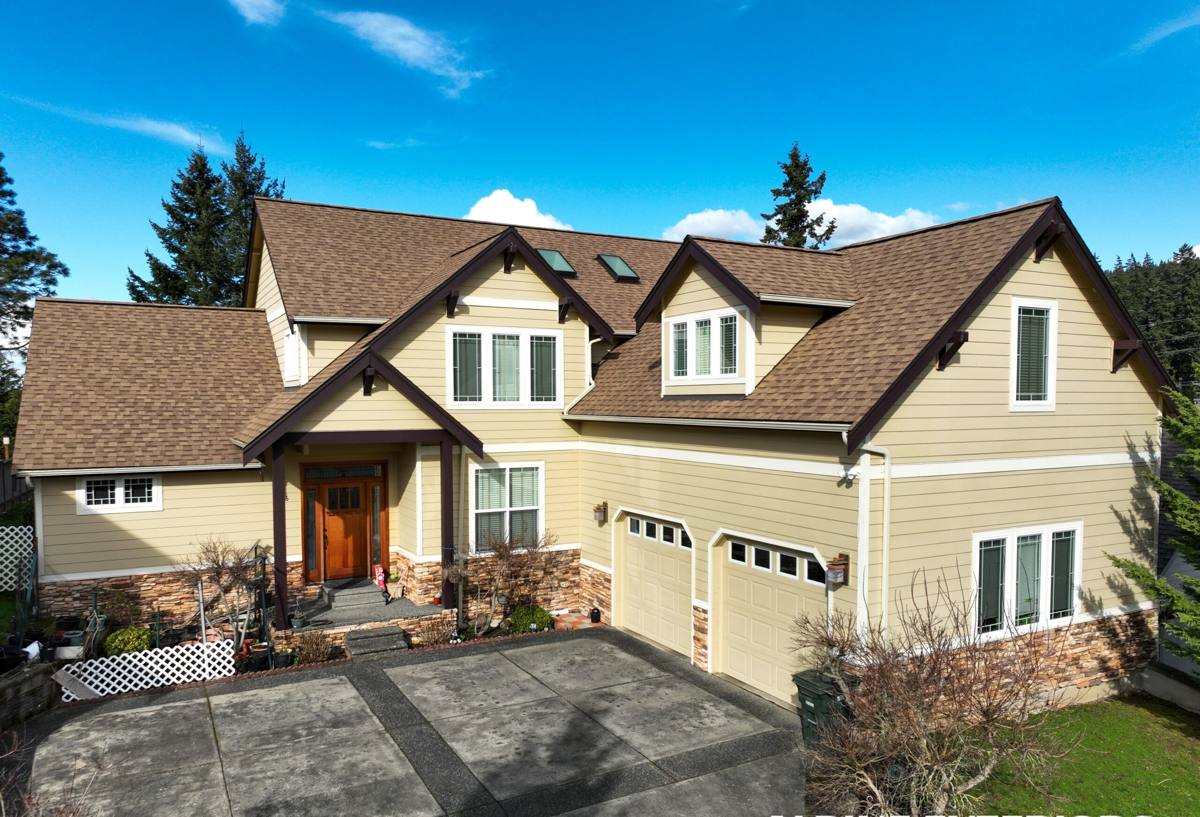
Signs a Cordata Home Is Due for Window Attention
Most homeowners don't think about their windows until something forces the issue. Here's what we actually see when we're called out to look at aging windows in this area:
- Fogging or a permanent haze between the panes — the seal on the insulated glass unit has failed and moist air is trapped inside where it can't be cleaned
- Visible moss or dark streaking building up on the sill or below the window on the siding, a sign water isn't shedding the way it should
- Soft or discolored trim around the frame, which usually means water has been getting behind it for a while
- Drafts you can feel with a hand near the frame on a windy day, even with the window latched shut
- Windows that are hard to open, close, or lock — frames can swell and shift as wood or composite parts absorb moisture over years
- Noticeably colder rooms near the windows in winter, or a spike in heating costs with no other explanation
Any one of these on its own might not mean full replacement. Several together, especially on a home that's had its original windows for fifteen-plus years, usually does.
What "Custom" Actually Covers
Matching the Home, Not a Standard Size
Cordata has a mix of housing stock — newer subdivision construction from the last couple of decades alongside older homes that predate it. Newer builds often have standard rough openings, but that doesn't mean stock windows are the right call; trim profiles, exterior cladding, and interior finish work still need to be matched. Older homes frequently have openings that have shifted slightly out of square over the years, which means a true custom measure — not just ordering a window sized to the rough opening on a spec sheet.
Matching the Exposure
Not every wall of a house faces the same conditions. A window on the side of the home that catches the prevailing rain and salt-tinged wind off the bay needs different attention to sealing and flashing than one tucked under an eave on a sheltered wall. Custom work means we look at each opening's actual exposure, not just apply one approach to the whole house.
Matching the Use of the Room
A bedroom window, a bathroom window that deals with interior humidity, and a large picture window in a living area all have different practical requirements — egress code for bedrooms, moisture tolerance for bathrooms and kitchens, glass performance for rooms with heavy sun or heat-loss exposure. Custom windows work through those differences room by room instead of specifying one product for the whole project by default.
Frame Material Comparison for This Climate
There's no single "best" window material — each has real trade-offs, and the right choice depends on budget, the home's style, and how much upkeep you want to take on. Here's how the common options stack up for a wet, salt-air climate like Cordata's:
| Material | Moisture & Salt-Air Resistance | Maintenance | Typical Lifespan |
|---|---|---|---|
| Vinyl | Good — won't rot or corrode, seams are the main watch point | Low — occasional cleaning | 20–30 years |
| Fiberglass | Very good — dimensionally stable, holds paint well in salt air | Low to moderate | 30–40+ years |
| Wood (unclad) | Fair — needs diligent finish maintenance near the coast | High — repainting/refinishing on a schedule | Varies widely with upkeep |
| Wood with metal or vinyl cladding | Good exterior protection, wood warmth inside | Moderate | 25–35 years |
| Aluminum | Prone to corrosion in salt air unless well-finished; strong but thermally weak | Low, but corrosion risk over time | Varies, corrosion-dependent |
For most Cordata homes we're steering people toward vinyl or fiberglass for the exterior-facing performance, with wood-clad as an option where the homeowner wants a wood interior look and is willing to budget for it. We don't push a single brand or material as universally "best" — we'll walk through the honest trade-offs for your specific home and exposure.
Glass and Weatherstripping Details That Matter Here
The frame gets most of the attention, but the glass package and the seals around the sash do a lot of the actual work against Whatcom County weather.
Insulated Glass
Double-pane insulated glass is the baseline now; triple-pane is worth discussing for rooms with heavy heat loss or street noise, though it adds cost and weight. Low-E coatings help manage heat gain and loss year-round, which matters both for our mild-but-damp winters and for the sunnier stretches of summer.
Weatherstripping and Seals
This is where cheap windows fail first in a climate like ours. Compression seals and weatherstripping that aren't rated for sustained wet, windy exposure degrade faster here than in a drier climate, leading to drafts and water intrusion well before the glass unit itself would fail. We pay close attention to seal quality and installation detail — a good window with a poor seal will still let water and air in.
Our Installation Process
- On-site assessment. We look at each opening individually — framing condition, current flashing, signs of past water intrusion, and the exposure that wall gets.
- Custom measurement. Every opening is measured on its own; we don't assume uniform sizing even on newer construction.
- Material and glass selection. We walk through the honest trade-offs for your home, budget, and how much maintenance you want to take on long-term.
- Removal and opening prep. Old windows come out carefully, and we inspect the sill and framing underneath — this is often where hidden moisture damage from years of a marginal seal shows up.
- Flashing and weatherproofing. Proper flashing integration with the existing siding or house wrap is done before the new window ever goes in, not treated as an afterthought.
- Installation and sealing. The window is set, shimmed level and square, and sealed with attention to the specific exposure of that wall.
- Interior and exterior finish. Trim work is completed to match the home, inside and out.
- Final walkthrough. We test operation, check the seal, and walk the job with you before we call it done.
Flashing and Moisture Management: The Part You Don't See
Most window failures we're called to look at in this area don't start with the glass or the frame — they start with flashing that was skipped, undersized, or installed out of sequence with the house wrap and siding. Water that gets behind a window, even in small amounts, has months of damp weather each year to keep finding its way in and doing damage before anyone notices from inside the house. Correct flashing — sill pan, side flashing, and head flashing integrated properly with the wall's water-resistive barrier — is the single biggest factor in whether a window installation holds up through a Whatcom County winter, let alone a decade of them. It's also the part of the job that's completely invisible once the trim goes back on, which is exactly why it matters who's doing that step and how carefully.
Moss Season and Ongoing Care
Once new windows are in, a little seasonal attention keeps them performing:
- Keep sills and tracks clear of debris and organic buildup, especially on shaded walls where moss and algae get a foothold
- Check weep holes on the exterior aren't blocked by dirt or moss, since they're what let condensation and driven rain drain back out
- Rinse salt residue off exterior frames periodically if the home has direct bay exposure
- Watch caulking and exterior sealant lines for cracking after a few years and have them touched up before gaps widen
- Operate windows periodically through the wet months so tracks and hardware don't seize up from disuse
Why a Crew Already Working in Cordata Is Worth It
A contractor who works this neighborhood regularly already knows the general housing stock, the common exposure issues on different sides of a lot, and what a properly flashed window here needs to hold up long-term. That familiarity shows up in fewer surprises during the job and fewer callbacks after. It also means we're not learning Whatcom County's weather behavior on your project — we've already seen what a rushed or under-detailed install looks like five years later, and we build every job to avoid becoming that example.
If you're weighing custom window replacement for a Cordata home, we're happy to take a look and give you a straight, no-pressure estimate — no obligation, no pushy sales pitch, just an honest read on what your windows need.