 Bellingham Siding
 Decks in Columbia Face a Different Set of Problems Than Decks Inland
Columbia sits close enough to Bellingham Bay that homes here deal with a specific combination of weather: salt-laced air drifting off the water, long stretches of driving rain through fall and winter, and a moss season that can run from October well into May. None of that is unique to Columbia, but the combination hits properties in this part of Bellingham harder than it hits homes further inland in Whatcom County. A deck built the same way you'd build one in a dry climate will show problems here years before it should — soft spots under the moss, rust bleeding from fasteners, rot starting at the ledger board where the deck meets the house.
Building a deck that actually holds up in Columbia isn't about using fancier materials across the board. It's about understanding which parts of a deck take the abuse and building those parts correctly, every time, whether the homeowner ever notices or not.
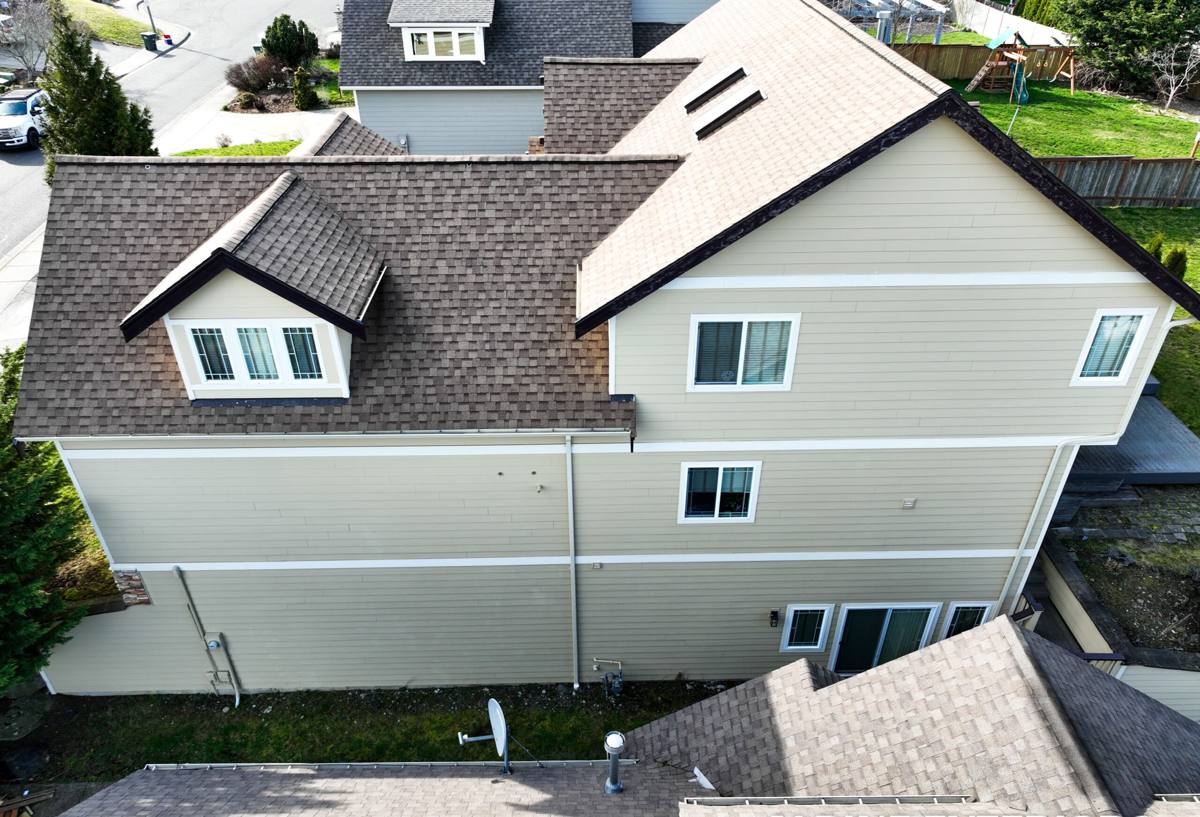
What the Local Climate Actually Does to a Deck
Salt Air and Metal Fasteners
Proximity to the bay means airborne salt settles on exposed wood and metal. Over time it accelerates corrosion in screws, joist hangers, and other hardware that isn't rated for it. A deck can look fine on the surface while the connectors holding it together are quietly weakening underneath. This is one of the most common issues we find when we're asked to look at an older deck in this neighborhood — the wood is still serviceable, but the fasteners aren't.
Driving Rain and Water Intrusion
Bellingham's rain doesn't just fall straight down — wind off the water pushes it sideways, which means water gets driven into joints, under flashing, and behind ledger boards that would stay dry in a calmer climate. Any gap in the water management on a deck becomes an entry point, and once water gets behind a ledger board or under a post base, it doesn't dry out quickly in our climate. It just sits there and does damage slowly.
Moss, Algae, and Deck Surfaces
A long wet season with mild temperatures is exactly what moss and algae need to establish themselves. On a deck, that growth isn't just cosmetic — it holds moisture against the decking surface, makes boards slippery, and on wood decking it can accelerate surface decay. The boards, gaps, and finish you choose all affect how much moss takes hold and how easy it is to keep off.
Getting the Foundation Right: Footings and Framing
Everything above the framing depends on what's below it. In Columbia's clay-heavy, often waterlogged soils, footings need to be sized and set to local frost depth and drainage conditions, not just poured to the minimum. We check the soil on site rather than assuming it matches the lot next door — drainage can vary block to block depending on grading and how water moves off the property.
For the frame itself, we use fasteners and joist hardware rated for the exposure this area sees, not just the minimum code-compliant option. That matters more here than in a lot of other parts of the county because of the salt air discussed above. We also pay close attention to two details that are easy to skimp on and expensive to fix later:
- Proper flashing where the ledger board attaches to the house, so water is directed away from the structure instead of trapped against it
- Post bases that keep wood off the concrete and off standing water, rather than posts set directly into or against wet footings
Choosing Decking Material for This Neighborhood
There's no single "best" decking material for every home — it depends on budget, how much upkeep the homeowner wants to take on, and how the deck will be used. What we won't do is recommend a product or installation method just because it's cheaper up front if we know it's going to cause a callback in five years. Here's how the common options actually perform in Columbia's conditions:
| Material | How It Handles Our Climate | Maintenance |
|---|---|---|
| Pressure-treated wood | Affordable, but needs consistent sealing to resist moss growth and moisture absorption in our wet season | Annual cleaning and periodic re-sealing |
| Cedar | Naturally more rot- and insect-resistant than most softwoods, ages to a gray patina if left unfinished | Periodic cleaning; sealing optional depending on desired look |
| Composite decking | Resists moisture absorption and rot well; surface can still grow algae/moss film if not cleaned | Occasional washing, no sealing or staining |
| PVC/vinyl decking | Fully moisture-resistant surface, performs consistently in driving rain | Low — washing only |
Whatever material a homeowner chooses, we're straightforward about the trade-offs rather than pushing whichever product carries the best margin. Composite and PVC decking cost more up front but take maintenance off the homeowner's plate. Wood costs less initially but only performs well if someone keeps up with cleaning and sealing on a schedule — which, in a climate with this much moss pressure, means realistically once a year.
Drainage and Airflow Under the Deck
One of the most overlooked parts of deck longevity in a wet climate is what happens underneath it, not on top of it. A deck built low to the ground with poor airflow traps moisture in the framing, which is exactly the environment moss, mold, and rot need. We grade the ground under and around a deck to move water away rather than let it pool, and we build in enough clearance and ventilation for the framing to actually dry out between rain events — which, in Bellingham, might only be a few days at a time in winter.
For deck surfaces close to grade or over living space below, proper under-deck drainage systems can keep the space below usable and dry. This is worth discussing during design if the deck will sit over a patio, walkway, or entry that needs to stay dry.
Railings, Stairs, and Hardware in a Corrosive Environment
Railing posts and stair stringers see some of the highest stress on a deck and some of the worst exposure to weather. In Columbia's salt-air environment, we spec fasteners and connectors rated for coastal exposure rather than standard interior-grade hardware, and we make sure railing posts are through-bolted into the framing rather than just screwed to the rim joist. A railing that looks solid when it's installed but was fastened with the wrong hardware can loosen within a few years as corrosion sets in.
What a Correct Deck Build Process Looks Like
Every deck we build in this neighborhood follows the same sequence, adjusted for the specific site conditions:
- On-site evaluation of soil, drainage, sun/wind exposure, and how the deck ties into the existing structure
- Design and material selection based on the homeowner's budget, maintenance preference, and how the space will be used
- Permitting through the City of Bellingham where required — deck height, size, and proximity to property lines all factor into whether a permit is needed
- Footings and framing built to handle local soil and moisture conditions, not just code minimums
- Flashing, fastener selection, and under-deck drainage handled as part of the build, not treated as optional upgrades
- Final walkthrough covering how to maintain the specific materials installed
Maintenance That Actually Fits Our Season
A deck built correctly still needs some upkeep in this climate — the difference is how much. We give every homeowner a maintenance rundown specific to their materials, but the general pattern for Columbia holds across most decks:
- Clear leaves, needles, and debris out of gaps between boards before they trap moisture over winter
- Clean moss and algae off the surface at least once a year, earlier if you notice it building up on shaded areas
- Check railing hardware periodically for corrosion or loosening, especially on decks facing the bay
- Reseal wood decking on the schedule appropriate to the product — don't wait until it's visibly graying and cracking
- Keep gutters and downspouts near the deck clear so runoff isn't dumping extra water onto or under the structure
Why Local Experience on This Specific Neighborhood Matters
A contractor who mostly builds decks in drier parts of Whatcom County, or who's building their first deck in a coastal-adjacent neighborhood, is going to make assumptions that don't hold up here. Fastener selection, footing depth, drainage planning, and even which decking materials perform well are all shaped by conditions specific to areas like Columbia. We've built and repaired decks in Bellingham long enough to know which shortcuts fail here even when they'd be fine somewhere else, and we build accordingly rather than defaulting to whatever's standard in a general framing manual.
If you're planning a new deck or replacing one that's showing its age, we're happy to take a look and put together a straightforward, no-pressure estimate — just fill out the form below.