 Bellingham Siding
 Windows Built for Columbia's Weather, Not Just Its Views
Columbia sits close enough to Bellingham Bay that salt-laden air is part of daily life, and that changes what "good windows" actually means here. A window that performs fine in a dry inland climate can start showing trouble within a few years on this side of Whatcom County: sash corrosion, seal failure, or a frame that holds moisture longer than it should. When we quote custom windows for a Columbia home, we're not just measuring openings — we're accounting for wind-driven rain off the bay, salt exposure, and the shaded, damp conditions that let moss and algae colonize sills and cladding faster than in drier parts of the county.
This page is specifically about window replacement and custom window installation for homes in the Columbia neighborhood. It's not a generic overview — it's what we've learned works, and what fails, for houses in this particular pocket of Bellingham.
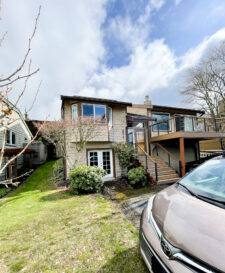
What Bellingham Bay Proximity Does to Windows
Salt Air and Metal Components
Salt air accelerates corrosion on anything metal — hinges, cranks, balance systems, and especially lower-grade aluminum or unclad wood hardware. Homes closer to the water see this show up first: stiff or seized hardware, pitting on hinges, and finishes that dull faster than the manufacturer's warranty language suggests they should. This isn't a defect in any one product line — it's just what salt air does to unprotected or under-protected metal over time. Our standard is to spec corrosion-resistant hardware and finishes rated for coastal or near-coastal exposure whenever a home sits within that salt-influenced zone, rather than defaulting to whatever hardware ships standard.
Driving Rain and Wind-Loaded Water
Rain in Whatcom County rarely falls straight down for long. Storms off the water push rain sideways into west- and south-facing walls, which means window flashing and sill pan details matter more here than they would in a sheltered inland lot. A window can be perfectly weathertight in a lab test and still leak on a Columbia home if the flashing integration with the wall assembly wasn't done correctly. Most of the leak calls we get on "bad windows" turn out to be flashing or sealant failures around a window that was otherwise sound — which is why installation quality matters as much as the window itself.
The Long Moss Season
Bellingham's moss season runs long — often eight or nine months of the year in shaded, damp spots. On windows, that shows up as green growth in sill tracks, weep holes clogged with organic debris, and trim that stays wet longer because moss holds moisture against the surface. Clogged weep holes are a bigger deal than they sound: they're the exit path for any water that gets into the window system, and a blocked one turns a well-designed drainage detail into a place where water sits and eventually finds its way inside.
What a Correct Window Job Looks Like Here
"Custom windows" doesn't just mean non-standard sizes, though that's part of it on older Columbia homes with openings that don't match modern stock dimensions. It means the window, the flashing, and the surrounding wall assembly are treated as one system.
- Full removal of the old window and inspection of the rough opening for hidden rot or water damage before anything new goes in
- Sill pan flashing installed to shed any water that gets past the window back to the exterior, not into the wall cavity
- Head flashing and side flashing integrated with the home's existing water-resistive barrier — not just caulked over the top
- Weep holes and drainage paths kept clear and unobstructed at final install
- Hardware and finish specified for the level of salt exposure at that specific lot, not a generic default
- Interior and exterior trim sealed and finished to shed water, not trap it
Skip any one of these steps and the window itself becomes almost irrelevant — water finds the weak point in the system, not the product.
Choosing Materials for a Columbia Lot
There's no single "best" window material for every home — the right call depends on exposure, budget, and how the house is built. Here's how the common options actually compare for this specific climate and setting.
| Material | Salt Air / Moisture Behavior | Maintenance Burden | Typical Fit |
|---|---|---|---|
| Vinyl | Doesn't corrode; seams and hardware quality vary by manufacturer | Low — occasional cleaning, no repainting | Budget-conscious replacements, rental or income properties |
| Fiberglass | Dimensionally stable, holds up well to damp cycling and salt exposure | Low to moderate | Homes wanting durability without wood upkeep |
| Wood (clad exterior) | Exterior clad protects the wood, but any breach in the cladding invites rot in a wet climate | Moderate — interior finish care, watch cladding seams | Historic or period-style Columbia homes wanting a wood interior look |
| Aluminum | Prone to corrosion and thermal performance issues in a cool, damp, salt-influenced climate | Higher — finish and hardware need monitoring | We generally steer Columbia homeowners away from unclad aluminum for this reason |
We're not tied to one brand or material — we'll tell you honestly which option fits your home's exposure, your maintenance appetite, and your budget, including where a cheaper option is a legitimate choice and where it's a false economy on this particular lot.
How Our Process Works
1. On-Site Assessment
We look at more than the windows themselves — sun and wind exposure on each elevation, existing flashing condition, any signs of past water intrusion, and how close the home sits to the bay's salt influence. This shapes the material and hardware recommendation before we ever talk numbers.
2. Measuring and Custom Fitting
Many Columbia homes, especially older ones, have openings that don't match modern standard sizes. We measure each opening individually rather than assuming uniformity across the house, since even a few homes on the same block can have settled or shifted differently over the decades.
3. Removal and Opening Inspection
Once the old window comes out, we inspect the rough opening for hidden moisture damage or rot before installing anything new. Catching a problem here — rather than sealing over it — is the difference between a window that lasts and one that fails from the inside out.
4. Flashing and Installation
This is where the driving-rain reality of this climate matters most. We install sill pan flashing and integrate head and side flashing with the home's water-resistive barrier, following manufacturer installation instructions to keep warranty coverage intact.
5. Finish, Seal, and Walkthrough
Interior and exterior trim gets sealed and finished, weep holes are confirmed clear, and we walk the job with the homeowner before calling it done.
Signs a Columbia Home Needs Window Attention
Not every window problem requires full replacement, but these are the signs worth having a professional look at sooner rather than later:
- Fogging or moisture between glass panes, indicating a failed seal
- Soft or discolored wood trim around the frame, especially on west- or south-facing walls
- Hardware that's stiff, corroded, or won't latch fully
- Visible moss or persistent green growth in sill tracks or exterior trim
- Noticeable draft or condensation on the interior glass in cooler months
- Water staining on interior walls or sills below or beside a window
Why Local Experience with Columbia Homes Matters
A contractor who mostly works dry, sheltered inland sites will spec and install windows differently than a crew that works Bellingham's bay-adjacent neighborhoods regularly. We know which elevations on Columbia homes tend to take the worst of the driving rain, which older housing stock in the area has non-standard openings, and which hardware and flashing choices hold up under this specific combination of salt air and a long wet season. That's not something you get from a spec sheet — it comes from doing this work, in this neighborhood, repeatedly.
We also stand behind the installation itself, not just the window product. Since so many "window failures" are actually flashing or installation failures, the crew doing the physical work matters as much as the brand on the label.
What to Expect on Cost
Window project costs vary widely based on material, size, number of openings, and site conditions — we won't quote a number without seeing the job. In general, expect vinyl to sit at the lower end of the range, fiberglass and clad wood in the mid-to-upper range, and custom or non-standard sizes to add cost regardless of material simply due to the fabrication involved. The honest answer is that we'll give you real numbers after a walkthrough, not a generic online estimate that doesn't account for your home's actual exposure and condition.
If you're weighing window replacement for a Columbia home, we're happy to take a look and give you a straightforward, no-pressure estimate — just fill out the form below and we'll set up a time to come out.