 Bellingham Siding
 Roofing in Blaine: A Different Set of Problems Than Inland Bellingham
Blaine sits right on the water at the northwest corner of Whatcom County, and that location changes what a roof has to deal with compared to a home a few miles inland in Bellingham or Ferndale. Roofs here take on salt-laden air off the Strait of Georgia and Semiahmoo Bay, wind-driven rain that doesn't fall straight down, and a moss season that runs longer than almost anywhere else in the county because the marine air keeps north-facing slopes damp for weeks at a time. None of that is dramatic on its own, but stacked together over 15-20 years it wears out roofing materials faster than most homeowners expect, and it punishes cheap installation work in particular.
A roof replacement in Blaine isn't just a bigger version of a roof job somewhere drier. The underlayment choice, the metal flashing spec, the ventilation plan, and even the fastener type all need to account for salt exposure and near-constant moisture. We treat those as the starting point for every Blaine roof, not an upgrade option.
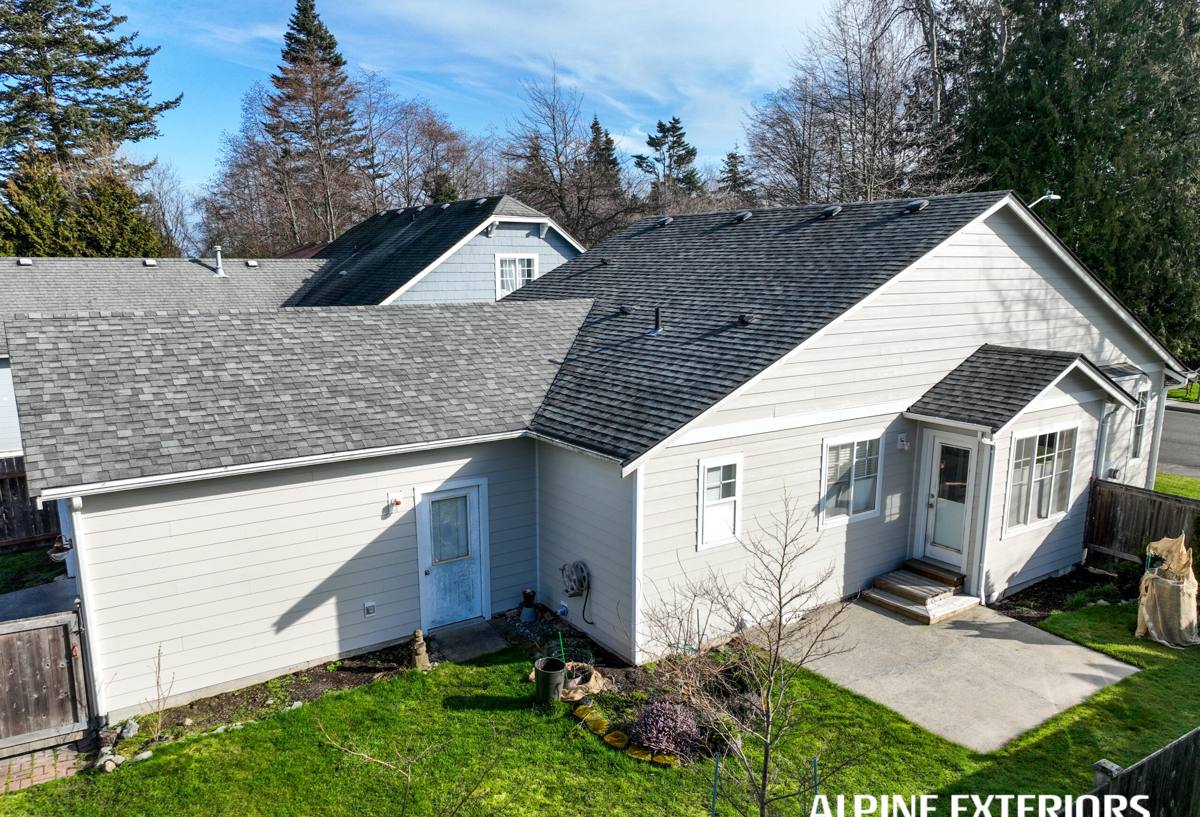
What Blaine's Climate Actually Does to a Roof
Salt Air and Metal Corrosion
Homes within a mile or two of the water deal with airborne salt that settles on every exposed surface, including roof metal. Standard galvanized flashing, exposed fasteners, and lower-grade vents corrode faster in this environment than they would inland. Over time that shows up as rust streaking down the roof face, pitted flashing at valleys and chimneys, and fastener heads that back out or fail early. It's a slow process, which is exactly why it gets missed until a leak forces the issue.
Driving Rain and Wind-Blown Water
Blaine gets weather off the water, and that means rain that doesn't just fall onto shingles, it gets pushed sideways and up under laps, ridge caps, and poorly sealed penetrations. A roof that would shed water fine in a calm, straight-down rain can leak in a wind-driven storm if the underlayment, ice-and-water membrane placement, and flashing details weren't built for that reality.
Moss and Extended Damp Season
Whatcom County as a whole deals with moss, but coastal exposure and the marine layer that hangs over Blaine keep shaded and north-facing roof sections wet longer into the season than roofs further inland. Moss holds moisture against the roofing material, works its way under shingle tabs, and lifts edges over time. A roof that isn't detailed and maintained with moss pressure in mind will show granule loss, soft spots, and premature aging years before it should.
Signs a Blaine Roof Needs Replacing, Not Just Patching
- Granules collecting in gutters or at downspout discharge points, especially after wind or heavy rain
- Curling, cupping, or cracked shingles, particularly on south and west-facing slopes that see the most sun and wind
- Rust streaking below flashing, vents, or valleys
- Moss buildup that keeps returning within a season or two of cleaning
- Soft or spongy spots underfoot near valleys, chimneys, or skylights, which usually means the deck underneath is already wet
- Daylight visible through the roof deck from the attic, or water stains on attic sheathing
- A roof age of 18-25+ years for asphalt shingle systems, even without obvious visible damage
- Repeated small leak repairs in different spots each year instead of one contained issue
Any one of these can sometimes be handled with a repair. Several of them together, especially on a roof already past the middle of its expected lifespan, usually means repair costs are heading toward the price of a full replacement anyway, just spread out and with the underlying problem still there.
What a Correct Roof Replacement Looks Like Here
Tear-Off and Deck Inspection
We remove the existing roofing down to the deck rather than layering over old material. That's the only way to actually see the condition of the sheathing, find soft or delaminated spots from long-term moisture exposure, and replace them before they're buried under a new roof for another 20 years.
Underlayment and Ice-and-Water Protection
Given the wind-driven rain this area sees, we don't treat synthetic underlayment as optional and we extend self-adhering ice-and-water membrane further into vulnerable zones, valleys, eaves, and around penetrations, than a bare-minimum install would. This is the layer that protects the deck if wind ever drives water past the shingles themselves.
Flashing Built for Salt Exposure
Flashing at valleys, chimneys, sidewalls, and roof-to-wall transitions gets specified with corrosion resistance in mind rather than defaulting to the cheapest galvanized stock. Fasteners and exposed metal components matter more within Blaine's salt-air belt than they would on an inland roof of the same design.
Ventilation That Matches the Marine Climate
Balanced intake and exhaust ventilation keeps the attic dry and the roof deck temperature stable, which matters for shingle lifespan and for controlling condensation in a climate that's damp most of the year. A roof can be installed correctly and still underperform if the attic beneath it is trapping moisture.
Moss-Resistant Details
Where zinc or copper strips are appropriate, we install them at ridges to reduce moss regrowth on shaded slopes. We also make sure valleys and low-slope transitions are detailed so water and debris don't sit and hold moisture against the shingles longer than necessary.
Material Options for Blaine Homes
| Material | How It Handles Blaine's Climate | General Lifespan | Trade-Offs |
|---|---|---|---|
| Architectural asphalt shingle | Good performance with proper underlayment and flashing; needs periodic moss and gutter maintenance | 20-30 years | Most cost-effective; requires attentive detailing near water |
| Standing seam metal | Sheds wind-driven rain well and resists moss buildup on steeper slopes; needs coastal-grade coatings and fasteners | 40-60 years | Higher upfront cost; installation quality matters even more near salt air |
| Synthetic/composite shingle | Resists moisture absorption and moss better than standard asphalt in shaded, damp areas | 30-50 years | Higher material cost; fewer installers experienced with the product |
| Cedar shake | Traditional look but requires more maintenance in a climate that stays damp this long | 20-30 years with upkeep | Ongoing maintenance burden and fire-rating considerations; we're candid with clients about this before recommending it here |
We don't push one product for every home. The right call depends on the roof's slope, sun and shade exposure, how close the home sits to the water, and the homeowner's tolerance for maintenance versus upfront cost. We'll walk through the honest trade-offs for your specific roof rather than defaulting to whatever's easiest to sell.
Our Process for a Blaine Roof Replacement
- On-site inspection — We look at the current roof, attic ventilation, decking condition where visible, and any signs of the salt, wind, or moss issues specific to your slope orientation and exposure.
- Written estimate — A clear scope covering tear-off, deck repair allowances, underlayment, flashing, material, and ventilation, so there are no surprise line items mid-project.
- Scheduling around weather — Coastal weather windows matter for roofing. We plan tear-off and dry-in timing to minimize the number of days the deck is exposed.
- Tear-off and deck assessment — Old roofing removed, deck inspected and repaired as needed before anything new goes down.
- Installation — Underlayment, flashing, ventilation, and roofing material installed to the spec discussed in the estimate, not a stripped-down version of it.
- Final walkthrough — We review the completed roof with you, including gutters, flashing details, and any ventilation changes made.
Why Hire a Crew That Already Works in Blaine
Roofing crews that mostly work drier, inland areas sometimes under-spec underlayment coverage, use standard-grade flashing and fasteners, or skip moss-prevention details because those problems aren't as urgent where they usually work. On a Blaine roof, those shortcuts show up faster, as rust, leaks at flashing points, or moss returning within a year or two.
Working regularly in Blaine and along the rest of Whatcom County's coastline means we're not guessing at what a marine-exposed roof needs. We factor in wind direction relative to the water, how much shade a given slope gets, and how long moisture typically sits on north-facing sections before it dries out. Those details come from working this specific area, not from a general roofing checklist.
Maintaining a New Roof in a Coastal Climate
- Clean gutters and downspouts at least twice a year so water isn't backing up under the roof edge
- Have moss growth removed before it spreads under shingle tabs, rather than waiting until it's visible from the street
- Check flashing and exposed metal periodically for early rust or corrosion, especially in the years after installation
- Keep overhanging branches trimmed back to reduce shade and debris buildup on north-facing slopes
- Have the attic checked occasionally for proper airflow and any signs of trapped moisture
A well-built roof still benefits from basic upkeep in this climate. None of this is intensive work, but skipping it is how a 30-year roof turns into a 20-year roof.
Get a Straightforward Look at Your Roof
If your roof is showing wear, approaching the end of its expected lifespan, or you just want an honest read on its condition, we're happy to take a look. The estimate is free, there's no pressure, and you'll get a clear explanation of what we see and what your options actually are. Use the form below to get started.