 Bellingham Siding
 Birchwood Homes Face a Specific Kind of Weather
Birchwood sits close enough to Bellingham Bay and the Puget Sound air stream that homes here take on a steady combination of salt-laden moisture, wind-driven rain, and the low, filtered light that keeps north and shaded walls damp for days at a time. Add Whatcom County's long moss season — realistically eight or nine months of the year when conditions favor moss, algae, and lichen growth on any surface that stays wet — and you have a climate that is genuinely harder on exterior siding than most of the country ever deals with.
None of that is exotic or unusual for this part of Washington. It's just relentless. Siding in Birchwood doesn't fail because of one dramatic storm; it fails from years of cumulative moisture cycling — wet, dry, wet, dry — that eventually finds a gap in the water-management details and starts working on the wall assembly behind the cladding. Any siding installation here has to be planned around that reality from day one, not patched around it later.
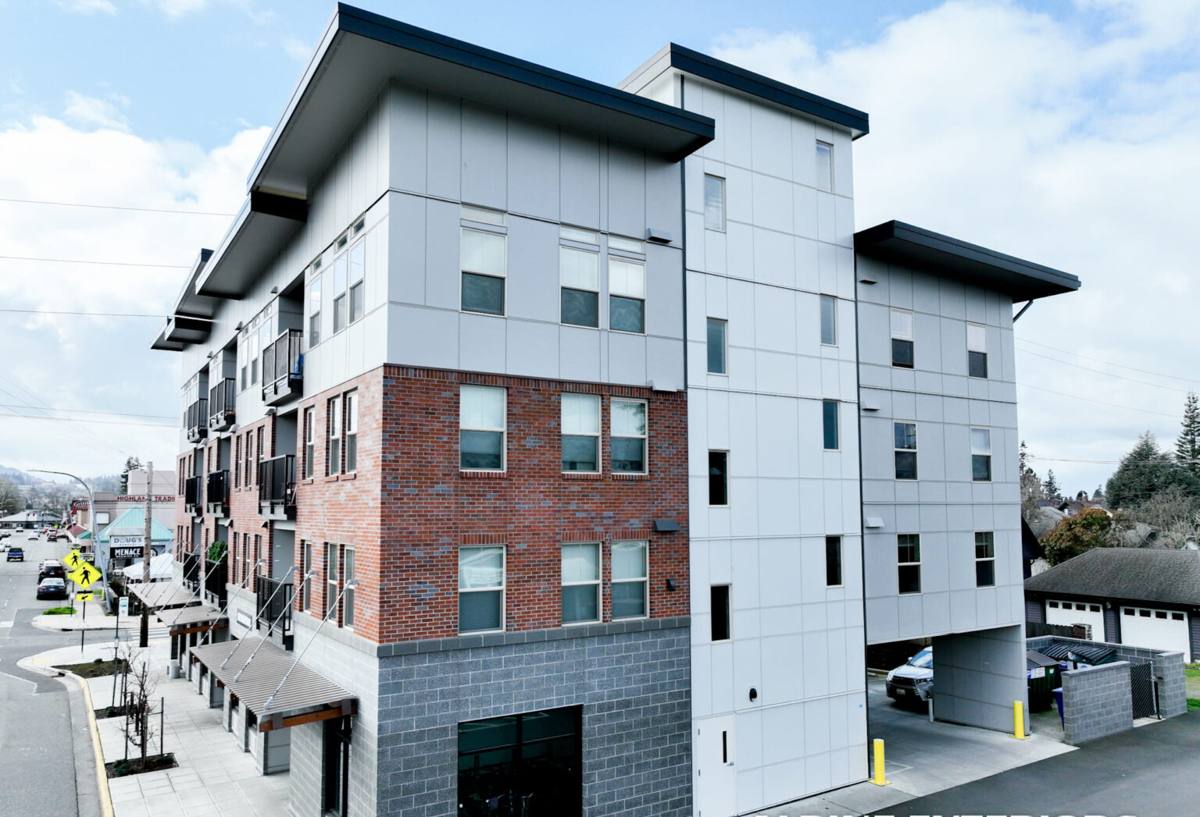
What "Correct" Siding Installation Actually Means Here
A siding install can look finished and still be wrong. The visible plank is maybe 20% of what determines whether a wall stays dry for the next 30 years. The rest is in details most homeowners never see once the job is buttoned up:
- A continuous weather-resistant barrier behind the siding, lapped correctly top-over-bottom so water sheds outward instead of tracking behind the barrier at seams
- Rainscreen or drainage gap so any moisture that does get behind the cladding has somewhere to drain and dry, rather than sitting against the sheathing
- Proper flashing at every window, door, deck ledger, and roof-to-wall intersection — the single most common source of hidden rot on Northwest homes
- Correct fastening and clearances per the manufacturer's installation manual, including ground clearance and gaps at inside/outside corners to allow for expansion
- Factory-finished panel edges sealed where field-cut, so cut ends aren't left to absorb water
Skip or rush any one of those steps and the siding itself can be a premium product and still let moisture in behind it. This is why we treat installation quality as equal in importance to the product choice — one without the other doesn't hold up in a climate like Bellingham's.
Why We Only Install James Hardie Fiber Cement
We don't install vinyl, LP SmartSide, primed spruce, cedar, or other fiber cement brands. That's a deliberate standard, not a lack of options. In a climate that stays wet as long as Whatcom County's does, the material decision matters as much as the workmanship:
- Non-combustible — fiber cement doesn't feed a fire the way wood-based products can
- Engineered for this climate — James Hardie makes a specific HZ5 product line formulated for the Pacific Northwest's moisture exposure, rather than a one-size-fits-all national formula
- Factory-applied ColorPlus finish — baked-on color that resists the fading and touch-up cycle that field-painted siding goes through, and holds up better against moss and mildew staining than porous wood surfaces
- Dimensionally stable — doesn't swell, cup, or split the way wood-based composite siding can when it takes on repeated moisture cycling
- Strong transferable warranty — backed by a manufacturer with a long track record in wet climates, not just a marketing claim
We're not saying every other product is unusable everywhere — wood siding and engineered wood have their place in drier climates. We're saying that after years of tearing old siding off Whatcom County homes and seeing exactly which products held up and which ones didn't, James Hardie is what we're willing to put our name behind and warranty. That's the whole reason we standardized on one manufacturer instead of offering a menu of options.
Our Installation Process for Birchwood Projects
1. On-Site Assessment
We walk the exterior, check the condition of the existing sheathing and framing where accessible, and look specifically at moisture-prone areas — north-facing walls, anywhere near grade, deck ledgers, and window/door penetrations. This tells us if there's hidden damage to address before new siding goes on, which is common on older Birchwood homes that have carried the same siding through several decades of Bellingham winters.
2. Tear-Off and Sheathing Check
Old siding comes off, and we inspect the sheathing underneath. Soft, delaminated, or rotted sheathing gets repaired or replaced before anything new goes back on — installing new siding over compromised sheathing just hides the problem for a few more years.
3. Water Management Layer
We install a continuous weather-resistant barrier and rainscreen system, with particular attention to flashing at every penetration. This is the layer that actually keeps your wall assembly dry — it does the real work, more than the cladding itself.
4. James Hardie Installation to Spec
Panels or lap siding go on per James Hardie's published installation manual: correct fastener type and spacing, proper clearances at grade and corners, and sealed cut edges. This is also where a lot of lower-quality installs cut corners — the manual exists for a reason, and skipping steps is what voids warranty coverage down the line.
5. Trim, Caulking, and Final Detail
Trim work and caulking at transitions finish the job and protect the edges where most water intrusion actually starts.
Signs a Birchwood Home Needs New Siding Now
Given the local climate, we tell homeowners to watch for these specific warning signs rather than waiting for obvious failure:
- Persistent moss or algae staining that comes back within weeks of cleaning, especially on shaded or north-facing walls
- Soft spots or slight give when you press on siding near the ground or under windows
- Visible cupping, warping, or separated seams on wood-based siding
- Peeling or bubbling paint that keeps recurring in the same spots year after year
- Interior signs — musty smell, discolored drywall, or soft trim — near exterior walls
Any one of these can mean moisture has already gotten past the cladding. Left alone through another wet Bellingham winter, that turns into sheathing and framing repair, which is a bigger job than a straightforward re-side.
Cost Factors for Siding Installation in Birchwood
Every home is different, but the line items that actually move the price are consistent. We'd rather walk through these honestly up front than throw out a number that doesn't hold up once we're on your walls.
| Factor | Why It Matters |
|---|---|
| Home size and wall complexity | More square footage, corners, and roof/wall intersections mean more material and more flashing detail |
| Existing sheathing condition | Rot repair found during tear-off adds labor and material beyond the base siding job |
| Siding profile chosen | Lap siding, shingle-style panels, and board-and-batten from the James Hardie line carry different material and labor costs |
| Trim and detail work | Corner boards, window trim, and fascia detail add finish time and materials |
| Access and site conditions | Multi-story walls, tight lot lines, or landscaping that limits staging area affect labor time |
| Tear-off and disposal | Removing and hauling old siding is a real cost, especially with multiple layers of prior siding |
We don't quote broad, unqualified price ranges on a page like this because they're not useful without seeing the actual home — an accurate number comes from the on-site assessment.
Why a Local Crew That Knows Birchwood Matters
Siding installation in this specific pocket of Bellingham benefits from local familiarity in ways that are easy to underestimate. A crew that regularly works this area already understands the exposure patterns — which wall orientations take the worst of the wind-driven rain, how much moss pressure a given lot typically sees based on tree cover and sun exposure, and how the region's freeze-thaw pattern (mild but not absent) affects fastener and caulking choices. That local pattern recognition shows up in better flashing decisions and fewer callbacks, not in anything flashy.
It also means a crew that's around for warranty follow-up, not a traveling outfit that's moved to the next region by the time an issue shows up two winters later. In a climate that tests siding installation quality this consistently, that continuity matters.
Caring for Your New Siding After Installation
James Hardie siding is low-maintenance compared to wood or vinyl, but "low-maintenance" isn't "no-maintenance" in Whatcom County's climate. A short annual routine keeps it performing the way it's designed to:
- Rinse siding with a garden hose once or twice a year to clear pollen, dust, and early moss spores before they take hold
- Trim back trees and shrubs that keep siding shaded and damp longer than the rest of the exterior
- Check and re-caulk trim joints and penetrations every few years, since caulk wears out well before the siding does
- Walk the exterior after major storms and check gutters and downspouts are directing water away from the walls, not onto them
- Address moss on adjacent roofing promptly, since roof runoff carries spores directly onto siding below
If you're weighing a siding project for a Birchwood home, we're happy to take a look and give you a straight, no-pressure assessment of what your walls actually need — no upsell, no scare tactics, just an honest read on condition and options. Use the form below to request a free estimate.