 Bellingham Siding
 Birch Bay's Exterior Puts Siding Through a Lot
Birch Bay sits right on the water, and that changes what a house needs from its siding compared to a home a few miles inland in Bellingham. Homes here deal with salt-laden air off the bay, wind-driven rain that hits walls sideways during winter storms, and a long stretch of the year where shaded and north-facing walls barely dry out between rain events. Add in the moss and algae growth that thrives in that damp, mild climate, and you have an exterior environment that punishes the wrong siding choice and rewards the right one.
We install James Hardie fiber cement siding on Birch Bay homes because it's built to handle exactly these conditions when it's installed correctly. This page covers what that means in practice — not generic siding advice, but what actually matters for a Birch Bay property.
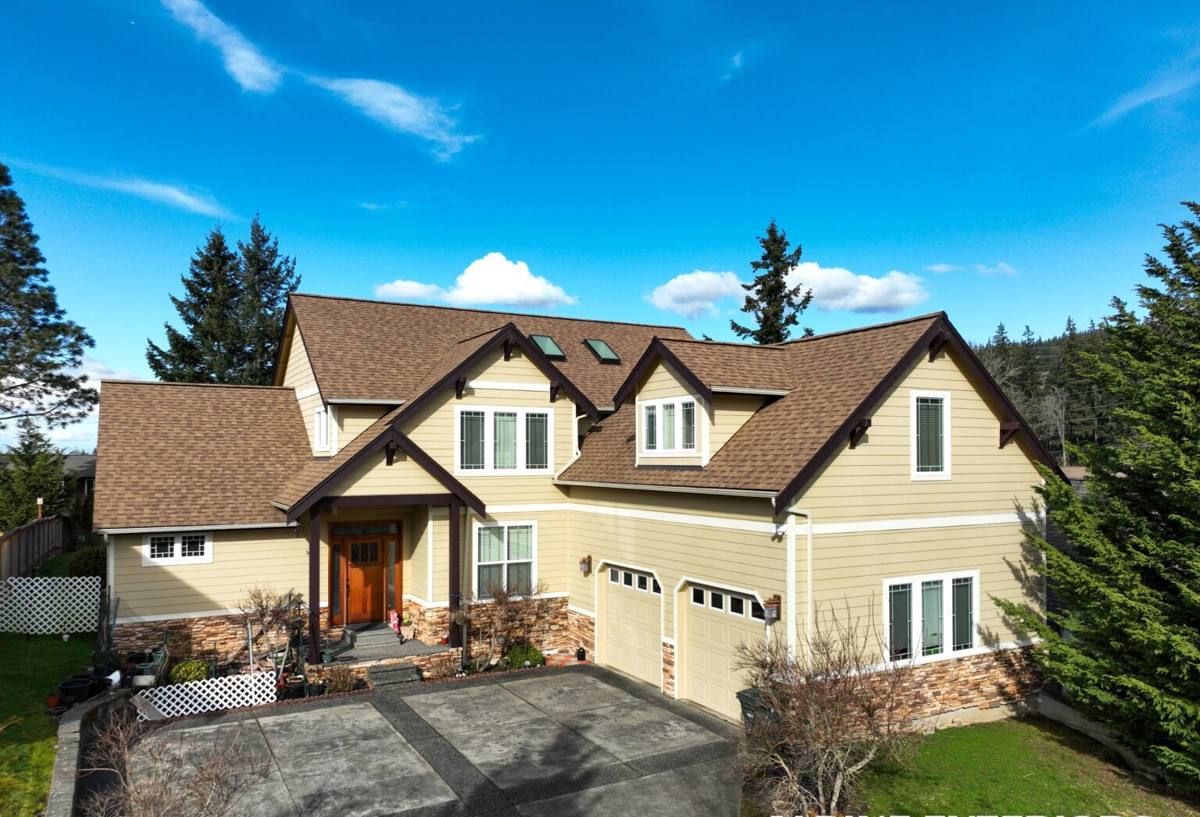
What Birch Bay's Climate Actually Does to Siding
Salt Air and Corrosion
Proximity to the water means airborne salt settles on exterior surfaces and works its way into fasteners, trim edges, and any exposed wood. Over years, that accelerates corrosion in the wrong hardware and speeds up rot in materials that aren't moisture-stable. It's a bigger factor here than it is for a home set back in the trees a mile inland.
Wind-Driven Rain
Birch Bay gets exposed to weather coming straight off the water, and storms often push rain horizontally into wall assemblies rather than letting it run straight down. That means siding laps, joints, and penetrations (windows, doors, hose bibs, light fixtures) take on more water pressure than a typical sheltered wall. Flashing details and caulking quality matter more here than they would somewhere calmer.
Moss and Algae Season
Western Washington's damp, mild winters are already good conditions for moss and algae growth on siding, and Birch Bay's marine humidity extends that season further than it runs in drier parts of Whatcom County. Siding that stays damp longer on shaded or north-facing elevations will show green and black growth sooner if the product and finish don't resist it well.
Why Fiber Cement Fits This Environment
James Hardie fiber cement is made from cement, sand, and cellulose fibers — it's non-combustible and dimensionally stable, meaning it doesn't swell, warp, or rot the way wood-based products can when they take on repeated moisture. That matters directly for Birch Bay:
- It doesn't absorb and hold water the way engineered wood or untreated wood siding can, so repeated soaking from wind-driven rain doesn't lead to swelling at the edges over time.
- It won't rot, which matters on the shaded, slow-drying walls that are common on wooded or waterfront Birch Bay lots.
- The factory-applied ColorPlus finish resists fading and holds up to UV and salt exposure better than field-applied paint, and it doesn't need repainting on the schedule that painted wood siding does.
- It's non-combustible, which is a real consideration anywhere in Whatcom County given regional wildfire smoke seasons and general fire risk awareness.
None of this makes fiber cement immune to moss or algae growth — nothing fully is — but a hard, stable, factory-finished surface sheds growth more easily during cleaning than a porous or textured wood-based surface, and it doesn't degrade structurally if growth does take hold before it's cleaned.
Choosing the Right Hardie Product Line for a Birch Bay Home
James Hardie makes climate-engineered product lines, and for a waterfront or near-waterfront property like most of Birch Bay, that engineering isn't a marketing detail — it's the reason we spec a specific line rather than defaulting to whatever's cheapest.
| Product | Best Use | Why It Matters in Birch Bay |
|---|---|---|
| HardiePlank Lap Siding (HZ10) | Standard walls, most exposures | Engineered for the wetter, harsher climate zone that includes coastal Washington |
| HardiePanel Vertical Siding | Accent walls, gables, modern designs | Clean vertical lines that also shed water well on steep or exposed gable ends |
| HardieTrim boards | Corners, window and door trim, fascia | Stable trim that won't cup or split at the joints that see the most wind-driven rain |
| ColorPlus Technology finish | All exposed lines | Factory-baked finish holds color and resists the fading that salt air and UV cause on field-painted surfaces |
We walk each Birch Bay property individually — water exposure, tree cover, wall orientation, and existing moisture damage all factor into which combination makes sense.
What Correct Installation Actually Involves
Fiber cement performs the way it's supposed to only when it's installed to manufacturer spec. This is where a lot of siding jobs — on any product — quietly fail years down the road, and it's especially unforgiving in a wind-driven-rain environment like Birch Bay.
Water Management Behind the Siding
Correct installation starts with the weather-resistive barrier and flashing, not the siding itself. Every window, door, and penetration needs proper flashing so water that gets past the siding surface (and some always will, in a storm) drains back out instead of getting trapped against the sheathing.
Fastening and Clearances
Hardie siding needs the right fastener type and spacing, proper nailing patterns, and correct clearance from grade, roof lines, and decks so water isn't wicking up from below. Ground clearance and drainage gaps matter more on lots close to sea level where soil can stay saturated longer.
Caulking and Joint Treatment
Joints and seams need to be sealed with the right sealant, in the right places — not everywhere, since fiber cement also needs to breathe and drain at certain details. Over-caulking is as much a problem as under-caulking.
Cut Edges
Every field cut exposes raw fiber cement that needs to be sealed or primed per Hardie's instructions before it's installed. Skipping this is a common shortcut that leads to premature edge deterioration, especially in a climate with this much moisture exposure.
Our Process for Birch Bay Installations
- On-site assessment: we look at your home's specific exposure — how close to the water, how much shade, existing moisture or rot issues, current siding condition.
- Product and line selection: we recommend the Hardie products and finish that fit your walls, not a one-size answer.
- Tear-off and sheathing check: we remove existing siding and inspect sheathing for hidden rot or damage before anything new goes up — common on older Birch Bay homes that have taken decades of coastal weather.
- Water barrier and flashing installation: the unglamorous part that determines whether the siding actually performs for its expected lifespan.
- Hardie siding installation to manufacturer spec: correct fastening, clearances, and joint treatment throughout.
- Final walkthrough: we go over the completed work and care basics with you before we consider the job done.
Maintenance Realities for a Birch Bay Property
Fiber cement is genuinely low-maintenance compared to wood, but "low-maintenance" isn't "no-maintenance," especially this close to the water. A few things worth knowing:
- Periodic rinsing (a garden hose is usually enough) helps keep salt residue and early moss growth from building up on shaded walls.
- Keep gutters clear and functioning — overflow running down a wall is one of the more common causes of localized staining and premature wear, on any siding product.
- Trim back vegetation that's shading walls and keeping them damp longer than they need to be; this helps more with moss than almost anything else you can do.
- ColorPlus finish doesn't need repainting on the schedule painted siding does, but check caulked joints every couple of years and have any cracked or failed sealant replaced before it becomes a water entry point.
Why Hiring a Crew That Works Birch Bay Regularly Matters
Siding installation quality varies a lot between crews, and the details that matter most — flashing, clearances, fastening, cut-edge treatment — are exactly the things that are easy to shortcut and hard for a homeowner to inspect after the fact. A crew that regularly works Birch Bay and the surrounding Whatcom County coastline has already seen how wind-driven rain, salt exposure, and moss behave on real homes here, and builds installation practices around that instead of applying a generic approach and hoping it holds up.
We only install James Hardie fiber cement — we don't offer vinyl, LP SmartSide, or other fiber cement brands — because we'd rather stand behind one system we know performs correctly when installed right, backed by a strong transferable warranty, than spread our installation standards across products with different moisture behavior and different failure points.
If you're planning a siding project in Birch Bay, we're happy to take a look at your home, talk through what your specific exposure calls for, and give you a straightforward estimate — no pressure, no hard sell.