 Bellingham Siding
 Building New in Barkley? Get the Windows Right the First Time
Barkley is one of the more active new-construction pockets in Bellingham, and that's exactly why window selection and installation deserve more attention than they usually get during a build. On a new house, windows go in once. There's no siding to pull back later and no easy do-over if the flashing sequence was wrong or the frame material was a poor match for the site. Whatcom County's climate is patient but unforgiving — it will find every shortcut in a window install eventually, just not on a schedule that's convenient for anyone.
We install new-construction windows on homes going up in and around Barkley, working alongside builders, general contractors, and owner-builders who want the window package handled by a crew that understands both the product and the local weather it has to survive. This page covers what that actually involves.
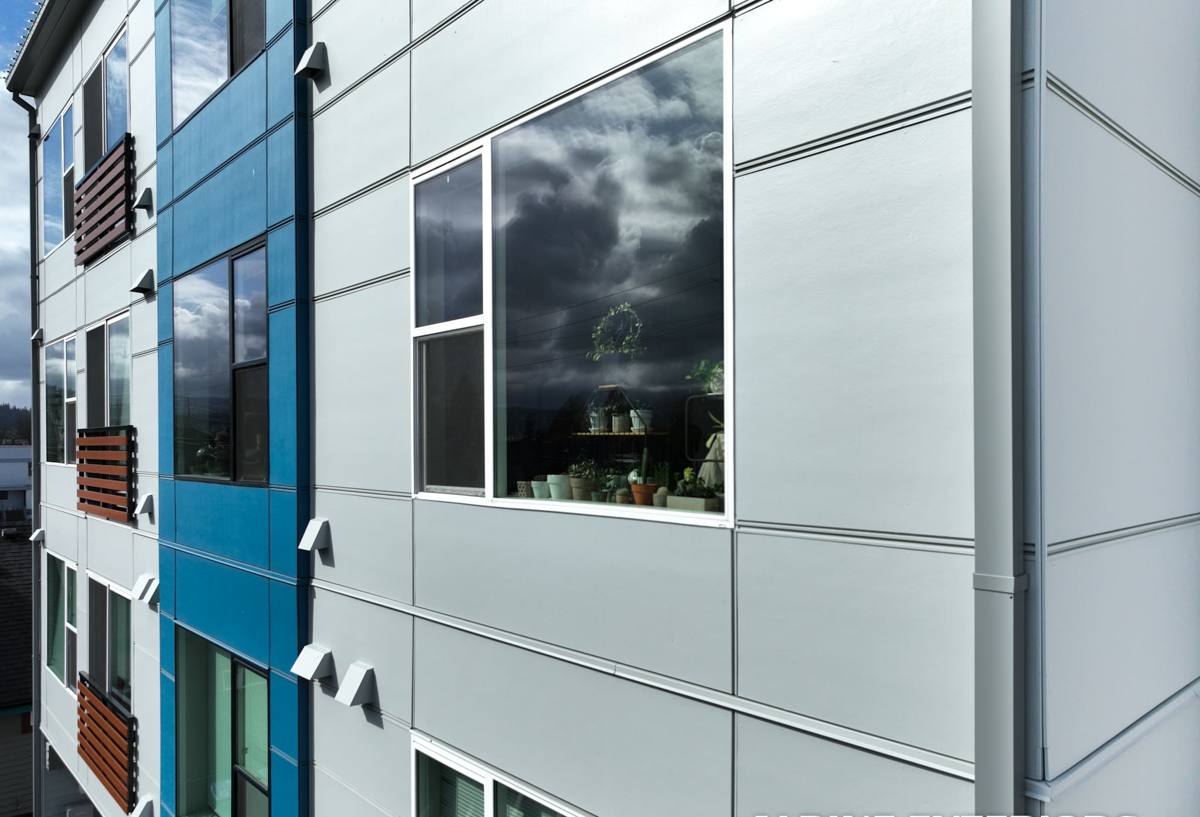
What Barkley's Climate Asks of a New Window Install
Bellingham sits close enough to the water that salt-laden air is a real factor for exterior materials, even a few miles inland. Add in long stretches of driving rain through fall and winter, plus a moss season that can run most of the year on shaded north- and west-facing walls, and you have a climate that punishes anything less than a correct, complete window installation.
- Salt air accelerates corrosion on lower-grade fasteners, hinges, and cladding-to-frame connections — hardware quality matters more here than in drier inland markets.
- Driving rain means wind-driven water is hitting window openings at an angle, not just falling straight down. Flashing has to shed water outward and downward, not just cover the opening.
- Extended moss and moisture season keeps wall assemblies damp longer, so any gap in the water-resistive barrier or sill pan becomes a slow, hidden rot problem rather than an obvious leak.
None of this is unique to Barkley specifically, but it applies to every new build going in there, and it's the baseline we design every install around.
New Construction vs. Replacement: Why the Approach Is Different
A lot of homeowners assume window installation is window installation. On a new build it's a different job with different tools, sequencing, and margin for error.
| Factor | New Construction | Replacement (Retrofit) |
|---|---|---|
| Access to framing | Full access — sill, jambs, and header are open before siding goes on | Framing hidden behind existing siding and trim |
| Flashing method | Built in layers with the WRB and sill pan as the wall is assembled | Worked in around existing materials, often with more compromise |
| Window flange type | Nailing-fin (flange) windows are standard | Often flangeless or insert-style units |
| Sequencing dependency | Must be coordinated tightly with siding, trim, and WRB crews | Largely independent of other trades |
| Margin for correction later | Very low — errors get buried behind finished siding | Somewhat higher — issues are sometimes visible sooner |
The upside of new construction is that, done correctly, it's the strongest, most weathertight way to install a window. The downside is that "done correctly" depends entirely on sequencing and attention to detail during a phase of the build that moves fast.
Choosing the Right Window for a Barkley Build
Frame material and glazing package both affect how a window holds up to coastal moisture and how much upkeep it demands over the years. We walk builders and owners through the trade-offs rather than pushing one product line by default.
| Frame Material | How It Handles This Climate | Maintenance Consideration |
|---|---|---|
| Vinyl | Good moisture resistance, no corrosion risk from salt air | Low maintenance; frame color is baked-in, not painted |
| Fiberglass | Very stable in temperature and humidity swings, strong long-term performance | Low maintenance; higher upfront cost than vinyl |
| Wood (clad or unclad) | Handsome appearance but more exposure risk in a wet, moss-prone climate | Higher maintenance; unclad exteriors need regular upkeep to avoid rot |
| Aluminum | Strong and slim sightlines, but conducts cold and can be prone to condensation without thermal breaks | Low maintenance if properly finished; watch for coastal corrosion on lower-grade hardware |
For glazing, double-pane with a low-E coating and argon fill is the practical baseline for this region — it manages both heat loss and condensation risk on cold, damp mornings, which are common through a Bellingham winter. We size the glazing package to the wall's exposure: a west-facing wall catching driving rain and afternoon sun gets different consideration than a sheltered, north-facing one.
What a Correct New-Construction Installation Actually Involves
The window unit itself is usually the easy part. What determines whether it performs for the next 20-plus years is everything around it — the sequence of materials that keep water out of the wall assembly.
- Sill pan flashing installed and sloped to drain water outward, before the window ever goes in
- Water-resistive barrier (WRB) integrated with the flashing in the correct shingle-lap order, so upper layers always overlap lower ones
- Window set plumb, level, and square in the rough opening — not just "close enough" to look right from inside
- Nailing fin fastened per the manufacturer's schedule, with corrosion-resistant fasteners suited to a coastal climate
- Head flashing installed last, over the WRB, to shed water down and away from the top of the unit
- Sill and jamb sealed with compatible sealant — not just caulk smeared over gaps
- Interior air-sealing at the rough opening, separate from the exterior weatherproofing, to control condensation and drafts
Skip or rush any one of these steps and the window can still look fine for years while water is quietly working its way into the framing behind it. That's the part of the job that doesn't show up in a walkthrough — it shows up later, as a repair.
Our Process on a Barkley New-Construction Job
1. Plan Review and Product Selection
We review the plan set, rough opening sizes, and elevation exposures, then go through frame material and glazing options with the builder or homeowner based on budget and how exposed each wall is to wind-driven rain.
2. Coordination With the Build Schedule
New-construction window installs have to slot in at the right moment — after the WRB is up, before siding starts. We coordinate directly with the general contractor or builder's schedule so the sequence isn't rushed or, worse, done out of order.
3. Flashing and Sill Pan Installation
Before a single window goes in, sill pans and flashing tape are installed at every opening, following a consistent shingle-lap sequence across the whole house.
4. Window Setting
Units are set plumb, level, and square, shimmed as needed, and fastened per the manufacturer's nailing schedule — the schedule that keeps the warranty valid, not a shortcut version of it.
5. Final Weatherproofing and Sealant
Head flashing, sealant, and interior air-sealing finish the opening before siding crews close it up.
6. Walkthrough
We walk the openings with the builder or homeowner before siding covers them — this is the last point where flashing and sealant work is actually visible, so it's the right time to confirm it.
Why a Crew That Already Works Barkley Matters
New-construction window installation depends heavily on getting the sequencing right with other trades, and that goes smoother when the window crew already knows how local builds in Barkley and the wider Bellingham area typically run — the pace, the coordination with siding and WRB crews, and the exposure conditions specific to Whatcom County's coastal climate. A crew that's done this locally isn't guessing at how much flashing overlap a given wall needs based on generic specs; they've seen how driving rain actually behaves against real Bellingham elevations over multiple wet seasons.
There's also a practical scheduling advantage. Builders in Barkley are often coordinating several subcontractors on tight timelines, and a window crew that's worked those job sites before tends to integrate into that schedule with fewer delays and fewer callbacks.
Common Mistakes We See in New-Construction Window Installs
Most window problems on new builds trace back to a handful of recurring issues, regardless of who installed them:
- Flashing installed out of shingle-lap order, so water gets directed behind the WRB instead of over it
- Sill pans skipped or improperly sloped, leaving standing water at the base of the opening
- Fasteners that don't match the manufacturer's schedule, which can void the window warranty without the builder or owner knowing
- Sealant used as a substitute for proper flashing rather than a supplement to it
- Window openings sized or squared incorrectly, forcing the unit to be racked into place and stressing the frame
Each of these is preventable with the right sequence and a crew that treats the flashing details as the actual job, not paperwork to get through before the "real" install starts.
Get a Free Estimate for Your Barkley Build
If you're building in Barkley or elsewhere in Bellingham and want the window package handled by a crew that treats flashing and sequencing as seriously as the windows themselves, we're glad to take a look at your plans. Reach out for a free, no-pressure estimate using the form below.