 Bellingham Siding
 Windows Built for the Barkley Neighborhood's Climate
Barkley homes sit close enough to the water and the hills around Bellingham that they take a specific kind of weather beating: salt-tinged air drifting in off Bellingham Bay, long stretches of driving rain, and a moss season that seems to start earlier every year. Windows are one of the first things on a house to show the effects. Aluminum frames pit and corrode. Wood sashes swell, stick, and eventually rot at the corners. Old glazing seals fail and fog up between the panes. None of that is dramatic on its own, but it adds up to higher heating bills, drafts you can feel on a January evening, and windows that are just a chore to open and close.
We install and replace windows for homeowners throughout Bellingham and Whatcom County, and Barkley is one of the neighborhoods we work in regularly. That matters more than it might sound like, because the right window package for a coastal Whatcom County home isn't automatically the right package for a house forty miles inland. Frame material, glazing package, and flashing detail all need to account for what this specific climate throws at a building envelope year after year.
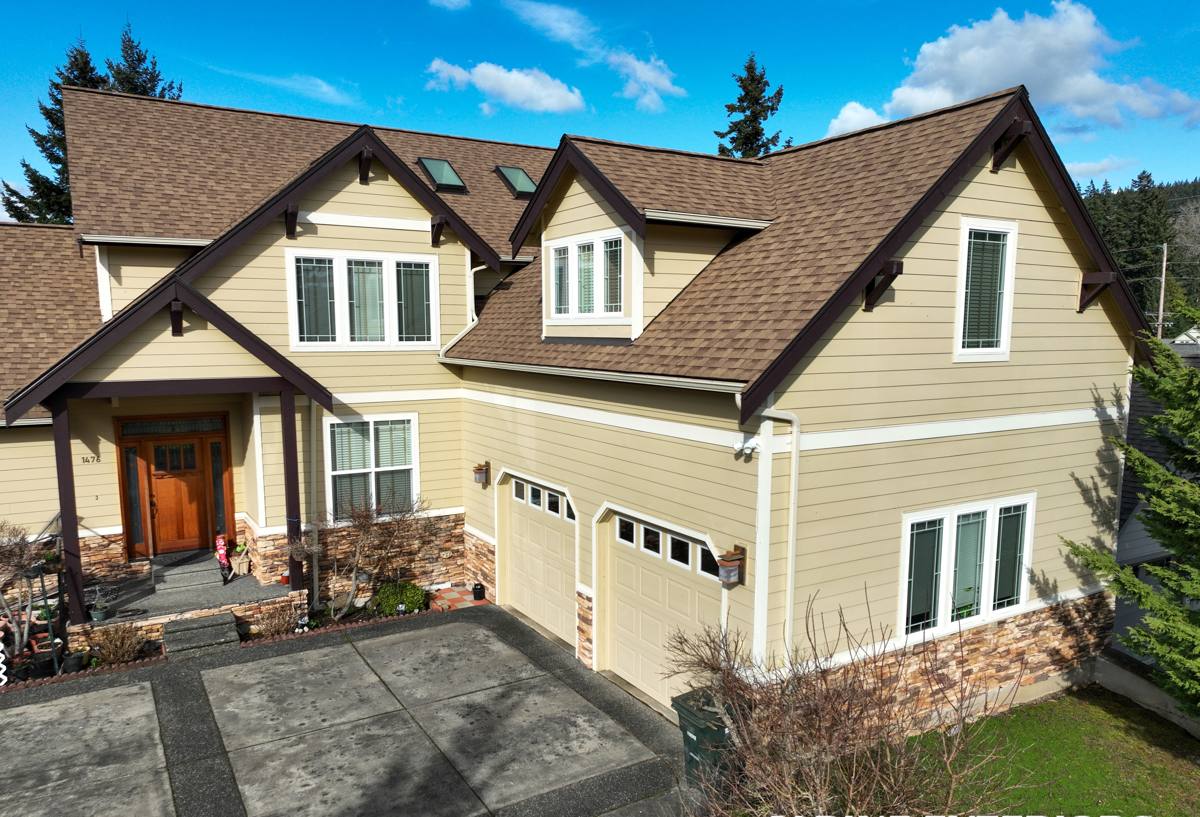
What Local Homes Actually Need From Their Windows
Moisture Management Comes First
Before we talk about energy efficiency, we have to talk about water. Bellingham gets a lot of it, and a lot of window failures we see aren't really window failures — they're flashing and sealant failures that let water behind the frame, where it rots sheathing and framing you can't see until the damage is already done. A correct window installation starts with proper flashing integration into the wall's water-resistive barrier, not just a bead of caulk around the outside trim. This is the part of the job that's invisible once it's finished, and it's also the part that determines whether the window lasts 25 years or causes a repair bill in year eight.
Then Efficiency
Once moisture management is handled correctly, efficiency is about glass and frame performance working together. In this climate, that generally means:
- Dual-pane glass with a low-E coating tuned for our mild, wet Pacific Northwest climate rather than a hot, dry one
- Argon gas fill between the panes for added insulating value
- Warm-edge spacers, which reduce condensation risk at the glass edge — a real issue during our damp winters
- Frame materials that won't corrode from salt-laden air or swell and rot from constant moisture exposure
- Weatherstripping and hardware that seal tightly against wind-driven rain, not just still air
A window that scores well on paper but is installed with a poor seal will still let in drafts and moisture. We treat the product and the installation as one job, not two.
Frame Material: What We Recommend and Why
We install vinyl and fiberglass window frames for most Barkley projects. Both hold up well against salt air and moisture without the maintenance burden of wood and without the corrosion risk aluminum frames face this close to the water. Here's how the common options compare for a home in this climate:
| Frame Material | How It Handles Our Climate | Maintenance | Typical Fit |
|---|---|---|---|
| Vinyl | Good moisture and salt resistance, doesn't rot or corrode | Low — occasional cleaning | Most homes; strong value |
| Fiberglass | Excellent dimensional stability in wet, temperature-swinging conditions | Low | Homes wanting a premium, longer-life frame |
| Wood (clad exterior) | Can perform well if the exterior cladding is intact, but exposed wood is vulnerable to our rain and moss | Higher — exterior cladding and seals need monitoring | Homeowners prioritizing a specific interior wood look |
| Aluminum | Prone to corrosion and condensation in salt air and cold, damp conditions | Higher — not our first recommendation here | Rarely our recommendation for this area |
We'll walk through the trade-offs honestly during your estimate rather than steering everyone toward one product. The right choice depends on your home's exposure, your budget, and how it's oriented to wind and rain.
Our Window Installation Process
1. On-Site Assessment
We look at each window opening individually — not every window on a Barkley home faces the same exposure. A window on the weather side of the house dealing with driving rain needs more attention to flashing detail than one tucked under an eave on a protected side.
2. Removal and Opening Inspection
When we pull the old window, we inspect the framing and sheathing underneath for any hidden water damage or rot. This is often the first real look anyone's had at that part of the wall in years, and it's important to catch problems here rather than sealing them back up behind a new window.
3. Flashing and Weatherproofing
We integrate flashing tape and drainage detailing with the home's existing water-resistive barrier so water is directed out and away from the framing, not trapped behind it. This step is what separates a window that lasts decades from one that causes problems in a few years.
4. Installation and Air Sealing
The window is set plumb and square, shimmed correctly, and insulated around the perimeter — not just stuffed with fiberglass, which settles and loses effectiveness over time. Interior and exterior sealant beads are applied where they belong, not as a substitute for proper flashing.
5. Final Check
We test operation, check for square and smooth function, and walk the finished work with you before we consider the job done.
Why the Installation Matters As Much As the Window
A high-quality window installed poorly will underperform a mid-grade window installed correctly. This isn't a sales line — it's just how building envelopes work. Gaps in flashing, poor air sealing, or an out-of-square frame all create paths for drafts and water intrusion that no amount of glass technology can fix. In a climate with as much sustained rain as Whatcom County gets, installation quality is often the deciding factor in whether a window replacement solves your problems or just moves them a few years down the road.
We also don't push single-pane storm windows, aftermarket interior films, or budget frame materials as a way to hit a lower price point, because in this climate those shortcuts tend to show their limits fast — fogged glass, sticking sashes, or frames that start showing wear well before they should.
Signs Your Barkley Home's Windows Need Attention
- Visible condensation or fogging between panes (a sign the seal has failed)
- Drafts you can feel near the frame on a windy or rainy day
- Windows that are difficult to open, close, or lock
- Soft or discolored trim or sill material around the window
- Visible moss or dark staining building up on window sills or nearby siding
- Noticeably higher heating costs compared to similar homes nearby
- Single-pane glass original to an older home
If you're seeing more than one of these, it's worth having someone look at the whole opening — not just the glass — before deciding what needs to be replaced.
Cost Factors for Barkley Window Projects
Every home is different, so we don't quote pricing sight unseen, but a few factors consistently move the number:
| Factor | Why It Affects Cost |
|---|---|
| Number of windows | Larger projects typically have a better cost-per-window ratio |
| Frame material | Vinyl, fiberglass, and clad-wood options each carry different material costs |
| Window size and configuration | Larger openings, custom shapes, or multi-panel units cost more than standard sizes |
| Condition of the existing opening | Hidden rot or framing damage found during removal adds repair time |
| Access and second-story height | Harder-to-reach windows take more time and equipment |
We give straightforward, itemized estimates so you know what you're paying for and why — not just a lump-sum number.
Why Work With a Crew That Already Knows Barkley
Every neighborhood in Bellingham has its own microclimate quirks — how much wind-driven rain a street sees, how much shade keeps moss active longer, how close homes sit to salt air coming off the bay. A crew that's already worked in Barkley isn't guessing at flashing details or glazing packages; they've seen how homes in this specific area hold up over time and what tends to fail first. That local pattern recognition is worth something you can't get from a general contractor passing through the area once.
If your Barkley home's windows are drafty, fogged, hard to operate, or just original and aging, we're happy to take a look and give you an honest read on what's needed — whether that's a full replacement or targeted repairs. Reach out for a free, no-pressure estimate using the form below.