 Bellingham Siding
 Siding in York Has to Handle a Specific Set of Problems
The York neighborhood sits close enough to Bellingham Bay and the surrounding wooded lots that its homes take on a particular combination of weather stress: salt-tinged marine air moving in off the water, long stretches of driving rain through fall and winter, and shaded, damp corners where moss and algae get a foothold and never really let go. None of that is unusual for Whatcom County, but it adds up differently on an older residential street than it does on an open lot with full sun exposure. Mature tree cover, tight side yards, and north-facing walls that rarely dry out all shorten the life of a siding product that isn't built to handle sustained moisture.
That's the backdrop for every siding decision in this part of Bellingham. The right product and the right installation matter more here than they would in a drier climate, because the margin for error is smaller. Get the water management wrong, or install a moisture-sensitive material without the right gaps and flashing, and the problems show up as rot, paint failure, or soft trim within a handful of years instead of decades.
Why Fiber Cement Is the Right Category for This Climate
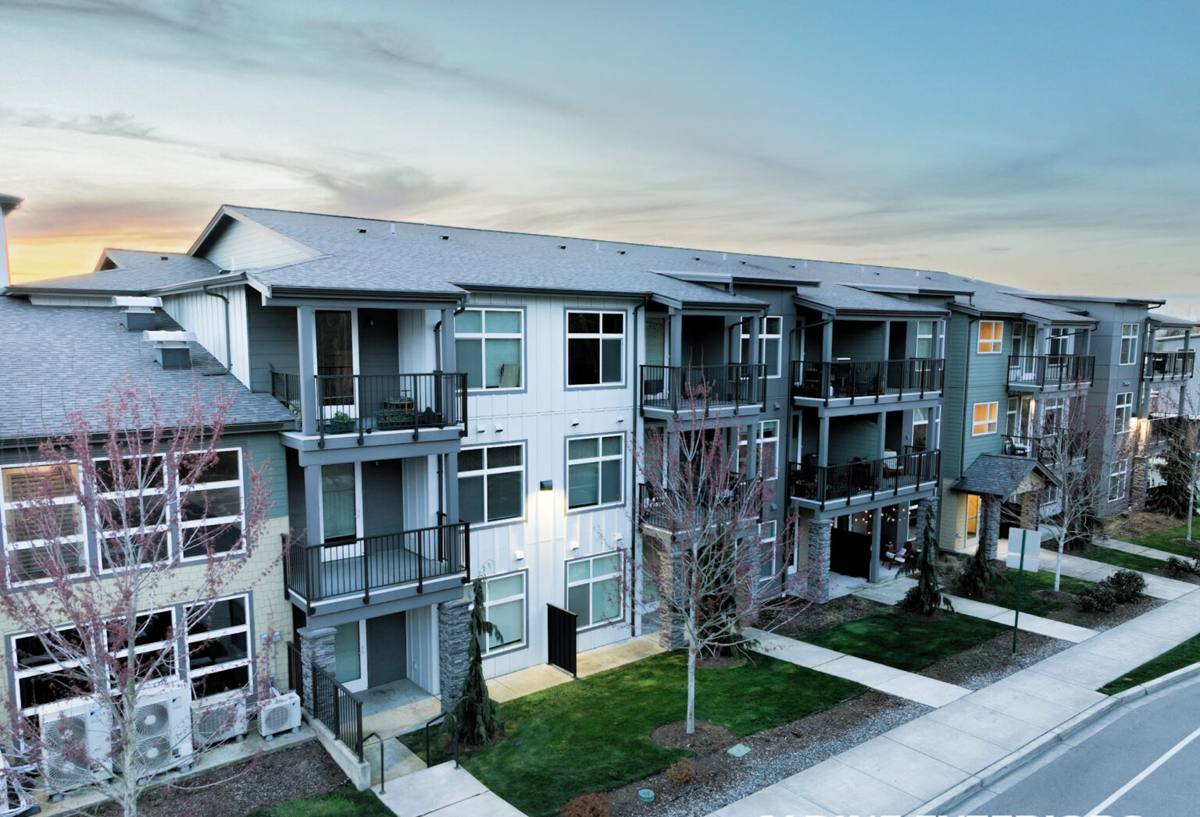
Fiber cement siding is a mix of cement, sand, and cellulose fiber, pressed and cured into planks or panels. Unlike wood or wood-composite products, it doesn't absorb water and swell the way organic material does, and unlike vinyl, it doesn't warp or crack in temperature swings or come loose in sustained wind-driven rain. For a neighborhood like York — shaded lots, salt air, moss that never fully dries out between storms — that dimensional stability is the whole point. It holds paint and factory finish evenly, resists the kind of moisture-driven swelling that pushes joints apart, and stands up to the freeze-thaw cycles Whatcom County gets most winters without cracking.
Fiber cement is also non-combustible, which matters for insurance and for peace of mind, and it holds a factory finish far longer than field-painted wood siding does when that finish is applied correctly and matched to the region.
Why We Only Install James Hardie
Fiber cement is a category, not a single product, and not all fiber cement is engineered the same way. We install James Hardie exclusively — not Cemplank, not Allura, not any other fiber cement brand — because Hardie builds region-specific formulations (their HZ5 line is engineered for the Pacific Northwest's wet, moderate climate), backs the product with a long transferable warranty, and applies its ColorPlus factory finish with a baked-on process that holds color and resists fading better than field-applied paint. We also don't install LP SmartSide, vinyl, or primed wood siding — not because those products have no legitimate use anywhere, but because for the moisture load and salt exposure a York home deals with, we don't think they hold up as well over the long run, and we'd rather stand behind one system we trust completely than offer several we have reservations about.
What a Correct Fiber Cement Installation Actually Involves
Fiber cement is only as good as the install behind it. Most siding failures we get called out to inspect — on any brand, in any neighborhood — trace back to installation shortcuts, not the material itself. In a climate like Bellingham's, those shortcuts show up faster.
Water Management Comes First
Before a single plank goes up, the wall needs a correctly lapped weather-resistant barrier, properly integrated flashing at every window, door, and roofline intersection, and a drainage plane that lets any moisture that gets behind the siding find its way back out. This is the step that's invisible once the job is done and the step that causes the most damage when it's skipped.
Clearances and Gaps
Hardie siding needs a minimum gap from grade, roof lines, decks, and horizontal surfaces so water isn't wicking up into the bottom edge of the boards. It also needs proper gapping at butt joints and around penetrations, caulked and sealed to spec rather than jammed tight, which is a common shortcut that traps moisture instead of shedding it.
Fastening
Hardie specifies fastener type, spacing, and placement for a reason — correct fastening keeps the boards flat and tight against the wall through wind events and temperature swings. Under-fastened or incorrectly placed nails are one of the more common causes of boards working loose over time.
Finish Integrity
Cut edges and any field-touched areas need factory-matched sealant or touch-up product so the ColorPlus finish's protection isn't compromised at the seams. Skipping this step is a quiet way to shorten the life of an otherwise correctly installed product.
How We Approach a York Project
- On-site assessment. We look at your home's specific exposure — shade, drainage, wall orientation, existing moisture damage — not just a generic measurement.
- Product and color selection. We walk through Hardie's HZ5 lines, plank styles, and ColorPlus options so you're choosing based on what fits the house and the neighborhood, not a showroom sample under different light.
- Removal and inspection of the existing wall. Old siding comes off so we can check sheathing and framing underneath for rot or moisture damage before anything new goes up — a step that's easy to skip and expensive to regret skipping.
- Weather barrier and flashing install. This is the part of the job that determines whether the siding lasts 10 years or 40, done to Hardie's specification and adjusted for your home's actual exposure.
- Siding installation. Correct fastening, gapping, and clearances throughout, with attention to the details around windows, corners, and rooflines where most problems start.
- Final walk-through. We go over the finished work with you before we consider the job done.
Signs a York Home Might Need New Siding Soon
- Paint that's peeling, bubbling, or chalking faster than it should, especially on shaded or north-facing walls
- Soft spots, dark staining, or visible rot at the bottom edges of siding boards or trim
- Persistent moss or algae growth that keeps coming back even after cleaning
- Warping, cupping, or boards that have visibly pulled away from the wall
- Gaps or cracked caulking around windows and doors that let water track behind the siding
- Rising energy bills that suggest the wall assembly isn't sealing the way it used to
- Visible cracking or brittleness in older fiber cement or composite products nearing the end of their service life
Any one of these on its own isn't necessarily an emergency, but a few together are usually a sign the wall assembly has been letting moisture in longer than it should have.
Cost Factors on a Fiber Cement Job
Every home is different, and we don't publish blanket pricing because the real cost drivers vary house to house. The table below outlines what actually moves the number up or down, so you know what to ask about when you're comparing estimates.
| Factor | Why It Matters |
|---|---|
| Wall condition underneath | Rotted sheathing or framing found during tear-off adds repair work before new siding can go up |
| Home size and wall complexity | More corners, dormers, and roof intersections mean more flashing detail and labor time |
| Plank style and texture | Lap, shingle, and panel styles carry different material and labor costs |
| Trim and accessory scope | Fascia, soffit, and trim replacement alongside siding changes the total project size |
| Access and site conditions | Tight lots, mature landscaping, and multi-story walls affect staging and labor time |
| Color and finish selection | Standard ColorPlus colors versus custom or premium finishes carry different material costs |
Why It Matters That We Already Work in York
A crew that regularly works this part of Bellingham already knows what the moisture and shade patterns on a given lot tend to do to a wall over time, which corners of a house typically need extra attention to flashing, and how the region's rain and moss season actually behaves through the year — not just in the abstract, but on the kind of established residential lots common to this neighborhood. That local pattern recognition doesn't replace a proper on-site assessment, but it means we're not learning the area's quirks on your project. It also means warranty support and any follow-up service is easy — we're not a crew that did one job in the area and moved on.
What Ongoing Care Looks Like
Hardie fiber cement with ColorPlus finish is low-maintenance compared to wood, but "low-maintenance" isn't "no-maintenance." A rinse to clear moss, pollen, and salt residue once or twice a year, prompt attention to any caulking that cracks or pulls away, and periodic inspection around windows and rooflines will keep a correctly installed system performing for decades. Because ColorPlus is a factory finish rather than field-applied paint, you're not looking at a repaint cycle every several years the way you would with wood siding — just basic upkeep.
If your York home's siding is showing wear, or you're planning ahead for a replacement, we're happy to take a look and walk you through what we'd actually recommend for your specific house — no pressure, no inflated scope. Fill out the form below for a free estimate.