 Bellingham Siding
 Siding Repair Built for Happy Valley's Climate
Happy Valley sits close enough to Bellingham Bay and the surrounding hills that its homes take a specific kind of weather beating: salt-laced air off the water, wind-driven rain that gets pushed sideways into wall assemblies, and a moss season that can run most of the year in the shadier, tree-covered lots common to the neighborhood. Siding repair here isn't a generic fix — it's a job that has to account for what Whatcom County weather actually does to a wall over time, not just what's visible on the surface today.
We work on homes throughout Bellingham, and Happy Valley's mix of older housing stock, mature landscaping, and proximity to the bay means we see certain repair patterns here more often than in drier, more exposed parts of town. That local pattern recognition matters when you're deciding whether a section of siding needs a patch, a board swap, or something more serious.
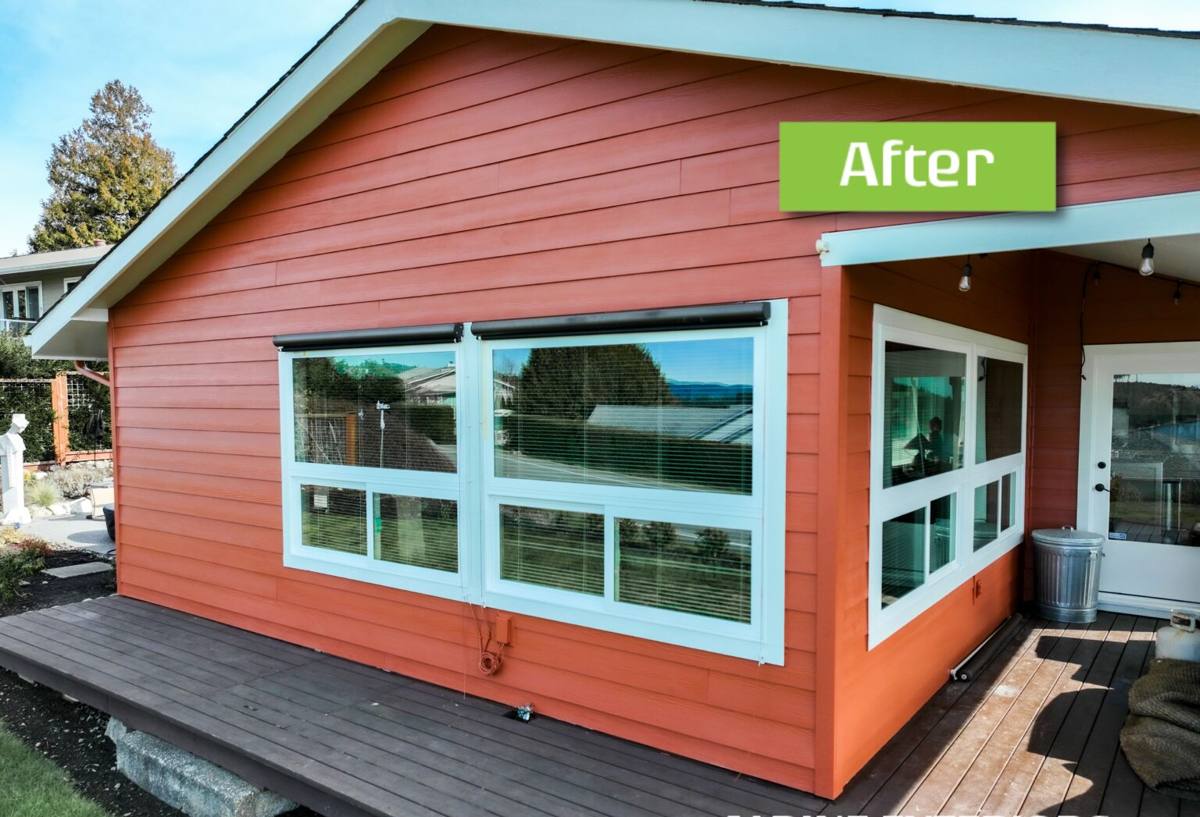
What Happy Valley Homes Are Up Against
Salt Air and Coastal Exposure
Even a few miles inland from the water, salt-laden air accelerates corrosion on fasteners, flashing, and any exposed metal trim. When those components fail quietly behind the siding, moisture gets a path in long before a homeowner sees a problem on the surface. Repairs in this area need to check fastener and flashing condition, not just the siding material itself.
Driving Rain and Wind-Driven Moisture
Bellingham's rain doesn't just fall straight down — storms off the water frequently drive it sideways into wall surfaces, gable ends, and window trim. Siding systems depend on lap joints, caulking, and flashing details all working together to shed that water. When one of those details fails, water tends to travel and show up somewhere other than where it entered, which is why an honest repair starts with tracing the actual path of intrusion.
The Long Moss Season
Shaded, tree-lined lots — common throughout Happy Valley — stay damp longer after rain and support moss and algae growth for much of the year. Left alone, that growth holds moisture against the siding surface, degrades paint and factory finishes faster, and can mask rot developing underneath. Moss on siding is a maintenance issue and a warning sign, and a repair job should treat it as both.
Signs Your Siding Needs Repair, Not Replacement
Most siding problems start small and stay repairable if they're caught early. Watch for:
- Soft or spongy spots when you press on a board, especially near the bottom courses or under windows
- Visible cracking, splitting, or buckling in isolated boards or panels
- Persistent moss or algae growth concentrated in one area rather than spread evenly
- Paint that's peeling, bubbling, or failing faster in one section than the rest of the house
- Staining or streaking below seams, trim, or window and door openings
- Gaps opening up at butt joints, corners, or where siding meets trim
- A musty smell or visible mold on the interior wall directly behind a suspect exterior area
Any one of these on its own is usually a repair. Several of them clustered together, or soft spots that extend across multiple boards, often point toward something more extensive going on behind the surface.
What a Correct Repair Actually Involves
Diagnosing the Real Problem First
A siding repair that only replaces the board you can see is a temporary fix if the actual cause — a failed flashing detail, a caulking gap, a drainage problem behind the wall — is still there. Before we touch a single board, we trace the moisture path: where it's entering, where it's traveling, and what's driving it. That often means checking flashing at windows, doors, and roof-to-wall transitions, since those junctions are where most real leaks originate, not the flat field of the siding itself.
Matching Materials the Right Way
We repair with James Hardie fiber cement, and matching a repair into existing Hardie siding means matching board profile, exposure, and color line correctly so the patch doesn't stand out or create a new water path at the seam. If the original color has weathered or the ColorPlus line has changed since installation, we talk through the honest options with you — sometimes that means repainting the repaired section to blend, sometimes it means a visible seam is the more honest trade-off than forcing a mismatched patch.
Repair vs. Replacement: How We Decide
| Factor | Usually points to repair | Usually points to replacement |
|---|---|---|
| Extent of damage | Isolated to one wall or a few boards | Spread across multiple walls or the whole house |
| Underlying structure | Sheathing and framing are sound | Rot has reached sheathing or framing in multiple spots |
| Age and condition of remaining siding | Rest of the siding is sound and well-fastened | Rest of the siding is near the end of its service life |
| Cause of the damage | A single identifiable failure (one flashing detail, one impact) | A systemic issue (bad original installation, no water-resistive barrier) |
| Material match | Existing product and color can be matched acceptably | Product is discontinued or too weathered to blend |
We'll tell you plainly which category your situation falls into. If a repair is the honest answer, that's what we'll recommend — we don't upsell a full re-side when a targeted fix will hold.
Why We Repair With James Hardie Fiber Cement
We install and repair with James Hardie exclusively — we don't work with vinyl, LP SmartSide, primed wood, or other fiber cement brands. That's a deliberate standard, not a default. Hardie's fiber cement is non-combustible, holds its factory ColorPlus finish far longer than field-painted alternatives, and is engineered in HZ product lines specifically for climates like ours — wet, marine-influenced, with real moss and mildew pressure. When we're patching into existing Hardie siding, that consistency also means the repair is going into a system we understand thoroughly, with a manufacturer warranty structure that's actually transferable and worth something if you sell the home later.
If your home currently has vinyl, LP SmartSide, cedar, or another product and needs repair, we'll still give you a straight assessment of the repair itself. But if the damage is extensive enough that you're weighing a broader fix, we'll walk you through why Hardie is what we'd put on in its place — and what trade-offs the original product carries that led us to standardize on fiber cement in the first place.
Our Process for Happy Valley Repairs
- On-site inspection: we look at the damaged area and trace the likely moisture path, including flashing, trim, and adjacent details
- Honest diagnosis: we tell you what's actually wrong, whether it's a simple board swap or something that needs to go deeper
- Written scope and estimate: a clear plan covering what's being repaired, the materials used, and the price — no surprise add-ons mid-job
- Correct repair: proper flashing and moisture management first, then board replacement and finish matching
- Cleanup and walkthrough: we review the completed work with you before we consider the job done
Why a Crew That Already Works Happy Valley Matters
Siding repair done right depends on understanding how a specific neighborhood's weather and building patterns interact — which wall orientations catch the worst of the wind-driven rain, which lots hold shade and moisture long enough to grow moss year-round, and which older homes in the area tend to have flashing details that don't meet current standards. A crew that's already worked jobs in Happy Valley and the surrounding Bellingham neighborhoods brings that pattern recognition to your inspection instead of starting from zero. It also means faster response for scheduling and follow-up, since we're not traveling in from outside Whatcom County to look at your project.
Maintenance After the Repair
Once a repair is complete, a few habits keep it — and the rest of your siding — performing well in our climate. Keep gutters and downspouts clear so water isn't overflowing onto wall surfaces below. Trim back vegetation that keeps a wall shaded and damp longer than the rest of the house. Rinse off moss and algae buildup before it has a chance to hold moisture against the finish. And do a quick visual check after major storms, since wind-driven rain events are when new leaks tend to reveal themselves first.
If you're seeing soft spots, moss buildup, or paint failure on your Happy Valley home's siding, we're happy to come take a look. Reach out for a free, no-pressure estimate — we'll give you a straight read on what's going on and what it'll actually take to fix it.