 Bellingham Siding
 Board & Batten on South Hill: A Style That Has to Earn Its Keep
South Hill sits above downtown Bellingham with clear exposure to wind off Bellingham Bay, and that view comes at a price for a home's exterior. Board and batten siding — vertical panels with raised battens covering the seams — has always suited the neighborhood's mix of historic Craftsman homes and newer builds because it reads as clean, vertical, and a little more custom than standard lap siding. But on a hill that catches salt-laden wind, driving rain off the Sound, and a long stretch of gray, damp months every year, board and batten is also one of the less forgiving siding profiles to install badly. The battens create dozens of extra seams and fastening points compared to lap siding, and every one of them is a place water can get behind the cladding if it's not detailed correctly. Done right, it's a durable, good-looking system. Done wrong, it's a moisture problem waiting for the next wet winter.
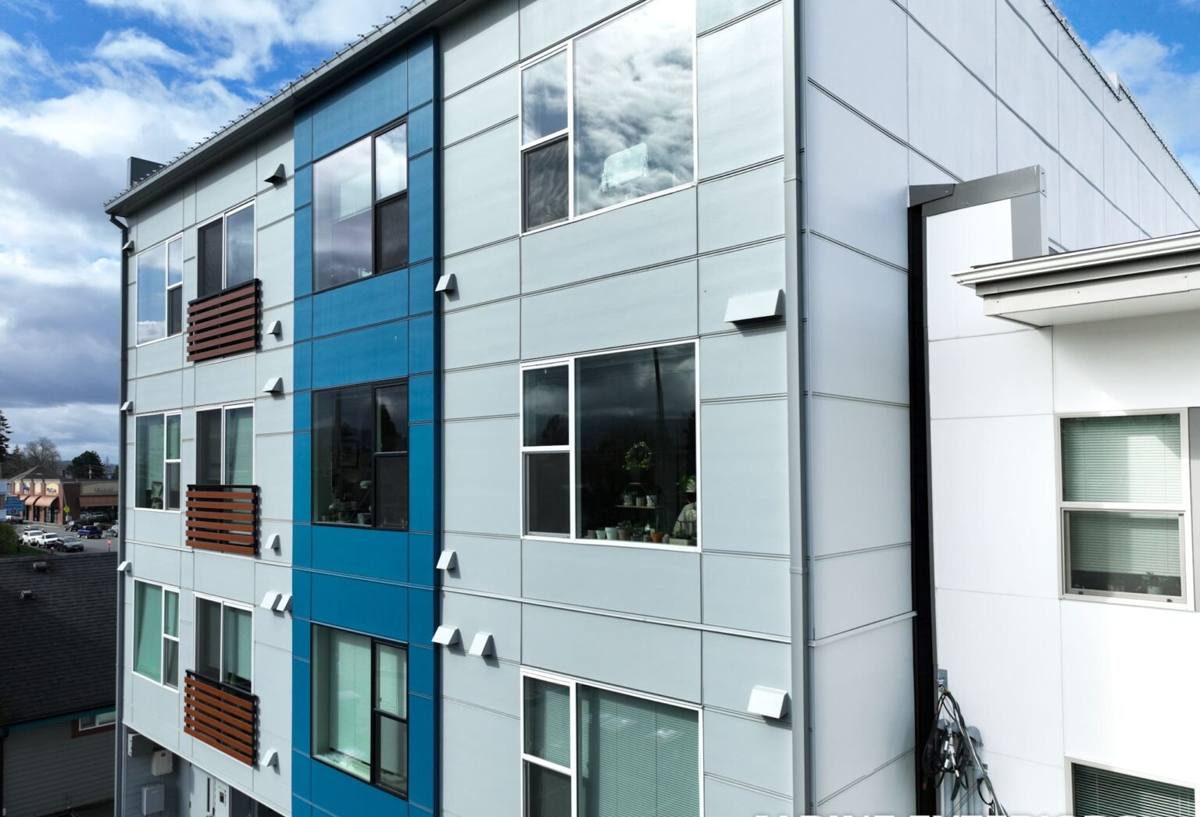
What Whatcom County's Climate Actually Does to a Wall
Bellingham's exterior siding doesn't just get rained on — it gets rained on sideways, for weeks at a stretch, with salt air working into the mix on top of the hill. A few things follow from that:
- Driving rain finds vertical seams first. Wind-driven rain hits vertical board and batten joints at an angle, which is exactly where a rushed installation is weakest.
- Moss and algae need shade, moisture, and time — and South Hill's tree cover and long wet season hand them all three. North- and west-facing walls are usually the first to show green growth.
- Salt air accelerates corrosion on fasteners and metal flashing that aren't rated for it, which is how you end up with rust streaks bleeding down a batten years before the siding itself would have failed.
- Freeze-thaw cycling, while milder here than inland Washington, still stresses any siding material that has already absorbed moisture it shouldn't have.
None of this is unique to South Hill, but the elevation and bay exposure make it more pronounced than in more sheltered parts of Bellingham. Siding that would hold up fine in a low, tree-sheltered lot elsewhere in Whatcom County can fail faster on an exposed hillside wall.
Why We Install Board & Batten Only in James Hardie Fiber Cement
Board and batten is available in vinyl, engineered wood, cedar, and fiber cement, and we've made a deliberate call to install only James Hardie fiber cement for this profile. The reasoning is specific to what board and batten demands:
| Material | How it handles South Hill's climate |
|---|---|
| Vinyl board and batten | Doesn't absorb water, but it expands and contracts more than fiber cement, which can open gaps at the battens over time and telegraph an uneven wall on older, less plumb South Hill framing. |
| Cedar board and batten | Handsome material, but real wood needs consistent refinishing to resist the moss and moisture cycle here — skip a maintenance cycle in a wet Bellingham winter and rot risk climbs fast. |
| Engineered wood (e.g. LP SmartSide) | Better moisture resistance than raw cedar, but it's still a wood-based substrate — cut edges and fastener penetrations need diligent sealing to keep water out over the long run. |
| James Hardie fiber cement | Non-combustible, dimensionally stable in wet-dry cycling, and engineered with an HZ10 formulation for the Pacific Northwest's specific rain and humidity pattern. |
We're not saying the other materials can't be installed well by someone — they can. We're saying that for the amount of seams and moisture exposure a board and batten wall creates on a site like South Hill, we only want our name on a material we're confident will still look and perform the same way in fifteen years without a homeowner having to babysit it.
What James Hardie Board & Batten Actually Is
Hardie's board and batten system uses vertical fiber cement panels (commonly their Artisan or HardiePanel lines) with matching battens fastened over the seams. It comes pre-primed or with the factory-applied ColorPlus finish, which matters more than it sounds like — a factory-cured finish resists the fading and peeling that field-applied paint struggles with in a climate that rarely gives paint enough dry days to cure properly.
What a Correct Board & Batten Installation Involves
The material is only half the equation. Board and batten fails or succeeds based on details most homeowners never see once the wall is closed up:
- Rainscreen gap. A drainage gap behind the panels lets any water that does get past the surface drain and dry out instead of sitting against the sheathing — critical in a climate where walls rarely get a long dry stretch to recover.
- Weather-resistive barrier and flashing. Properly lapped house wrap and flashing at every window, door, and penetration, installed shingle-fashion so water is always directed outward and down.
- Correct fastener spacing and type. Corrosion-resistant fasteners, placed to Hardie's published spacing, not "close enough" — under-fastened battens are one of the more common failure points we see on redos.
- Batten placement over seams, not just decoration. The batten has to actually cover and protect the panel seam beneath it, with enough overlap that wind-driven rain can't track sideways underneath.
- Bottom clearance and kickout flashing. Siding held off grade, decks, and roof-to-wall intersections with proper clearance and kickout flashing so runoff doesn't wick into the bottom edge of the panels.
- Caulking only where Hardie specifies it — not as a substitute for correct flashing, which is a shortcut that looks fine on install day and fails quietly over the next few winters.
Our Process for a South Hill Board & Batten Job
1. On-Site Assessment
We walk the exterior looking at existing moisture damage, moss growth patterns, sun and wind exposure by elevation, and the condition of the sheathing underneath any existing siding. Hillside homes often have different exposure needs wall to wall, and we plan the job around that instead of treating all four sides the same.
2. Substrate and Moisture Check
Before any new siding goes up, we confirm the sheathing underneath is dry and sound. Installing new board and batten — however well detailed — over compromised sheathing just locks a problem behind a fresh wall.
3. Weather Barrier and Rainscreen Install
House wrap, flashing, and a drainage gap go in first, sized and lapped for the amount of driving rain this side of Bellingham actually sees.
4. Panel and Batten Installation
Hardie panels are fastened to spec, followed by battens set with the correct overlap and fastening pattern, working from a level baseline so the vertical lines read straight — which matters more visually on board and batten than on any other siding profile.
5. Trim, Caulk, and Final Detailing
Corner trim, window and door trim, and any penetrations get finished per Hardie's installation guidelines, which is also what keeps the manufacturer's warranty intact.
6. Walkthrough
We go over the finished exterior with the homeowner, including basic care expectations for the first year and what normal weathering looks like versus something worth a call.
Cost Factors for Board & Batten on a South Hill Home
Every home is different, but the line items that actually move the price on a board and batten project are consistent:
| Factor | Why it matters |
|---|---|
| Wall complexity | More corners, dormers, and roof intersections mean more flashing detail and cut panels — board and batten has more seams to manage than lap siding to begin with. |
| Existing siding removal | Tear-off and disposal of old siding, plus any sheathing repair found underneath, adds time before the new wall assembly even starts. |
| Access and site conditions | South Hill's grades and lot layouts can mean more scaffolding or staging work than a flat-lot job. |
| ColorPlus vs. field-painted | Factory-finished panels cost more upfront but remove a repainting cycle from the maintenance schedule. |
| Trim and batten detail level | Wider trim, custom corner details, or tighter batten spacing add material and labor beyond a basic install. |
We give a real, itemized estimate after seeing the actual walls — broad ranges without seeing the site aren't useful to a homeowner trying to plan a project.
Maintenance: What Owning Board & Batten in Bellingham Looks Like
Hardie's fiber cement doesn't rot, and the ColorPlus finish doesn't need repainting on the schedule that raw wood does, but it isn't zero-maintenance in this climate:
- An annual rinse-down, especially on shaded or north-facing walls, keeps moss and algae from getting a foothold.
- Gutters and downspouts should be checked before the wet season so overflow isn't running down the wall face.
- Caulked joints are worth a visual check every couple of years — caulk is a maintenance item on any siding system, Hardie included.
- Any impact damage (a ladder, a dropped tool) is worth patching promptly rather than letting an exposed edge sit through a wet winter.
Why Hiring a Crew That Already Works South Hill Matters
Board and batten installed to spec on a sheltered, low-elevation lot and the same material installed on an exposed South Hill wall aren't really the same job — the exposure changes what "correct" flashing and clearance need to look like. A crew that already works this neighborhood knows which elevations take the worst of the bay wind, where moss shows up first, and how the older housing stock up here tends to be framed. That's the difference between a board and batten wall that looks good on install day and one that still looks good a decade into Whatcom County winters.
If you're weighing board and batten siding for a South Hill home, we're glad to walk the exterior with you and put together a straightforward, no-pressure estimate — just fill out the form below.