 Bellingham Siding
 Building a Deck in York That's Made for This Climate
York is one of Bellingham's older, established residential pockets, with a mix of homes that range from mid-century builds to newer infill construction. A lot of these houses already have a deck, porch, or raised patio that's showing its age — soft boards, a slick moss film that never fully goes away, and fasteners that have started to bleed rust streaks down the face boards. Others have no outdoor living space at all and are ready for a first deck that takes advantage of the yard. Either way, building or rebuilding a deck in this part of Bellingham means designing for the specific way Whatcom County weather works a structure over, not just following a generic decking spec sheet.
A deck built the same way you'd build one in a dry inland climate will not perform the same way here. Salt-tinged air off the Sound, long stretches of driving rain, and a moss season that can run eight or nine months out of the year all attack a deck differently than heat and dry cold do. The good news is that none of this is mysterious — it's well understood, and a deck designed and built with these conditions in mind will hold its finish, its structure, and its footing for decades instead of years.
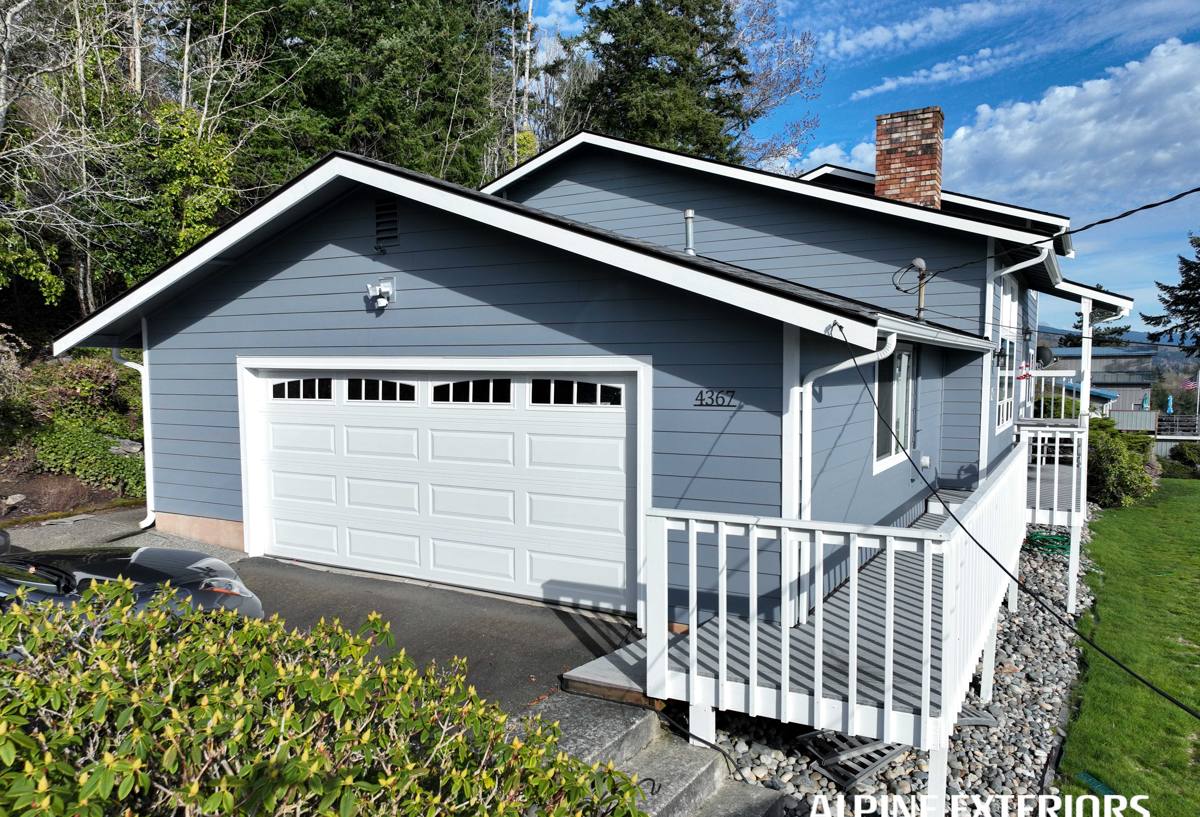
What Bellingham's Weather Actually Does to a Deck
Moss and Constant Damp
Moss doesn't just make a deck look neglected — it holds moisture directly against the wood surface, which is exactly what accelerates rot, softens finishes, and makes boards dangerously slick underfoot. In shaded or north-facing yards, which are common in York's tree-covered lots, a deck can stay damp for days after a storm passes. Board spacing, airflow underneath the deck, and how much direct sun a layout gets all affect how fast moss takes hold and how hard it is to keep off.
Driving Rain and Water Intrusion
Bellingham rain doesn't always fall straight down — wind-driven rain pushes water sideways into ledger boards, stair stringers, and any spot where the deck meets the house. This is where most of the serious, expensive deck failures actually start: not on the open deck surface, where problems are visible, but behind the ledger board where water gets trapped against the house's rim joist and rots quietly for years before anyone notices a soft spot.
Salt Air and Metal Corrosion
York's proximity to Bellingham Bay means the air here carries more salt than an inland neighborhood would. Salt air corrodes standard fasteners, joist hangers, and hardware faster than most homeowners expect — a deck built with the wrong grade of hardware can develop rust staining and weakened connections well before the wood itself is a problem. This is one of the most overlooked factors in coastal Whatcom County deck construction.
Decking Material Options for a York Yard
There's no single "best" decking material — the right choice depends on budget, how much upkeep you're willing to do, and how much sun or shade the deck actually gets. Here's how the common options stack up under Bellingham conditions specifically:
| Material | How It Handles Our Climate | Maintenance Reality |
|---|---|---|
| Pressure-treated fir/hem-fir | Affordable, widely available; needs a quality finish to resist moss and moisture staining | Annual cleaning and refinishing every 2-3 years to keep water out |
| Cedar | Naturally more rot- and insect-resistant, ages to a silver-gray if left unfinished | Periodic cleaning; finish maintenance if you want to keep the original color |
| Composite/PVC decking | Doesn't absorb water the way wood does, resists rot at the board level | Low upkeep, but still needs regular cleaning — moss and algae will grow on the surface of any material in shaded, damp spots |
| Ipe/tropical hardwood | Extremely dense and durable, naturally rot-resistant | Low structural maintenance, but requires oiling to maintain color; higher material cost |
One honest point worth making: composite decking is often marketed as "maintenance-free," and that's not quite accurate in a climate like this one. Composite boards won't rot the way wood can, but moss, pollen, and algae still grow on any decking surface that stays damp and shaded, so periodic washing is still part of ownership no matter what material you choose.
The Structural Details That Actually Determine How Long a Deck Lasts
The decking boards are the part everyone sees, but the parts that determine whether a deck lasts 10 years or 40 are mostly hidden. In a wet coastal climate, these details matter more than they would somewhere dry:
- Ledger flashing: A properly flashed ledger connection, with flashing that directs water away from the house rim joist, is the single most important detail on an attached deck in this climate.
- Joist tape: A self-adhering membrane over the top of each joist keeps rain from soaking into end grain and fastener holes, which is where rot typically starts first.
- Corrosion-resistant hardware: Hot-dip galvanized or stainless fasteners and joist hangers matter more here than in a drier, inland climate, given the salt content in the air near the Bay.
- Footings below frost depth and on stable soil: Whatcom County's mix of clay and glacial till soils can shift with seasonal saturation, so footings need to be sized and set correctly for the specific lot.
- Airflow underneath the deck: Proper joist spacing and ground clearance let air move under the structure, which slows the moss and mildew buildup that constant shade and dampness encourage.
- Gapped board spacing: Correct spacing lets water drain through instead of pooling on the surface, which reduces both moss growth and slip risk.
Our Deck Building Process in York
- On-site assessment: We look at sun exposure, drainage, existing structure (if any), and how the deck will tie into the house, with an eye specifically on ledger condition and grading.
- Design and material selection: We walk through decking and railing options honestly, including real maintenance expectations for each, so the choice fits your budget and how much upkeep you actually want to do.
- Permitting: We handle the permit application and inspection scheduling required for the project so nothing gets built out of code.
- Demolition (if replacing an existing deck): Old structures are removed and hauled off, and we inspect the ledger and framing underneath for hidden rot before building new.
- Framing and flashing: This is where the climate-specific work happens — proper ledger flashing, joist tape, corrosion-resistant hardware, and footings set correctly for the soil.
- Decking, railing, and finish work: Boards are installed with correct spacing and fastening for the material chosen, followed by stairs, railings, and any finish coating.
- Final walkthrough: We go over care and maintenance specific to the material you chose, so you know what to expect through the wet months.
Permits and Code in the City of Bellingham
Most decks above a certain height or attached to the house require a building permit in the City of Bellingham, and inspections typically cover footings, framing, and the ledger connection before the decking goes down. Guardrail height, baluster spacing, and stair geometry are also governed by code, particularly on any deck with a significant drop-off. Skipping permitting on a deck project isn't just a legal risk — it also means no third-party inspection ever confirms the ledger flashing and footings were done correctly, which is exactly the part of a deck that fails invisibly in this climate. We pull the required permits and build to the inspected standard as a matter of course.
Living With a Deck Through a Bellingham Winter and Spring
No deck material in Whatcom County is truly maintenance-free, but the maintenance burden looks different depending on what you built with and how the deck was designed. A few realities worth planning around:
- Moss and algae growth is heaviest in shaded areas from late fall through spring, and a periodic wash — not harsh pressure-washing, which can damage wood fibers and strip finish — keeps it from building up into a slip hazard.
- Wood decking needs its finish checked annually and typically refreshed every couple of years to keep water from penetrating the grain.
- Composite decking should still be swept and washed regularly; debris left sitting in damp shade can stain the board surface over time.
- Metal hardware and fasteners are worth a visual check each year for early rust or corrosion, especially on decks closer to the water.
- Keeping gutters and downspouts clear near the deck area reduces the volume of runoff hitting the structure during heavy rain events.
Why a Crew That Already Works in York Makes a Difference
Building a deck that holds up here isn't about using exotic materials — it's about not skipping the unglamorous details that a drier climate would let you get away with skipping. A contractor who builds decks across a range of climates might not default to salt-air-rated hardware or think twice about ledger flashing on a shaded, north-facing lot. A crew that regularly works Bellingham neighborhoods like York already knows which lots hold moisture longest, which soil conditions call for extra care on footings, and which details actually matter once the moss season sets in. That local pattern recognition is the difference between a deck that needs major rework in eight years and one that's still solid in thirty.
If you're planning a new deck or need to replace one that's past its prime, we're happy to take a look and walk you through honest options for your specific yard and budget. Reach out for a free, no-pressure estimate using the form below.