 Bellingham Siding
 Decking Built for York's Weather, Not Just Its Looks
The York neighborhood sits close enough to Bellingham Bay that salt-laden air is a constant, and far enough into the Pacific Northwest's rain pattern that a deck here spends a good chunk of the year wet. Add a long, shaded moss season through the fall and winter months, and you've got conditions that expose weak decking work fast. A deck that looks fine on installation day in July can show soft spots, mildew streaks, or fastener corrosion by the following spring if it wasn't built with this specific climate in mind.
That's the difference between decking that's simply installed and decking that's installed correctly for Whatcom County. Composite decking has a real advantage here — it doesn't absorb water the way wood does, doesn't need annual staining, and resists the rot that eventually catches up with even well-maintained cedar or pressure-treated lumber. But composite is not maintenance-free or install-proof. Get the substructure, drainage, or fastening wrong, and you can still end up with a deck that traps moisture, grows moss in the grooves, or fails at the ledger board within a few years.
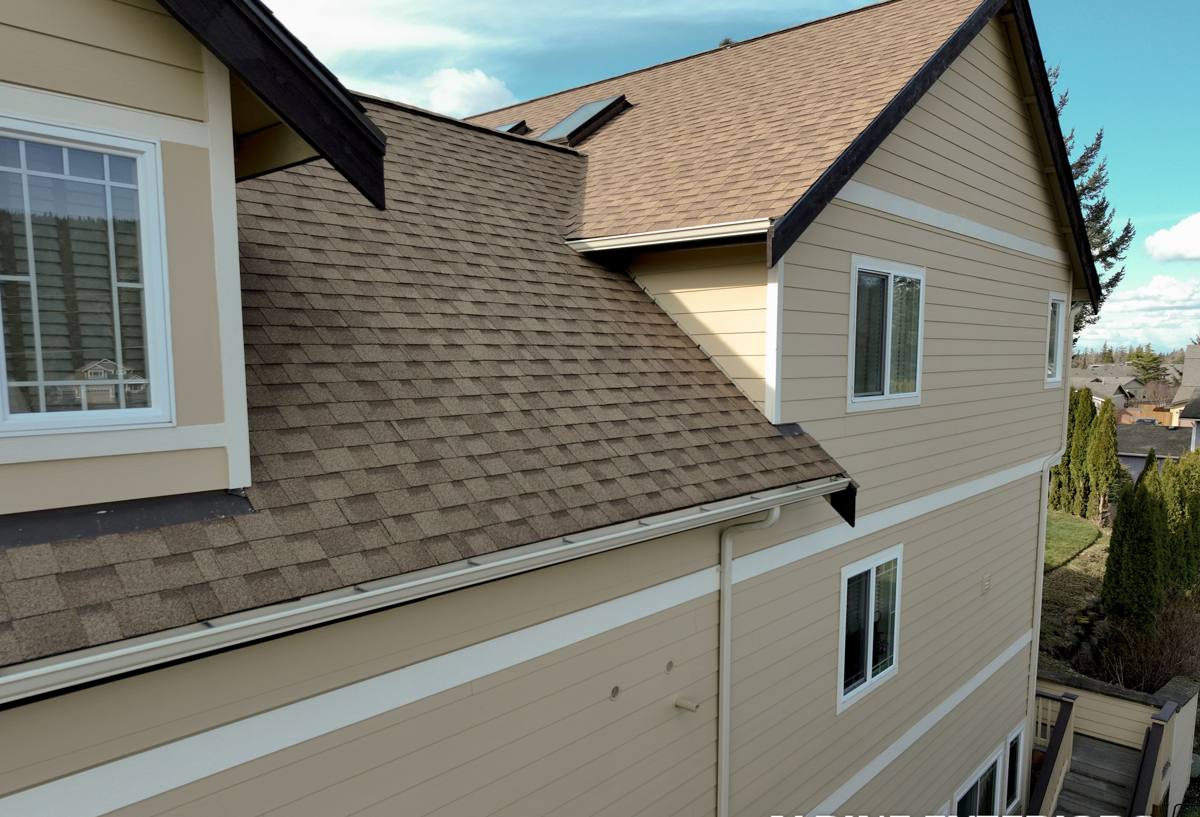
What a Correct Composite Deck Build Actually Involves
A lot of decking problems in this climate don't start with the decking boards at all — they start underneath, where nobody looks until something goes wrong.
Ledger Attachment and Flashing
Where the deck ties into the house is the single most common failure point in wet climates. Proper flashing — installed so water sheds away from the house rim joist rather than behind it — is non-negotiable. This is also the area building inspectors in this region focus on, because a poorly flashed ledger is a slow, hidden leak that can rot framing long before it's visible from the deck surface.
Substructure and Airflow
Composite boards don't rot, but the joists and beams underneath them can if the substructure is buried too close to grade or doesn't have enough airflow to dry out between rain events. In a climate that gets steady rainfall much of the year, we pay close attention to joist spacing, ground clearance, and ventilation under low decks — this is where a lot of "composite deck failures" actually originate, and it's framing work, not decking work.
Fasteners and Hardware
Salt air off the bay accelerates corrosion on lower-grade hardware. We use fasteners and structural connectors rated for coastal exposure, not generic interior-grade hardware, because the cost difference is small and the consequence of corroded joist hangers is not.
Composite, Wood, and PVC: An Honest Comparison for This Climate
Homeowners in York often ask why we lean toward composite over traditional wood decking, and the honest answer is maintenance burden and moisture behavior — not that wood is a bad material. Here's how the common options actually compare for a home dealing with driving rain, salt air, and moss:
| Factor | Wood (Cedar/PT) | Composite | PVC |
|---|---|---|---|
| Moisture absorption | High — swells, cups, and checks over time | Very low — capped boards resist water intake | Lowest — fully non-porous |
| Moss and mildew resistance | Needs regular cleaning and sealing to resist growth | Good, especially in shaded or damp spots with regular rinsing | Very good, smooth surface sheds growth easily |
| Annual maintenance | Staining or sealing most years | Occasional wash, no staining or sealing | Occasional wash, no staining or sealing |
| Upfront cost | Lowest | Moderate | Highest |
| Feel underfoot in cold, wet weather | Can feel rough or splintery as it weathers | Consistent, often with textured grip | Can feel harder and colder |
| Typical warranty structure | Manufacturer warranty on treatment only, not workmanship | Strong material warranties from most major brands | Strong material warranties, generally longest stain/fade coverage |
We install both composite and PVC decking depending on budget and the specific spot on the property. For most York homes, capped composite hits the right balance of upfront cost, low upkeep, and performance in this weather — which is why it's what we recommend most often, not because wood or PVC are poor choices in every case.
How We Approach a Deck Project in York
Because we already work regularly in this part of Bellingham, we're not learning the neighborhood's quirks on your project. A typical job runs through a few clear stages:
- On-site assessment — we look at existing structure (if any), grade, drainage path, sun/shade exposure, and how the deck ties into the house.
- Honest scope and estimate — what needs to be rebuilt versus reused, what board and railing options fit the budget, and a clear written quote with no vague allowances.
- Permitting — for anything requiring sign-off from the City of Bellingham or Whatcom County, we handle the paperwork and inspections as part of the job.
- Demo and framing — old decking and any compromised framing removed, substructure built or reinforced to current code and to hold up in wet ground conditions.
- Decking, railing, and finish work — boards installed with proper spacing for drainage and expansion, railings set, fascia and trim completed.
- Final walkthrough — we go over the finished deck with you, including what maintenance it actually needs (and doesn't).
Choosing the Right Board for a Damp, Shaded Lot
Not every composite board performs the same way in this climate, and board choice matters more on lots with heavy shade or tree cover — common in parts of York — than it does on a fully open, sun-exposed deck.
- Color: darker boards show pollen, moss spores, and water spotting less than very light colors on shaded decks, though this is a preference call, not a rule.
- Surface texture: a textured or embossed finish provides better footing when boards are wet, which matters most of the year here.
- Capped vs. uncapped composite: fully capped boards resist moisture intrusion and staining far better than older-style uncapped composite, which can absorb water at cut ends and edges over time.
- Grooved vs. solid edge: grooved-edge boards with hidden fasteners look cleaner but can collect debris in the groove in heavy leaf-drop areas — worth discussing if your lot has a lot of overhanging trees.
Railings, Fascia, and the Details That Get Skipped
The railing and trim work on a deck take the brunt of driving rain because they're vertical and fully exposed, unlike the deck surface which sheds water. We pay particular attention to end caps, post base connections, and fascia board fastening — these are the spots where water intrusion shows up first if they're not sealed and fastened correctly. Composite or aluminum railing systems generally outperform wood railing here for the same reasons composite decking outperforms wood decking: less maintenance, no repainting, and better resistance to the freeze-thaw cycles that can loosen wood joinery over a wet winter.
Maintaining a Composite Deck Through Moss Season
Composite decking cuts maintenance significantly compared to wood, but "low maintenance" isn't "no maintenance," especially with a moss season as long as this region's. A simple seasonal routine keeps a composite deck looking and performing the way it should for the life of the material:
- Sweep leaves, needles, and debris off the deck regularly in fall — trapped organic matter under debris piles is what starts moss and mildew growth.
- Rinse the deck surface periodically through the wet months, particularly in shaded corners that don't get direct sun or wind to dry them out.
- Clean grooved-edge boards with a stiff brush a couple of times a year to clear out debris that collects between boards.
- Check that gaps between boards and along the perimeter haven't been blocked by soil, mulch, or plantings, which can trap moisture against the framing below.
- Inspect railing posts and stair connections annually for any movement, since these take the most direct weather exposure on the structure.
- Keep gutters and downspouts near the deck clear so runoff isn't dumping directly onto or under the deck surface.
Permits and Local Requirements
Most deck projects that involve new framing, a deck attached to the house, or railings above a certain height require a permit through the City of Bellingham or Whatcom County, depending on where the property falls. Requirements and setback rules can vary by lot, so we handle the specifics for your address as part of the estimate rather than asking you to sort it out. Skipping required permits on a deck project can create real problems later — at resale, with insurance, or if an inspector flags unpermitted work — so we build this into the process rather than treating it as optional paperwork.
Why a Crew That Already Works in York Matters
Decking work in this part of Bellingham isn't the same as decking work in a drier inland climate, and a crew that hasn't worked this specific mix of rain, salt exposure, and moss will often build to a generic standard rather than what the site actually needs. Working regularly in York and the surrounding Bellingham area means we're familiar with the drainage patterns, the shaded lots, the permitting process with the local jurisdiction, and the failure points that actually show up on decks around here — not just the ones in a manufacturer's install guide. That local familiarity shows up in fewer callbacks and a deck that holds up the way it's supposed to, season after season.
If you're considering a new composite deck or replacing an aging one in York, we're happy to take a look and give you a straightforward, no-pressure estimate. Use the form below to get started.